EzumeImages/iStock/GettyImages
A Simple, No-Fuss Way to Add Protein to Your Meal
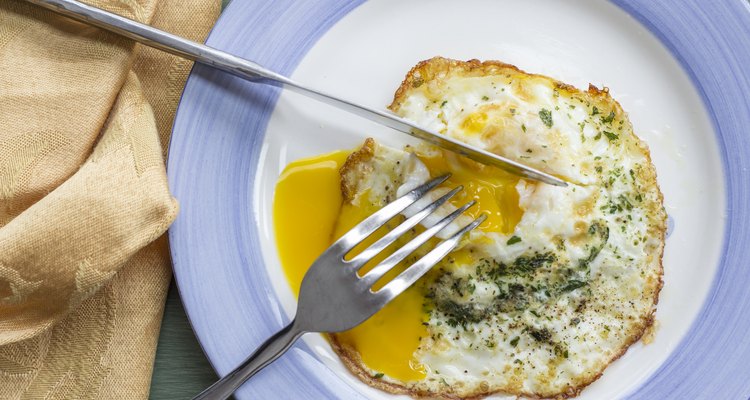
Low in cost and high in protein, eggs are an ideal addition to any meal, whether first thing in the morning or after a long day at the office. They are also one of the easiest foods to prepare, especially if you are using a microwave. It takes just a few minutes of prep and cooking time to have a cooked over-easy egg with firm whites and a delicious runny yolks. Enjoy them with buttered toast, crispy potatoes, seasoned noodles, savory lentils or a plate full of steamed vegetables.
Coat a microwave-safe bowl or plate with nonstick cooking spray or oil. Sprinkle the bottom of the dish with salt, which helps the egg to cook evenly.
Break the egg into the plate or bowl. Use a fork to pierce the yolk once and the whites two to three times, which prevents the egg from exploding during cooking.
Cover the entire dish, except for one corner, with plastic wrap. The one exposed corner will allow the steam to vent while the egg cooks.
Cook on full power for 30 seconds. Allow the egg to cool for another 30 seconds, and then flip it over in the dish. Re-cover the egg, and cook it on full power for 30 more seconds. Again, allow the egg to cool.
If the egg is undercooked, microwave it for another 10 seconds. Continue to cook it in 10-second increments until it has the desired consistency.
Related Articles

Egg Noodle Nutrition

How Many Calories Are in a McDonald's ...

How to Store Cracked Eggs in ...
How to Make Scrambled Egg With Spinach

How to Make an Overeasy Egg

How to Cook Eggs Sunny Side Up Without ...

Simple and Delicious Egg Salad Recipe

How to Use My Day Old Cornbread to Make ...

How to Cook a Raw Egg in Instant Ramen
How to Make Your Deviled Eggs Look Great

How to Cook Arroz Chaufa
How to Store Egg Whites

How to Make Quick Easy Egg Salad
How to Cook Eggs With a Microwave ...

How to Cook a Hard Boiled Egg With a ...

How to Fry an Egg Without It Turning ...
What Is a Souffle Dish?
How to Prevent Dark Circles in Hard ...
How to Overcook Hard Boiled Eggs
How Do I Freeze Egg Beaters?
References
Resources
Tips
- Microwave oven wattage varies, so you may need to adjust the cooking time to thoroughly cook your egg.
- When cooking eggs in a microwave, cook them one at a time for best results.
Warnings
- If you don't pierce the egg yolk, it can explode in the microwave.
Writer Bio
Based on the west coast, Beth Rifkin specializes in business, food, cooking, family, lifestyle and health issues. Her work has appeared in numerous on and offline publications. Beth earned a Bachelor of Business Administration from Temple University.