
Why Is Upper Body Strength Important?
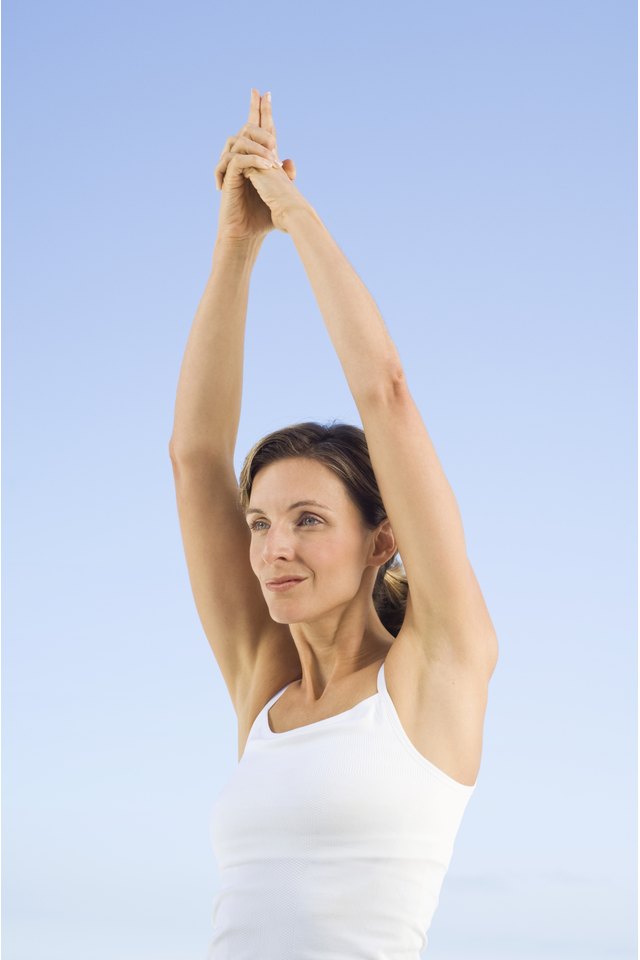
Upper body strength is important to have because the upper body controls your ability to perform everyday activities such as reaching, pulling, pushing and lifting. Having a strong upper body improves your flexibility, mobility and range of motion. If your upper body strength deteriorates as you age, you are more prone to injuries, disease and a diminished quality of life.
Upper Body Muscles
Your upper body is grouped into muscles with specific functions. You have muscles of your hands, forearms, upper arm and shoulder. You also have muscles that connect your limbs to your chest, torso and spinal column. Benefits of strength in these muscles are a pleasing, healthy appearance and strong posture. More important, maintaining strength in these muscles enables you to perform everyday and sports-related activities at an optimal level and to minimize the muscle loss that comes with aging. Upper body muscle strength can also help prevent injuries with activities that stress those muscles.
Upper Body Anatomy: Why It Is Important to Stay Strong
The muscles and joints of your hand primarily allow you to grasp and clench. Those abilities allow you to perform fine motor skills. An inability to grasp would limit your functionality significantly.
The muscles of your lower arm allow you to rotate your hands and to flex and extend your hand, wrist and forearm. Muscles in your upper arm are also involved in some of those motions. Those activities are important in pulling and pushing.
The muscles and joints of your shoulder allow you to move your arm in all directions. Moving your arm away from your body, toward your body, over your head, behind your back, toward your front and rotating your arm are controlled by your shoulder. Most activities that you perform daily would be limited by an inability to perform those functions.
The muscles that connect your upper limbs to your chest allow you to flex, rotate and move your arms toward or away from your body. The muscles connecting your upper limbs to your spinal column allow you to draw your shoulders up, down and back; to extend and rotate your arms; and to draw your shoulder blades toward your back.
Injury and Upper Body Strength
You naturally tend to lose muscle as you age. That is called sarcopenia and begins as early as your 20s. You can lose up to 40 percent of your muscle mass by the time you reach your 60s. Loss of muscle mass in your upper body can have a great effect on other aspects of your life. For example, if you injure your lower extremities and require the use of crutches, upper body strength allows you to remain mobile. The same is true if you find yourself in a wheelchair temporarily or need the use of a walker.
Upper Body Strengthening
To maintain mobility, flexibility, range of motion and strength, you need to maintain upper body strength. Many options are available to you to maintain this strength, including simple exercises you can learn from a book, a DVD or online, through participation in strength training classes or with a personal trainer or physical therapist. Always seek the advice of a professional for any specific questions related to your personal health.
References
- "Gray's Anatomy"; The Muscles and Fasciae of the Upper Limb; Henry Gray; 1976
- U.S. News & World Report: How to Avoid Losing Muscle as You Age
Resources
Writer Bio
A registered nurse living in Colorado, Lesley Radocy began writing professionally in 1985. She specializes in health-care topics, with work appearing in "RN" magazine. Radocy holds a master's degree in health services administration from Saint Joseph's College.