joanna wnuk/iStock/Getty Images
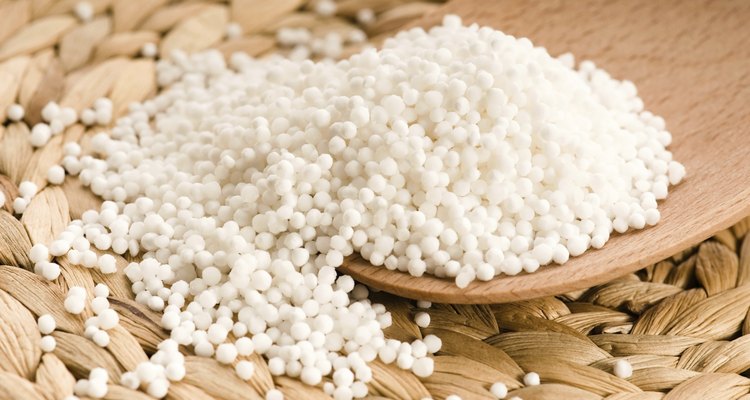
Tapioca is a starchy substance harvested from the root of the cassava plant. The dry pellets or flakes turn into clear, jellylike balls when mixed with milk or other liquids. Tapioca is an interesting ingredient, but it is best saved for special occasions because it is not particularly nutritious.
Pure Carbohydrates
Tapioca is essentially pure carbohydrate. A cup has 544 calories with less than a gram of both fat and protein. By contrast, there are 134.8 grams of carbohydrates and 1.4 grams of sugar in the same serving. Tapioca has very little nutritional value. A 1/4-cup serving of tapioca pearls has a mere 8 milligrams of calcium, 3 milligrams of phosphorous and 4 milligrams of potassium. The quantities of other vitamins and minerals are miniscule.
Prepared Pudding
Tapioca pearls, flakes or pellets are often cooked with milk and other ingredients to make a pudding. While a 4-ounce serving of prepared pudding offers a few grams of protein and approximately 10 times the amount of calcium, phosphorous and potassium as plain tapioca, it is also higher in fat and packs 16.4 grams of sugar.
Related Articles
How to Cook Tapioca Balls

Tapioca Flour Vs. Quick Cooking Tapioca
How to Make Large-Pearl Tapioca
How to Make Your Own Rice Milk
The Difference Between Bittersweet ...
Does Cake Flour Contain Baking Soda & ...

How to Make Sweet Brown Rice
What Can I Substitute for Cornstarch?

How to Soften Crystalized Molasses
Rice Milk Nutrition Information
Fat-Free and Sugar-Free Jell-O Pudding ...
Quaker Oats Instant Grits: Nutritional ...
Bread Flour vs. Cake Flour in Sponge ...
How to Use Guar Gum to Replace Gelatin
Can You Make Dumplings With Corn Starch?
Substitute for Vanilla Custard Powder
The Best Way to Cook Tapioca
Are Masa & Fine Cornmeal Used for ...

How to Dissolve Cooking Flour
What Kind of Oil Do You Use in Brownie ...
References
Writer Bio
Carolyn Robbins began writing in 2006. Her work appears on various websites and covers various topics including neuroscience, physiology, nutrition and fitness. Robbins graduated with a bachelor of science degree in biology and theology from Saint Vincent College.
Photo Credits
joanna wnuk/iStock/Getty Images