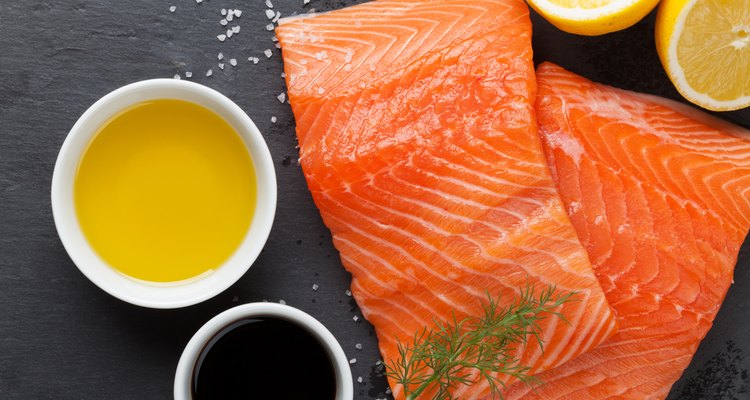
karandaev/iStock/Getty Images
Wild Alaskan salmon includes the species Chinook, Coho, chum, sockeye and pink salmon. These large, cold-water fish are caught off the coast of Alaska for their delicious and nutritious flesh, which is high in protein and omega-3 fatty acids.
Calories
According to the U.S. Department of Agriculture, a 3-oz. serving of wild Alaskan salmon contains 135 calories, on average. Proteins make up about 75 calories, while fats deliver 60 calories. Carbohydrates provide no calories.
Components
The USDA also indicates that a 3-oz. serving of wild Alaskan salmon provides 17 g of protein and 7 g as fat. Water, indigestible matter and nutrients make up the remainder.
Nutrients
Salmon provides several minerals, including magnesium, phosphorus, potassium and selenium. It also provides vitamins B6, B12, niacin, riboflavin, thiamine and pantothenic acid.
Considerations
The Colorado State University Extension indicates that all species of salmon contain high levels of omega-3 fatty acids.Including salmon in the diet may help reduce the risk of cardiovascular disease and cholesterol levels in the bloodstream.
Related Articles

Nutrition for Canned Pink Salmon
How to Blanch Tomatillos

How to Grill a Cod Fish

How to Bake Boneless Skinless Tilapia

How to Cook Trevally
Baked Salmon Filet Nutrition Information

How Many Calories Are in Butternut ...

Alkaline Diet & Protein Foods
How to Brine a Grilled Salmon
How to Cook Atlantic Cod Fillets

How Long Do You Cook Haddock Fillets in ...

How Fast Does Cooked Spaghetti Squash ...

How to Fillet a Goliath Grouper

How to Cook Salmon in Pineapple Juice
Nutritional Facts of Fava Beans

How to Make Baked Haddock in a Foil ...

Calories of Tuna in Sunflower Oil
Grilled Mahi Mahi Calories

How to Cook Mackerel in an Oven

How to Cook Rockfish Fillets
References
Writer Bio
In Jacksonville, Fla., Frank Whittemore is a content strategist with over a decade of experience as a hospital corpsman in the U.S. Navy and a licensed paramedic. He has over 15 years experience writing for several Fortune 500 companies. Whittemore writes on topics in medicine, nature, science, technology, the arts, cuisine, travel and sports.
Photo Credits
karandaev/iStock/Getty Images