How Many Calories Should a Ten Year Old Female Eat a Day?
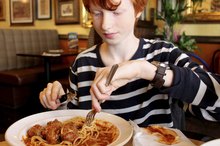
Maintaining a healthy weight requires balancing calories consumed with calories burned. A 10-year-old girl needs enough calories to support growth and provide energy. The exact number of calories a girl needs depends on her activity level.
General Recommendations
The Dietary Guidelines for Americans, 2010 recommends that girls ages 9 to 13 take in between 1,600 and 2,000 calories per day. The recommendations are based on median height and weight for the ages.
Activity Level Implications
Recommended Daily Calories for a Seven-Year-Old
Learn More
A sedentary 10-year-old should aim for about 1,600 calories per day. Sedentary is defined as doing only light physical activity associated with regular living. Those who are moderately active should consume between 1,600 and 2,000 calories per day. A moderately active lifestyle means performing activity equal to walking about 1.5 to 3 miles per day at a brisk 3 to 4 mph, in addition to daily activity. An active girl who exercises more than the equivalent of a daily, brisk 3-mile walk needs between 1,800 and 2,000 calories per day.
A Healthy Diet
If weight is a concern for a 10-year-old girl, you should encourage physical activity and provide healthy food choices that include whole, unprocessed products like fruits, vegetables and low-fat dairy over candy, baked goods, chips and soda.
Related Articles

Recommended Daily Calories for a Seven-Year-Old
Learn More
How Many Calories Does a Teenage Boy Need?
Learn More
How Many Calories Should You Eat to Stay at 135 Lbs?
Learn More

Three Components of a Weight Loss Program
Learn More

How Much Should a Man Weigh?
Learn More
How Many Calories Per Day to Lose 1 Pound Per Week?
Learn More
Recommended Daily Allowance for Calories
Learn More

How Many Milliliters of Water Should You Drink a Day?
Learn More

What Is the Recommended Caloric Intake for Children?
Learn More
How to Lose 10 Pounds in Two Weeks With "30 Day Shred"
Learn More
References
Writer Bio
Andrea Cespedes is a professionally trained chef who has focused studies in nutrition. With more than 20 years of experience in the fitness industry, she coaches cycling and running and teaches Pilates and yoga. She is an American Council on Exercise-certified personal trainer, RYT-200 and has degrees from Princeton and Columbia University.