How Long Does it Take to Rehabilitate a Snapped Achilles Tendon?
A snapped or ruptured Achilles tendon affects the back of your ankle. It most commonly occurs as a sports injury. If you suffer damage to your Achilles tendon, you may feel a sudden “pop” in your ankle. You will then be unable to walk properly. The rupture can be full or partial and usually requires surgery. Rehabilitation can take anywhere between four and 12 months.
Achilles Tendon
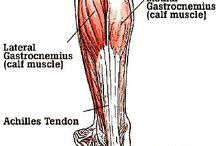
Tendons are fibrous collagen tissues that connect muscles to bones. The Achilles tendon is the largest tendon in the human body. It attaches your calf muscles to your heel bone. You use your Achilles tendon whenever you run, walk and jump. The Achilles tendon is a strong sinew and can withstand the stress of running and jumping, but active sports may cause an injury. This tendon is also prone to a disorder known as tendonitis, which causes painful inflammation.
- Tendons are fibrous collagen tissues that connect muscles to bones.
- The Achilles tendon is a strong sinew and can withstand the stress of running and jumping, but active sports may cause an injury.
Symptoms
Symptoms of a Torn Achilles Tendon
Learn More
Symptoms of a ruptured Achilles tendon include swelling and severe pain around your heel and ankle; the inability to put weight on, bend or push off the injured foot; and the inability to stand on your toes on the injured foot. If the rupture is only partial, you may still be able to move your foot, and the pain and swelling may be less severe. If you feel a "pop" in your ankle and you are having problems bearing weight on the same foot, you should seek medical advice immediately.
Causes
Your Achilles tendon is important for a range of foot movements, including pointing your toes, standing on tiptoes and pushing off on your foot as you walk, run or jump. You use your Achilles tendon every time you move your foot. According to MayoClinic.com, Achilles tendon ruptures most often occur at a location on the tendon which receives less blood flow. A sudden increase of stress on your heel can cause a ruptured tendon, for example, falling from a height, increased sport activity and stepping into a hole.
- Your Achilles tendon is important for a range of foot movements, including pointing your toes, standing on tiptoes and pushing off on your foot as you walk, run or jump.
Rehabilitation
What Causes Pain to the Back of Your Ankle & Heel When You Walk?
Learn More
Rehabilitation either with or without surgery is a lengthy process and should not be rushed; otherwise, you risk damaging the tendon further. Immediately after the injury, apply ice to the foot and elevate it and rest. If you require surgery, a cast will be applied for the first eight weeks. During this time, you should completely rest your foot. During the following weeks, you may wear heel raises to take some of the pressure off the tendon. Your health-care provider may recommend massage and ultrasound to help stretch and realign the new fibers in the tendon. Stretch the tendon by pulling the toes up to the ceiling. Continue this as long as it causes no discomfort. When your full range of motion has returned, you can begin balancing exercises and build up gradually. It may take between four and six months for most people to rehabilitate, notes MayoClinic.com. If you are an athlete, however, it may take between six and 12 months until you can be fully active in your sport.
- Rehabilitation either with or without surgery is a lengthy process and should not be rushed; otherwise, you risk damaging the tendon further.
Related Articles
Symptoms of a Torn Achilles Tendon
Learn More

What Causes Pain to the Back of Your Ankle & Heel When You Walk?
Learn More
Symptoms of a Torn Tendon in the Big Toe
Learn More
My Heel Hurts & I Have Sharp Pain When I Walk
Learn More

Foot Cramps & Stretches
Learn More

How to Walk on a Torn Miniscus
Learn More
How Long Does it Take to Rehab From Meniscus Surgery?
Learn More
How to Rehab a Suspensory Strain
Learn More
Recovery Time for a Torn Plantar Fascia
Learn More
How to Wrap Achilles Tendon
Learn More
References
- American Academy of Orthaepedic Surgeons: Achilles Tendinitis
- Maughan KL, Boggess BR. (2018). Achilles tendinopathy and tendon rupture. Fields KB, ed. UpToDate. Waltham, MA: UpToDate Inc.
- Lopez RG, Jung HG. Achilles tendinosis: treatment options. Clin Orthop Surg. 2015;7(1):1-7. doi:10.4055/cios.2015.7.1.1
- Medina Pabón MA, Naqvi U. Achilles Tendonitis. Treasure Island (FL): StatPearls Publishing. Updated April 8, 2019.
- Tu P. Heel Pain: Diagnosis and Management. Am Fam Physician. 2018;97(2):86-93.
- Fakoya AOJ, Otohinoyi DA, Fakoya FA. Correlation of some predisposing intrinsic conditions with the morphological integrity of the Achilles tendon. Ann Afr Med. 2018;17(2):58-63. doi:10.4103/aam.aam_49_17
- Bass E. Tendinopathy: Why the Difference Between Tendinitis and Tendinosis Matters. Int J Ther Massage Bodywork. 2012;5(1):14-17.
- Gulati V, Jaggard M, Al-nammari SS, et al. Management of achilles tendon injury: A current concepts systematic review. World J Orthop. 2015;6(4):380-6. doi:10.5312/wjo.v6.i4.380
- Vyas S, Bhalla AS, Ranjan P, Kumar S, Kumar U, Gupta AK. Rheumatoid Arthritis Revisited - Advanced Imaging Review. Pol J Radiol. 2016;81:629-635. doi:10.12659/PJR.899317
- Kim J, Sung DJ, Lee J. Therapeutic effectiveness of instrument-assisted soft tissue mobilization for soft tissue injury: mechanisms and practical application. J Exerc Rehabil. 2017;13(1):12-22. doi:10.12965/jer.1732824.412
- Park YH, Jeong SM, Choi GW, Kim HJ. How early must an acute Achilles tendon rupture be repaired? Injury. 2017;48(3):776-780. doi:10.1016/j.injury.2017.01.020
- Maughan KL, Boggess BR. (2018). Achilles tendinopathy and tendon rupture. Fields KB, ed. Waltham, MA: UpToDate Inc.
Writer Bio
Corinna Underwood began writing in 2000. She has been published in many outlets, including Fox News, “Ultimate Athlete,” “Hardcore Muscle,” “Alternative Medicine” and “Alive.” Underwood also wrote "Haunted History of Atlanta and North Georgia" and "Murder and Mystery in Atlanta." She has a Bachelor of Arts in English literature and philosophy and a Master of Arts in women’s studies from Staffordshire University.