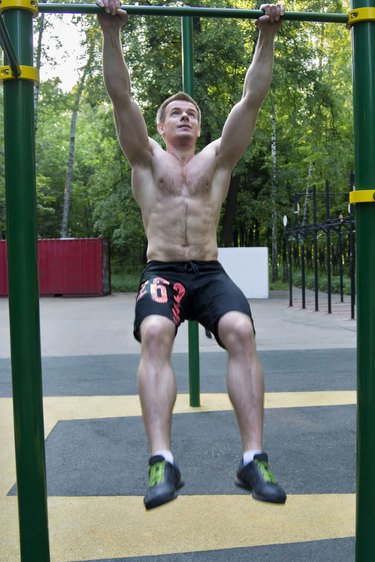
Just about every pullup engages your lats. Unlike chinups, which exert biceps more, pullups primarily target lats. Other muscles such as your triceps, shoulders and core play supporting roles. For a lat workout, try standard, wide, narrow or sternum pullups.
Basics
Video of the Day
Pullups are not chinups. You use a pronated grip -- palms face away -- during pullups. You use a supinated grip -- palms face you -- during chinups. Use a pullup bar at your gym, or buy a door model. You can do pullups on a door -- if it's strong enough -- if you place a towel over the top for cushioning. Posture matters wherever you practice. Maintain a straight alignment from your head to lower back. Keep shoulders back. Avoid swinging.
Video of the Day
Standard Grip
Begin with hands on a pullup bar, slightly wider than shoulder-distance. At the bottom starting position keep arms fully extended. Bend your legs, if you need to, or cross feet. Rise up so your chin goes above the bar. Feel the tension in your lats. Lower to the starting point.
Wide and Narrow Grip
Widening or narrowing your grip can develop your lats more. For wide-grips, place hands more than shoulder distance apart; your upper body forms a Y. For narrow grips, place hands four to eight inches apart. Narrow grip pullups engage your arms too, but they target lower lats.
Sternum
This advanced pullup demands tremendous upper back strength. You don't move straight up then down. Pick a comfortable grip -- wider challenges more. Arch your back. Raise your chest -- not your chin -- to the bar. As you pull your sternum toward the bar, bend back so your head moves away from it. At the high point, your head and floor are parallel. Watch someone perform this pullup first.
Tips
Pullups challenge many people. If you can't lift your weight, assisted machines decrease your load. Ask a spotter to give you a boost. If you want more resistance, however, use a weight belt or put weights between your legs. Consult your physician or personal trainer before trying pullups. Done well, they provide a total upper-body workout. Done incorrectly, they strain your joints, neck, shoulder and back.