While many different types of seafood are enjoyed worldwide, shrimp is the most popular pick for Americans, according to the Delaware Sea Grant.
This crowd-pleasing seafood can be farmed domestically or caught in the wild, but the vast majority of it is produced in countries throughout Southeast Asia and Central and South America, per the World Wildlife Fund.
Video of the Day
Video of the Day
If you don't eat much seafood, shrimp can be a versatile and accessible option because it pairs well with a number of other foods. Add it to stir-fries, salads or vegetable sautés. Shrimp provides high amounts of protein with very little fat, and can also protect your brain and heart.
Current dietary guidelines recommend Americans eat two seafood-based meals per week. Shrimp is a fantastic option to anchor your meals with and can be a part of a well-rounded, healthy diet.
Shrimp Nutrition Facts
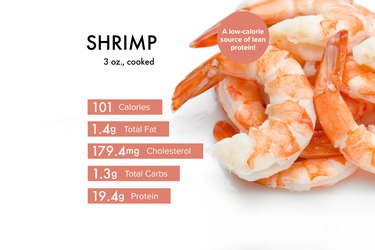
Three ounces (about 8 to 9 medium pieces) of shrimp is equal to a single serving. The nutrition value of three ounces of cooked shrimp contains:
- Calories: 101
- Total fat: 1.4 g
- Cholesterol: 179.4 mg
- Sodium: 805 mg
- Total carbs: 1.3 g
- Dietary fiber: 0 g
- Sugar: 0 g
- Added sugar: 0 g
- Protein: 19.4 g
Shrimp Macros
- Total fat: Three ounces of shrimp has 1.4 grams of total fat, which includes 0.5 grams of polyunsaturated fat, 0.3 grams of monounsaturated fat, 0.4 grams of saturated fat and 0 grams of trans fat.
- Carbohydrates: Shrimp does have carbs, though very few. Three ounces of shrimp has 1.3 grams of carbs, which includes no fiber or sugars.
- Protein: The amount of protein in shrimp is quite substantial. Three ounces of shrimp has 19.4 grams of protein.
Shrimp Vitamins, Minerals and Other Micronutrients
- Selenium: 77% of your Daily Value (DV)
- Vitamin B12: 59% DV
- Copper: 24% DV
- Phosphorus: 21% DV. Check out more foods high in phosphorus.
- Choline: 21% DV
- Niacin (Vitamin B3): 14% DV
- Zinc: 13% DV
- Vitamin B6: 12% DV
- Vitamin E: 12% DV
- Vitamin A (RAE): 9% DV
- Pantothenic acid (B5): 9% DV
- Magnesium: 7% DV
- Calcium: 6% DV
- Folate: 5% DV
- Potassium: 3% DV
Shrimp Nutrition: Grilled vs. Fried
The nutrition value of shrimp will vary depending on how it is prepared. Grilled shrimp will have a healthier nutrition profile than fried shrimp, for example.
Fried shrimp also contains a fair amount of carbs, unlike grilled shrimp or shrimp cocktail.
Grilled shrimp is a healthy option and easy to prepare. Cooking shrimp with oil adds way more calories and fat than you might realize, so do so sparingly.
Alternatively, you can use a cooking spray to avoid adding extra calories to grilled shrimp.
Grilled shrimp can be a low-calorie option if you cook them with very little added oil. Eight grilled shrimp have 44 to 52 calories, with less than one gram of carbohydrates. The majority of the calories in grilled shrimp comes from its protein.
Fried Shrimp Nutrition vs. Grilled Shrimp Nutrition
Grilled Shrimp (8-9 pieces) | Fried & Breaded Shrimp (9 pieces) | |
|---|---|---|
Calories | 101 | 360 |
Fat | 1.4 g | 22 g |
Carbohydrates | 1.3 g | 33 g |
Protein | 19.4 g | 9.2 |
As you can see, the calories in fried shrimp are far greater than those in grilled shrimp. Fried shrimp is not as healthy a pick as grilled because it contains excess calories and fat.
The carbs in fried shrimp especially stand out because when grilled or boiled, shrimp contains virtually no carbohydrates.
A 9-piece serving of fried shrimp also contains 1,050 milligrams of sodium (44 percent DV), while grilled or cooked shrimp contains 417 milligrams of sodium (17 percent DV).
If you're eating shrimp cocktail, know that its nutritional profile is very similar to that of grilled or cooked shrimp. Just be mindful of the cocktail sauce, which often contains added sugars.
Health Benefits of Shrimp
Eating seafood such as shrimp can be part of a healthy diet, especially when it replaces sources of protein that are higher in saturated fat.
Shrimp is a lean protein source that can help you maintain a healthy weight, and it also provides brain-protective nutrients such as selenium, vitamin B12 and choline.
1. Shrimp Is a Great Source of Lean Protein
If you're wondering if shrimp is good for you, consider the amount of protein it provides.
"Shrimp is a fabulous source of lean protein, and it can replace other protein sources that may not be as heart-healthy," says Joan Salge Blake, EdD, RDN, a registered dietitian and clinical professor at Boston University.
"We're now asking Americans to have two seafood meals per week to potentially displace other meals that may not be as healthy."
Not all protein sources are created equal, but shrimp is a versatile protein source and can be easily mixed into healthy foods like salads.
Our body needs protein from food to build and maintain bones, muscles and skin, per the U.S. National Library of Medicine. Animal products like shrimp provide complete proteins, which means they supply all of the amino acids the body is unable to produce on its own.
While most Americans eat enough protein, many could benefit from making leaner and healthier choices such as swapping regular ground beef or sausage for seafood like shrimp, poultry or beans, per the Ohio State University Extension.
Tip
Shrimp is a healthy protein source relative to many other protein choices because it contains only 0.1 g saturated fat, provides omega-3 fatty acids and contains few contaminants.
The preparation method helps determine the healthfulness of shrimp. Adding butter, breading, oil and sauces reduce its nutritional value. Like all animal sources of protein, shrimp is a complete protein, containing all the amino acids the human body needs to function.
2. Shrimp Boasts Brain-Boosting Nutrients
Shrimp provides a number of nutrients that can protect the brain and preserve cognitive function.
A 3-ounce serving of shrimp provides 77 percent of your DV of selenium, an essential trace mineral that plays a critical role in thyroid health, DNA synthesis, reproduction and protection from oxidative damage and infection, per the National Institutes of Health (NIH).
While most Americans get adequate amounts of selenium, a deficiency in this nutrient might be associated with age-related declines in brain function, possibly due to reduced levels of selenium's antioxidant activity.
Either too low or (to a lesser extent) too high levels of selenium are linked to a higher risk of depressive symptoms and negative mood in young adults in a November 2014 study published in the Journal of Nutrition.
This could be because selenium protects the body from oxidative damage through glutathione peroxidase, a key antioxidant enzyme that functions best at certain selenium concentrations. Oxidative damage to the brain and nervous system may contribute to the development of depression.
Shrimp also provides 59 percent of your DV of vitamin B12, which our bodies need to make red blood cells and carry out other essential functions, per Harvard Health Publishing.
A B12 deficiency is common in older adults, per a March 2015 review in the Hong Kong Medical Journal. This deficiency is linked to cognitive difficulties, such as trouble thinking and reasoning or memory loss. The body cannot make B12 on its own, and this vitamin only naturally occurs in animal products such as shrimp.
Choline, an essential nutrient, is also present in shrimp. It's needed to produce acetylcholine, an important neurotransmitter for mood, memory, muscle control and other brain and nervous system functions, per the NIH.
People with Alzheimer's disease have lower levels of the enzyme that turns choline into acetylcholine in the brain. That said, more research is needed to confirm the relationship between choline intake and cognitive function, and to clarify if choline supplements might help those with dementia such as Alzheimer's disease.
3. Shrimp Can Help You Manage a Healthy Weight
While shrimp is packed with nutrients and protein, it's low in calories, which could help you attain or maintain a healthy weight when eaten as part of a healthy diet.
A 3-ounce serving of this shellfish contains just 101 calories — but you'll feel satiated after eating it since protein takes more energy for your body to digest than, say, refined carbohydrates, and helps you feel full for longer, per Harvard Medical School.
Eating protein sources like seafood was associated with less weight gain in a June 2015 analysis of 120,000 adults' dietary habits in Clinical Nutrition. Eating red meat, full-fat cheese and chicken with skin, on the other hand, was linked to greater weight gain.
What's more, researchers found that weight loss and weight maintenance may depend on the high-protein (not necessarily the low-carbohydrate) component of a diet in an October 2012 study published in the journal Physiology & Behavior.
Strong evidence also shows that eating patterns including seafood are associated with a lower risk of heart disease, according to the 2015-2020 Dietary Guidelines for Americans.
Tip
The Dietary Guidelines call for at least 8 ounces of seafood per week, and note that average intakes of seafood are low for all age-sex groups. Shifting to options like seafood in place of meat, poultry, or eggs twice per week can help you increase the protein variety in your diet and make more nutrient-dense choices.
Shrimp Health Risks
1. Allergies
Shellfish is one of the most common food allergens. Within the shellfish family, crustaceans like shrimp, lobster and crab cause the most allergic reactions.
Although many individuals who are allergic to shellfish can eat mollusks like scallops, oysters and clams, it's important to talk to an allergist before trying any other type of shellfish, per the American College of Allergy, Asthma & Immunology. Cross-contamination can also occur because shellfish are often stored together in restaurants and markets.
Although shellfish allergies can affect children, they most commonly develop in adulthood. They can cause symptoms such as vomiting, stomach cramps, diarrhea, wheezing, weak pulse, hives and swelling. Food allergies may cause anaphylaxis, a severe whole-body allergic reaction that can be life-threatening.
If you have a shellfish allergy, your allergist will likely provide you with epinephrine to keep on hand — and a written emergency treatment plan.
2. Drug Interactions
There are currently no known drug interactions associated with shrimp. Be sure to discuss any medication and food interactions with your health professional.
Is Eating Too Much Shrimp Bad for You?
Although the cholesterol in shrimp is fairly high (179.4 milligrams per 3-ounce serving), the most recent Dietary Guidelines no longer limit the amount of cholesterol in your diet.
A June 2015 meta-analysis published in Clinical Nutrition found that dietary cholesterol was not statistically significantly associated with coronary artery disease, ischemic stroke or hemorrhagic stroke. Dietary cholesterol did increase total blood cholesterol, including LDL cholesterol.
That said, the body creates much more cholesterol in the liver than what you can eat, so avoiding foods high in cholesterol won’t effect your blood cholesterol levels very much, per the Cleveland Clinic.
You should still generally try to eat as little dietary cholesterol as possible in a nutritious diet, because foods that are higher in dietary cholesterol (like fatty meats) tend to also be higher in saturated fat.
Shrimp, however, has less than 1 gram of saturated fat per serving. “The biggest culprit in raising LDL cholesterol is saturated fat, not dietary cholesterol,” Blake says. “Shrimp can also be expensive, so the odds of the average person eating too much to be detrimental is probably minimal.”
Shrimp Preparation and Helpful Tips
It's important to purchase seafood like shrimp from certified processors and dealers, and to follow general rules for safe preparation and storage.
You can experience seafood poisoning from eating shrimp that hasn't been handled properly or is improperly cooked. Follow these tips to safely purchase, store and cook shrimp.
1. Examine the Shrimp Before You Buy
Fresh shrimp has a mild odor and firm-textured meat, and the shell or meat is not slippery, according to the Clemson Cooperative Extension. It should not have any black spots or patches on the shell or meat. The shell may be light pink, pinkish-tan or grayish-green.
If you're buying frozen seafood, make sure the flesh is solid and there's no discoloration or freezer burn on the surface. There should be no odor (or it should smell fresh and mild). Make sure the wrapping material is moisture-proof and doesn't have any indications that the package might have thawed at one point, like water stains or ice crystals. The shrimp should separate easily from each other.
"Both wild-caught and farmed shrimp could have potential problems, so don't assume that wild-caught shrimp is always sustainable and farm-raised shrimp is not."
2. Check the Sourcing
You can consult the Monterey Bay Aquarium Seafood Watch to determine if shrimp has been fished or farmed in ways that have less of an effect on the environment. Select the type of shrimp, whether it was farmed or wild-caught and where it's from to easily determine if it's considered the best choice, a good choice or a choice to avoid.
"Both wild-caught and farmed shrimp could have potential problems, so don't assume that wild-caught shrimp is always sustainable and farm-raised shrimp is not," Blake says.
3. Store and Cook Properly
Store fresh seafood like shrimp in the refrigerator immediately once you're home, after wrapping it in cling wrap or storing in an airtight container. Frozen shrimp should be placed in the freezer immediately, and kept in its original moisture- and vapor-proof packages, per the Clemson Cooperative Extension.
Thoroughly wash your hands with hot, soapy water before and after handling seafood. Keep raw food separate from cooked foods, and wash all surfaces raw seafood has touched. Raw shrimp will turn firm and pink when cooked thoroughly.
It takes 3 to 5 minutes to boil or steam a pound of medium-sized shrimp in the shell, depending on the size, according to the extension service. Keep a close eye on your seafood: Shrimp becomes dry and tough when overcooked.
Tip
Fresh shrimp generally lasts up to four days in the refrigerator or up to five months in the freezer.
Shrimp Recipes
Need some shrimp inspiration? Here are a few of our favorite shrimp recipes to get you started.
Alternatives to Shrimp
Shrimp contains a variety of healthy nutrients and antioxidants that can benefit weight loss or weight management, brain health and heart health.
Prawns offer many of the same nutritional values as shrimp, as do fish like salmon, tuna or cod. In general, you should aim to eat seafood like shrimp with at least two meals per week.
Whats the Difference Between Shrimps and Prawns?
Despite the popularity of shrimp, they're often confused with other types of shellfish, like prawns or even baby crayfish. Shrimp and prawns can be cooked in the same way and are generally considered to have similar flavors.
In the U.S., the word "shrimp" is often used to refer to prawn (and you'll find the reverse throughout the United Kingdom and Australia), but these are actually two different species.
Shrimp, like prawns, are 10-footed crustaceans. Both come in a range of sizes, but in prawns, the head overlaps the thorax and the thorax overlaps the abdomen (like shingles on a roof). You can typically replace one for the other in any recipe and prawns have many of the same health benefits as shrimp.
- My Food Data: "Cooked Shrimp"
- U.S. National Library of Medicine: "Protein in diet"
- Harvard T.H. Chan School of Public Health: "Healthy Eating Plate"
- U.S. National Library of Medicine: "Dietary Proteins"
- The American Journal of Clinical Nutrition: "Changes in intake of protein foods, carbohydrate amount and quality, and long-term weight change: results from 3 prospective cohorts"
- Physiology & Behavior: "Relatively high-protein or 'low-carb' energy-restricted diets for body weight loss and body weight maintenance?"
- Ohio State University Extension: "Putting MyPlate on Your Table: Protein"
- Cook's Illustrated: "Shrimp vs. Prawn"
- National Institutes of Health: "Selenium"
- Journal of Nutrition: "Optimal Serum Selenium Concentrations Are Associated with Lower Depressive Symptoms and Negative Mood among Young Adults"
- Harvard Health Publishing: "Vitamin B12 deficiency can be sneaky, harmful"
- National Institutes of Health: "Choline"
- Hong Kong Medical Journal: "Vitamin B12 deficiency in the elderly: is it worth screening?"
- National Institutes of Health: "Omega-3 Fatty Acids"
- U.S. National Library of Medicine: "Omega-3 fats - Good for your heart"
- Harvard T.H. Chan School of Public Health: "Fish: Friend or Foe?"
- American College of Allergy, Asthma & Immunology: "Shellfish Allergy"
- Clemson Cooperative Extension: "Safe Handling of Seafood"
- Monterey Bay Aquarium Seafood Watch: "Shrimp Recommendations"
- The American Journal of Clinical Nutrition: "Dietary Cholesterol and Cardiovascular Disease: A Systematic Review and Meta-Analysis"
- Cleveland Clinic: "Why You Should No Longer Worry About Cholesterol in Food"
- Delaware Sea Grant: "Shrimp"
- World Wildlife Fund: "Farmed Shrimp"
- Harvard Medical School: "Extra protein is a decent dietary choice, but don’t overdo it"