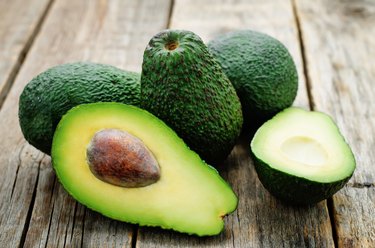
Changes in your diet can help reduce your levels of cholesterol. For example, replacing saturated fats with unsaturated fats and getting your daily fiber will lower cholesterol. A third dietary action that helps is boosting your intake of substances from plants called phytosterols. Beta-sitosterol is one of the most abundant phytosterols. You'll get it from natural sources such as nuts, vegetable oils, avocados and dark chocolate.
Beta-Sitosterol Rundown
Video of the Day
Consuming 2,000 milligrams of phytosterols daily can lower cholesterol by 5 to 15 percent, according to the National Heart, Lung and Blood Institute. It may be difficult to get that much from natural foods because some of the best sources are also high in calories, so it's important to limit the amount you eat. You can also boost your daily intake by consuming fortified foods. Depending on the product, they contain about 400 milligrams to 1,700 milligrams of total phytosterols per serving, according to the Cleveland Clinic. However, they may have phytosterols other than beta-sitosterol.
Video of the Day
Nuts and Seeds
Nutrient-rich nuts and seeds are good sources of vitamin E, potassium, magnesium and unsaturated fats that help lower cholesterol. They also contain beta-sitosterol. One of the top sources -- pistachio nuts -- provides 60 milligrams of beta-sitosterol in a 1-ounce serving. The next best choices include macadamia nuts, almonds, cashews, walnuts, pecans and hazelnuts. Sesame seeds are also good sources of beta-sitosterol, with 1 tablespoon supplying 19 milligrams.
Fruits and Vegetables
Avocados exceed every other choice in this category. If you eat one-half of an avocado, or about 2/3 cup of cubed avocado, you'll consume 76 milligrams of beta-sitosterol. Your favorite fruits and vegetables contain phytosterols, but values are typically reported for total phytosterols, without a separate amount for beta-sitosterol. As a general guideline, oranges, beets and Brussels sprouts have about 24 milligrams of total phytosterols per 100 grams of food. The total amount in carrots, cauliflower, cabbage, bananas, apples, peaches and pears is 8 to 18 milligrams per 100 grams.
Plant Oils
The highest concentrations of total phytosterols are found in plant oils, according to the Linus Pauling Institute. One tablespoon of canola oil and corn oil contains 59 milligrams of beta-sitosterol. You'll get about 23 milligrams in a tablespoon of soybean oil and 28 milligrams in the same portion of flaxseed oil. Vegetable oils, as well as nuts, seeds and avocados, are good sources of healthy unsaturated fats that also lower cholesterol.
Dark Chocolate
Dark chocolate contains the same antioxidant phytonutrients as grapes, berries, apples and tea. It's also a natural source of beta-sitosterol. To get the most phytosterols, choose chocolate with the highest percentage of cacao solids. A 1-ounce serving of milk chocolate only has 3 milligrams of beta-sitosterol, compared to dark chocolate with 70 percent to 85 percent cacao solids, which contains 24 milligrams.
- National Heart, Lung, and Blood Institute: National Cholesterol Education Program: Your Guide to Lowering Cholesterol With Therapeutic Lifestyle Changes
- Cleveland Clinic: Phytosterols: Sterols and Stanols
- Joy Bauer: Nuts and Seeds: How Food Affect Health
- USDA National Nutrient Database: Nutrient List: Beta-Sitosterol: Nuts and Seeds
- USDA National Nutrient Database: Avocados, Raw, All Commercial Varieties
- Dietary Fiber Foods: List of Foods (With High Phytosterol) That Help Lower Serum Cholesterol
- Linus Pauling Institute: Phytosterols
- USDA National Nutrient Database: Nutrient List: Beta-Sitosterol: Fats and Oils
- USDA National Nutrient Database: Nutrient List: Beta-Sitosterol: Sweets
- Linus Pauling Institute: Flavonoids
- USDA National Nutrient Database: Nuts, Pistachio Nuts, Dry Roasted Without Salt Added
- USDA National Nutrient Database: Seeds, Sesame Seed Kernels, Dried (Decorticated)