Side Effects of Phenylalanine in Soda
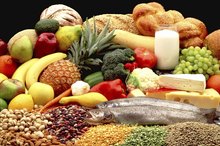
Phenylalanine is an essential amino acid, which your body needs to build proteins. Your body cannot manufacture this amino acid, so you need to get it from foods such as poultry, pork, fish, milk, yogurt, eggs, cheese, soy products, bananas, certain nuts and seeds. Aspartame, an artificial sweetener used in many diet sodas, is high in phenylalanine, according to HealthVitaminGuide.com. Phenylalanine in general is not a problem to most people and a vast majority do not report any side effects. However, people born with phenylketonuria, a rare metabolic disorder, cannot process phenylalanine and should avoid taking it.
Hypertension and Migraine
If you have PKU, or are sensitive to phenylalanine, and take more than 5000 milligrams of DL-phenylalanine a day, a lab-created mirror-image molecule of phenylalanine, you may experience nausea, heartburn and headaches, HealthVitaminGuide.com notes. You may also experience hypertension and migraine. The risk of this happening becomes especially high and serious if you are using antidepressants that are monoamine oxidase inhibitors. These medications, combined with phenylalanine, may cause a spike in your blood pressure that could lead to a heart attack or stroke, the University of Maryland Medical Center reports.
- If you have PKU, or are sensitive to phenylalanine, and take more than 5000 milligrams of DL-phenylalanine a day, a lab-created mirror-image molecule of phenylalanine, you may experience nausea, heartburn and headaches, HealthVitaminGuide.com notes.
Neurological Side Effects
List of Foods That Contain Phenylalanine
Learn More
Children who have been exposed to high doses of DL-phenylalanine may show signs of anxiety, jitteriness and hyperactivity, reports the University of Maryland Medical Center. Phenylalanine also may worsen the symptoms of people suffering from tardive dyskinesia, a disorder that arises from taking antipsychotic drugs, such as phenytoin, valproid acid or carbamazepine, to treat schizophrenia over a long period of time. Tardive dyskinesia causes its victims to involuntarily move parts of their body such as the tongue, lips, face, trunk and limbs. In addition to this, phenylalanine may also make some of the symptoms of Parkinson’s disease worse as well as interfere with the absorption of levodopa, a medication used to treat the disease, according to the University of Maryland Medical Center. At high doses, phenylalanine acts as a neurotoxin that excites the neurons of the brain to the point of cellular death, reports HealthVitaminGuide.com.
- Children who have been exposed to high doses of DL-phenylalanine may show signs of anxiety, jitteriness and hyperactivity, reports the University of Maryland Medical Center.
- In addition to this, phenylalanine may also make some of the symptoms of Parkinson’s disease worse as well as interfere with the absorption of levodopa, a medication used to treat the disease, according to the University of Maryland Medical Center.
Damage to Infants
Women who have phenylketonuria and who are pregnant need to be particularly careful about ingesting phenylalanine either from food or from artificial sweeteners. High levels of phynylalanine ingested during pregnancy can cause birth defects ranging from failure of developing organs to form properly in the first trimester to faulty brain formation during the last trimester, according to a report from the Louisiana State University Health Sciences Center.
Related Articles
List of Foods That Contain Phenylalanine
Learn More

Can You Take L-Tyrosine and Caffeine Together?
Learn More

Seroquel & Elevated Liver Enzymes
Learn More

How to Use Melatonin to Treat Acid Reflux
Learn More

The Effects of Caffeine Drunk With Aspartame
Learn More

Drugs to Avoid If You Take Lexapro
Learn More

How Does Depakote Affect the Brain?
Learn More

How Does Lamictal Work on Depression?
Learn More
Sugar Free Candy Side Effects
Learn More
Gaba Serotonin Diet
Learn More
References
- HealthVitaminGuide.com: Phenylalanine
- University of Maryland Medical Center: Phenylalanine
- MedlinePlus.com: Phenylketonuria
- Marble, M. Phenylketonuria and other metabolic diseases: clinical, genetic and newborn screening aspects. LSU Health Sciences Center.
- Burlina AP, Lachmann RH, Manara R, et al. The neurological and psychological phenotype of adult patients with early-treated phenylketonuria: A systematic review. J Inherit Metab Dis. 2019;42(2):209-219. doi:10.1002/jimd.12065
- Hood A, Antenor-dorsey, JA, Rutlin J, et al. Prolonged exposure to high and variable phenylalanine levels over the lifetime predicts brain white matter integrity in children with phenylketonuria. Mol Genet Metab. 2015;114(1):19-24. doi:10.1016/j.ymgme.2014.11.007
- Macleod EL, Ney DM. Nutritional management of phenylketonuria. Ann Nestle Eng. 2010;68(2):58-69. doi:10.1159/000312813
- University of Washington, Cristine M. Trahms Program for Phenylketonuria. What is the diet for PKU?
- Sara, GL., Alejandra, LML, Isabel, IG, Marcela, VA. Conventional phenylketonuria treatment. Journal of Inborn Errors of Metabolism and Screening. 2010;4. doi:10.1177/2326409816685733
- Southeast Regional Genetics Network. PKU nutrition management guidelines. Updated August 2016.
- Kose E, Aksoy B, Kuyum P, Tuncer N, Arslan N, Ozturk Y. The effects of breastfeeding in infants with ohenylketonuria. J Pediatr Nurs. 2018;38:27-32. doi:10.1016/j.pedn.2017.10.009
- Guo H, Zheng Y, Wang B, Li Z. A note on an improved self-healing group key distribution scheme. Sensors (Basel). 2015;15(10):25033-8. doi:10.3390/ijns5030026
- Concolino D, Mascaro I, Moricca MT, et al. Long-term treatment of phenylketonuria with a new medical food containing large neutral amino acids [published correction appears in Eur J Clin Nutr. 2017 Aug;71(8):1027]. Eur J Clin Nutr. 2017;71(1):51–55. doi:10.1038/ejcn.2016.166
- Kose E, Aksoy B, Kuyum P, Tuncer N, Arslan N, Ozturk Y. The effects of breastfeeding in infants with phenylketonuria. J Pediatr Nurs. 2018;38:27-32. doi:10.1016/j.pedn.2017.10.009
- Southeastern Genetics Network. PKU nutrition management guidelines.
- The National PKU Alliance. Returning to diet.
- University of Washington. Cristine M. Trahms Program for Phenylketonuria. What is the diet for PKU?
Writer Bio
Joseph Pritchard graduated from Our Lady of Fatima Medical School with a medical degree. He has spent almost a decade studying humanity. Dr. Pritchard writes as a San Francisco biology expert for a prominent website and thoroughly enjoys sharing the knowledge he has accumulated.