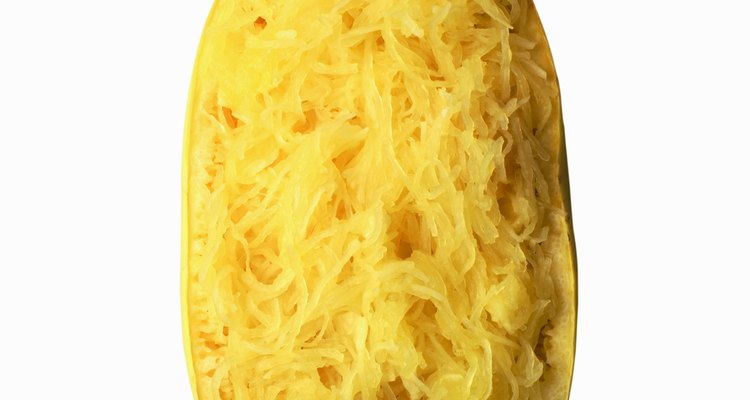
Spaghetti squash is different from other squashes because its fibrous flesh resembles strands of spaghetti when cooked. Because of this, it can be eaten as a gluten-free and low-carbohydrate alternative to pasta or noodles. If left at room temperature, cooked spaghetti squash will spoil quickly, but you can keep it for longer by freezing or refrigerating it.
Keep It Fresh
Cooked spaghetti squash will keep for three to five days in the fridge or 10 to 12 months in the freezer before spoiling. Be aware that it will lose its stringy, spaghetti shape after being frozen and defrosted. Make sure you put it in the fridge or freezer within two hours of cooking it to prevent bacteria from building up. Let it cool to room temperature before freezing or refrigerating it.
Related Articles

How Long Does Banana Bread Stay Fresh?

How to Reheat Leftover Pork Chops ...

How Many Calories Are in Butternut ...

How Long Is Steamed Cauliflower Good ...

How Long to Cook Steak at 150 Degrees ...
How to Freeze Empanadas

How Long Does It Take to Cook Linguine?

How to Cook Kale in a Pan With Butter ...

How to Store Brussels Sprouts

Calories in One Slice Provolone Cheese

How to Store Apples

How Long Do You Cook Whole Deer ...

How to Make Fresh Strawberry Frosting ...

How to Get a Marriage Certificate Online
How to Freeze Fresh Beets

Grilling a Top Sirloin Filet in a Cast ...

How to Freeze Papaya

How to Respond to a Compliment From a ...

How to Cook Large Brown Mushrooms

Calories in Pasta Noodles
References
Photo Credits
Stockbyte/Stockbyte/Getty Images