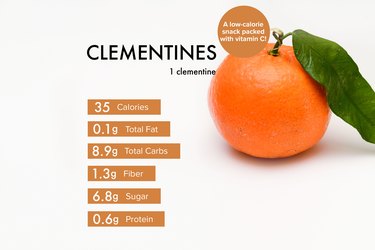
A clementine is a small citrus fruit also known as a mandarin orange. In fact, clementines are the smallest of mandarin oranges, with an average size of approximately 2 3/8 inches in diameter, according to the Missouri Botanical Garden.
Clementines have thin skin that ranges from slightly smooth to bumpy. As the fruit matures, the skin separates from the flesh of the clementine, which makes it easy to peel.
Video of the Day
Video of the Day
This delicious citrus fruit is sweet, seedless and very nutritious. Clementines are great to snack on, slice into salads and add to children's lunchboxes.
Clementine Nutrition Facts
One clementine is equal to a single serving. One clementine contains:
- Calories: 35
- Total fat: 0.1 g
- Cholesterol: 0 mg
- Sodium: 0.7 mg
- Total carbs: 8.9 g
- Dietary fiber: 1.3 g
- Sugar: 6.8 g
- Added sugar: 0 g
- Protein: 0.6 g
Clementine Macros
- Total fat: One clementine has no fat.
- Carbohydrates: One clementine has 8.9 grams of carbohydrates, which includes 1.3 grams of fiber and 6.8 grams of naturally occurring sugar.
- Protein: One clementine has 0.6 grams of protein.
Vitamins, Minerals and Other Micronutrients
- Vitamin C: 40% DV
- Thiamin (B1): 5% DV
- Folate: 4% DV
- Copper: 4% DV
- Potassium: 3% DV
- Niacin (B3): 3% DV
Are Clementines Healthy?
Clementines are good for you and make for a healthy snack — especially when you're craving something sweet. Clementines have many important nutrients, such as vitamin C and fiber.
Health Benefits of Clementines
1. Clementines Contain Vitamin C
One clementine provides 40 percent of your daily dose of vitamin C, which has many roles throughout the human body.
Its most vital functions are immunity support and antioxidant protection, according to a November 2017 article in Nutrients. Antioxidants, such as vitamin C, disarm harmful free radicals in the body, protecting DNA, proteins and lipids from oxidative damage. That's why vitamin C is integral to a healthy immune system.
Your skin also depends on vitamin C to protect its cells from free radicals formed in response to sunlight, according to the Linus Pauling Institute. Vitamin C is essential for collagen synthesis, which supports tendons, skin, blood vessels, bones and tissues throughout your body.
Here's another amazing benefit of C: It helps you absorb plant-based non-heme iron, which comes from plant foods. Humans cannot easily absorb non-heme iron, and vitamin C acts synergistically to reduce the non-heme form from ferric to ferrous, which allows us to more easily absorb the nutrient, according to the October 2019 issue of Antioxidants.
This is particularly important for vegans and vegetarians who eat a primarily plant-based diet and are more likely to experience anemia.
Related Reading
2. Clementines Have Phytonutrients
Phytonutrients is a broad term describing health-promoting compounds found in plant foods, such as fruits and vegetables. It has been estimated that more than 4,000 phytonutrients exist, all with a variety of benefits for the body.
Oranges and clementines contain phytonutrients known as citrus flavanones, which have been widely studied for their possible role in the prevention of cancer and heart disease, according to the February 2014 issue of the Journal of Food Composition and Analysis.
Plus, eating citrus is linked to a significant reduction in heart disease risk factors, per a May 2017 study in Nutrients.
3. Clementines Contain Fiber and Can Support a Healthy Weight
Clementines have a combination of dietary fiber, high water content and low calories. This helps fill you up and feel satisfied for longer.
Fiber supports healthy weight-loss goals and helps maintain a healthy weight by creating bulk, helping to keep you feeling full and your gastrointestinal tract running smoothly.
Fiber also helps protect your heart by lowering levels of cholesterol as well as helps to control blood sugar levels, according to the Harvard T.H. Chan School of Public Health.
Higher intakes of fiber are linked to lower body weights, according to an April 2013 study in Nutrients. Increasing fiber to 30 grams per day has been shown to be an effective approach to weight loss, per a February 2015 study in Annals of Internal Medicine.
Clementine Health Risks
Food Allergies
Citrus allergies are rare, but can cause tingling and itching of the lips, tongue and throat, reddening and mild swelling of the lips and gums and sore skin in some people, per the NY Allergy and Sinus Centers.
Other allergic reactions include gastrointestinal discomfort or difficulty breathing. Those with citrus allergies often have other food allergies as well, according to January 2013 research in PLOS One.
If you think you have a citrus allergy, speak to your doctor — you may need to avoid all citrus and carry an EpiPen with you.
Drug Interactions
Clementine juice may have adverse drug interactions similar to the well-known grapefruit juice warnings, according to a comparative study published in the January 2017 European Journal of Pharmaceutical Sciences.
Be sure to discuss any food interactions with your doctor.

Clementine Preparation and Useful Tips
Clementines are available nationwide and are often found in boxes or mesh bags containing several, typically ranging from two to five pounds.
For the juiciest, sweetest clementines, look for fruit that is firm and heavy for its size with a sweet, clean fragrance. Avoid fruit that is soft, bruised, moldy or puffy.
Like other citrus fruits, clementines can be stored at room temperature for roughly two weeks or loosely stored in the crisper drawer in the refrigerator.
Now that you have your clementines, here are some quick serving ideas:
- Eat them on their own as a snack, as part of a fruit salad or paired with some nuts and cheese.
- Add to smoothies, oatmeal, yogurt or grains to add sweetness, flavor and texture.
- Use their juice and/or zest in place of oranges.
- Use with vegetables in a salad. Try clementine segments with fennel, arugula and parmesan.
- Simmer clementine segments with winter squash or sweet potatoes and lightly mash together.
- Freeze clementine juice in ice cube trays and add to smoothies or beverages.
Clementine Recipes
Alternatives to Clementines
Other citrus fruit, such as oranges and grapefruit, can be used in place of clementines.
Other mandarin or hybrid varieties are a great swap as well, including satsumas, tangerines and tangelos.
- Missouri Botanical Garden: "Citrus reticulata 'Clementine'"
- National Institutes of Health: "Vitamin C"
- Nutrients: “Vitamin C and Immune Function”
- My Food Data: "Clementines"
- Fact Sheet for Health Professionals: "Vitamin c"
- Antioxidants: “Vitamin C in Plants: From Functions to Biofortification”
- Journal of Food Composition and Analysis: “A comprehensive review on flavanones, the major citrus polyphenols”
- Nutrients: “Nutraceutical Value of Citrus Flavanones and Their Implications in Cardiovascular Disease”
- Nutrients: “Fiber and Prebiotics: Mechanisms and Health Benefits”
- Annals of Internal Medicine: “Single-Component Versus Multicomponent Dietary Goals for the Metabolic Syndrome: A Randomized Trial”
- PLOS One: “Citrus Allergy from Pollen to Clinical Symptoms”
- European Journal of Pharmaceutical Sciences: “Clementine Juice Has the Potential for Drug Interactions - In Vitro Comparison With Grapefruit and Mandarin Juice”
- NY Allergy and Sinus Centers: "Citrus Allergy"