Booster Seat Age, Height and Weight Requirements
Safety is a top priority for families on the road. Young children quickly graduate from five-point harnesses to booster seats that allow for the use of a regular seat belt. Understanding the requirements for booster seat usage can help parents make an informed decision about what kind of equipment can best protect their growing child.
Booster Seats
The underdeveloped body of a child is 59 percent more likely to be injured in an automobile accident when protected only by a lap and shoulder harness. Booster seats reduce the risk of injury to a child by raising a child up and giving her a shallow area to sit comfortably without slouching. Booster seats make it possible for the lap belt to rest across the upper thighs instead of the child's vulnerable abdomen, and keeps its restraining force away from the abdomen by increasing the lap belt angle during a crash, according to the Insurance Institute for Highway Safety.
Age and Weight
Height Requirement for a Child Riding in the Front Seat
Learn More
Young children are safest in five-point harnesses, and should be left in them as long as they still fit comfortably, according to the Car Seat Lady. Children between the ages of 3 and 4 who are at least 40 pounds are good candidates for booster seats as long as the lap and shoulder belt fits properly when the child is seated.The child should be able to sit comfortably for the entire trip without altering his position by sitting on his knees or leaning forward.
Height Matters
Children may begin using a booster seat as early as the age of 3, but the Car Seat Lady asserts that as many as 50 percent of 10-year-old children still require booster seats for optimum lap belt placement. There may not be a perfect size to determine booster seat usage, but the child's height will ultimately help determine how the lap belt fits. When the child has grown tall enough that the lap belt is fitting safely without the aid of the booster seat, parents can safely consider allowing the child to ride without one.
Bye-Bye Booster
How Long Should Kids Stay in Booster Seats?
Learn More
Eventually, young travelers outgrow their booster seats. Parents can perform five simple tests at thecarseatlady.com to determine their child's readiness to ride without the booster. If the child is able to sit with her back against the vehicle seat and her knees bend comfortably while she is buckled in, she may be ready. The belt should cross the child's shoulder between her neck and arm, while the lap belt should cross her thighs. If the child is able to remain seated safely for the entire trip, the booster seat can be removed. Parents should be certain to test each new vehicle their child rides in, as different makes and models can alter the position of the seat belt across the child's lap.
Related Articles
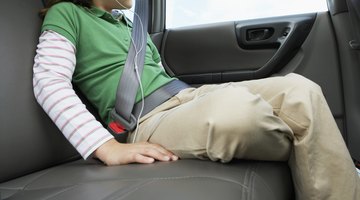
Height Requirement for a Child Riding in the Front Seat
Learn More
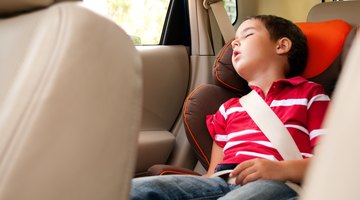
How Long Should Kids Stay in Booster Seats?
Learn More

High Back Booster Seats or Booster Seats with No Back?
Learn More

Rules in Ohio on Kids Riding in the Front Seat
Learn More

Is a Bouncer Harmful to a Baby's Development?
Learn More

Graco Snugride Infant Car Seat Base Installation
Learn More

What Age Do Children Learn to Ride a Bike?
Learn More

North Carolina's State Laws Regarding Kids Staying Home Alone
Learn More

How Old Should a Child Be to Be Dropped Off at the Mall Alone?
Learn More

How to Teach Violin to a Toddler
Learn More
