5 Things You Need to Know About Piercings

Text size:  |  Post a comment  |  Print  |   | 
Add to my favorites

1. Experience Counts in Body Piercing

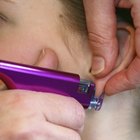
Lots of tattoo parlors offer body piercing, but this doesn't guarantee that piercer has enough experience to give you a successful piercing. Ask about the procedure and what experience or training the piercer has. Insist on inspecting facilities and seeing for yourself that all needles and equipment are kept sterile and in good working order, and that workers place everything that isn't sealed, such as your jewelry, in an autoclave to sterilize it. The establishment where you choose to get pierced should be clean and organized.

2. Exercise Good Piercing Hygiene

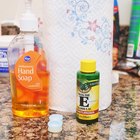
No matter what body part you've had pierced, it's important to keep the piercing clean. Wash the area often with gentle soap and warm water; use soap without dyes or perfumes to keep the area from drying out or becoming irritated. Clean your piercing at least three times daily for the first week after having the area pierced. You can also soak your piercing in salt water or use a sterile salt water spray, such as H2Ocean Purified Ocean Salt Water Piercing Spray. Never use hydrogen peroxide, alcohol or wound care salve on your piercings.

3. Be Especially Careful With Facial Piercings

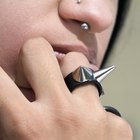
Tongue, lip and nose piercings look cool but they're especially difficult to take care of and keep clean. If you get a piercing in or around your mouth, avoid eating acidic foods like tomatoes or citrus fruits; the acid makes the pierced area sting and become irritated. Use alcohol-free mouthwash and clean out your mouth several times a day to cut down on the germs and bacteria in your mouth while your tongue or lip is healing. Be careful when you blow your nose or apply makeup until your nose piercing has healed completely to avoid tearing or irritating the pierced area.

4. Wear Quality Jewelry

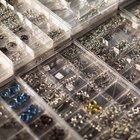
Cheap earrings or piercing jewelry can irritate piercings and infect them. Cheap metal and jewelry painted or coated with sterling silver can infect piercing sites if the paint flakes off the jewelry into the piercing site. Buy quality stainless steel jewelry in an appropriate size for your piercing. If you have sensitive skin, look for jewelry that is hypoallergenic and made to be gentle to your skin. Avoid jewelry with dangling pieces or jewels to avoid accidental snagging or tearing, especially while your piercing is still healing.

5. Clean Jewelry Often

Germs and dirt can find their way into your piercing site no matter how often you clean the area around it, so take the jewelry out at least once a week to clean and disinfect it, after your piercing has healed. Wash the jewelry thoroughly and inspect it for any loose pieces or signs of wear. Replace jewelry that becomes tarnished, discolored or that has loose clasps. Put the jewelry back in your piercing as soon as you've cleaned it to prevent the site from healing over and sealing up.

About this Author

Jessica Riendeau is a pharmacy technician and a home healthcare specialist. Her training includes sports injury braces, orthotics, diagnostic equipment, home safety and mobility aids and wound management. She is a certified compression garment fitter for lymphedema and post-mastectomy patients.

Last updated on: 11/18/09

Member Comments

0 down up

by beekay15 on August 13, 2008 at 9:50 AM

I pierced the cartilage in my ear last year and had to remove it because it would form a wad of tissue in the back. It did not seem infected, but the skin was purplish-red ever since it got pierced, so I took my earring out. Again, I piecred the same spot a while afterwards by a professional, and again it had the same affect. The earring was of good quality and I cleaned it constantly. Any other reason as to why my ear is reacting this way to a piercing?

-4 down up

by TehBuffy on August 29, 2008 at 9:18 AM

It's a cyst. A lot of piercings develop this little bubble that collects pus and blood (disgusting I know) I'm not entirely sure why it happens or how you can get rid of it but I know what it is. might wanna look up "earring cyst" on the internet.

+2 down up

by heitlynn143 on November 17, 2008 at 5:44 PM

it's not a cyst, its called a hypertrophic keloid (big name for scar tissue). there are numerous ways to reduce it or remove it completely, depending on how old it is. look up hypertrophic keloid reduction (check bmezine.com) or hit up my page http://www.myspace.com/piercingsbyheidi

+1 down up

by marzipanrobot on November 29, 2008 at 8:15 AM

try putting tea tree oil on it once-twice a day. i had the same thing happen when i got my tragus pierced and it was really frustrating. there were some websites that said NOT to apply tea tree oil, but i went ahead and tried it anyway because i didn't know what else to do.

tea tree oil is a natural anti-bacterial agent and it cleans and dries out the area that's affected. for me, it did wonders. some people say that it hinders the healing process because of the fact that it dries the area out, but it seemed to work for me. my problem re-occurred after disappearing for months, so i used the oil again after calling my piercer. some piercings take much longer than others to heal, so just give it time! it's annoying, but if you want to preserve the piercing, just work with it.

i would call your piercer too and see what they say. good luck!

0 down up

by Inti on January 14, 2009 at 9:47 PM

It's just a keloid. Crush up some aspirin in some tea tree oil and put some on the keloid twice a day.

0 down up

by britybabe on September 28, 2009 at 7:03 PM

Obviously everyone has a different view on this. And mind you, my way may not be the best way but I had this happen to me when I got my cartilage pierced 8 years ago.
I had it pierced and had a stud in it. The "bubble" that you're talking about got really annoying for me because the stud "pinched" it and it was very painful. Personally, I just kind of squeezed it a little bit (and it hurt) and some gunk came out. Then I put some antibacterial ointment on it and changed the earring to a loop (sleeper) that was able to be turned in the ear. From then on I cleaned it everyday with ear cleaner (provided at most piercing places) and just turned the loop around in the ear to distribute the cleaner in the piercing. That worked for me and I still have that same loop in my ear today. The bump is gone and has NEVER returned.
I hope maybe this helps.... Good Luck!

0 down up

by Skasyanchik on August 14, 2008 at 3:40 AM

I was thinking of haveing my girl pierce her bellybutton. I think it looks sexy.

0 down up

by Tula on October 9, 2008 at 2:52 PM

I got my belly pierced last year. It was so fun!! and it does look sexy. : ) Oh! and tell her it doesn't hurt. Getting it done hurt less than getting my second ear piercing.

0 down up

by sunshinedancerr on April 5, 2009 at 7:41 PM

I have mine done and I love it. It does look very sexy. The process is quick and it hurts less than donating blood or biting your tongue. Definitely pay attention to the jewelery that you buy outside of a piercing shop. The only time mine ever got infected was from cheap jewelery.

+1 down up

by felinity on October 3, 2008 at 6:41 PM

I pierced my daughters cartilage in her ear a few years back (yes I have a cosmetology license lol) and I did mine at the same time. Mine was fine but hers did as yours did. I took her to the Doctor and he said that for many people the ear does not have a good enough blood supply to heal the piercing properly and it can cause a lot of problems.

+3 down up

by heitlynn143 on November 17, 2008 at 5:42 PM

a cosmetology license means nothing to the piercing community. you should have a body artist certification from your local dept of health stating you are knowledgeable about blood bourne pathogens and proper training in the means of an apprenticeship from a reputable body piercer.

0 down up

by x0breeXcore0x on September 28, 2009 at 3:12 PM

That's not required in most states, most states you just do an apprentice type thing. There are no certificates.

0 down up

by x0breeXcore0x on September 28, 2009 at 3:13 PM

I meant no license..like heitlynn said, apprenticeship and bbp certificate,

-4 down up

by sjvsweety on January 30, 2009 at 2:11 PM

i have 15 piercings all done by myself some include mt tongue my lip my nose and my bellybutton and ears and none ever got an infection and healed up perfectly. Ive been piercing myself since i was 10 and l'm now 14 and I'm perfectly fine no diseases or anything i use a clean needle every time( my sister buys the sterile piercing needles online for me and i keep the piercing clean they are fine.

0 down up

by thenewzero on February 2, 2009 at 3:21 PM

Self-piercing is generally not recommended for a lot of reasons, not just the risk for disease and infection. Using a new, sterile needle every time is certainly better than not, but what you need most from a professional piercer is their experience with the actual piercing procedures. Pros have steady hands and often use clamps to pierce the skin -just- deep enough to keep piercings from moving or growing out. A good one will have done the procedure hundreds of times before, where each piercing experience is a new trial for the self-piercer.

I can tell you as a 23-year old with many piercings in her past, both self-made and professionally done (and still holding onto my lip piercing, and a few conches, rooks and daiths in my ears) that even though your piercings may appear fine now, you will know the difference in quality once you're done with a few of your piercings and let them heal. You will not be happy with the scars your self-done piercings have left on your body. The professional ones, on the other hand, may only be a tiny dent where your jewelry used to be. Do a quick google image search if you don't believe me (-especially- what rejecting piercings look like afterward) and really think about your piercings.

There is a great chance that some of your piercings (especially if you have eyebrow piercings, bellybutton or any surface piercings) are too shallow and will migrate over time as your body tries to reject them. You may be best taking out ones you have doubts about -before- this happens, letting them heal for 6 months-1 year and then getting them re-done by a professional. There's nothing worse than nasty piercing scars.

0 down up

by kat777 on April 3, 2009 at 1:31 AM

that makes you the exception, rather than the rule.

Tools

Track your daily calories. See how many calories you burn and consume.

BMI is a measurement of body fat based on height and weight.

Map your local running, cycling, walking and hiking routes and track your calorie burn.

Find us on the web, receive emails and use our mobile app to keep you motivated.

This tool will help you to decide whether to treat at home or see a doctor.