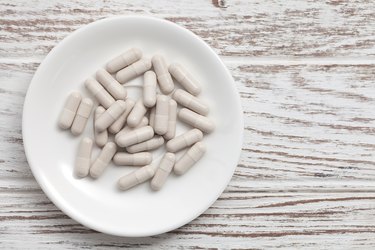
Glutathione is a powerful antioxidant that your body makes as a defense against the oxidative stresses of everyday life. Although the oral supplemental form is generally considered safe for many conditions, some glutathione side effects can result with its improper use.
The Role of Glutathione
Video of the Day
Glutathione is a tripeptide composed of high levels of three amino acids, namely cysteine, glycine and glutamic acid. The concentration of these compounds is the same concentration in your cells as glucose, potassium and cholesterol, according to the journal of IMCJ Integrative Medicine published in February 2014.
Video of the Day
Glutathione acts as a potent detoxification compound. It is also a cofactor for a variety of cellular enzymes in your body and is involved in several metabolic and signaling pathways. Unlike some other antioxidants, your body is capable of producing glutathione.
As you age, your levels of natural glutathione decline and this sets the stage for a wide range of age-related health problems, including neurodegenerative, lung, liver and cardiovascular diseases, immune disorders and the aging process itself, reports a study in the journal of Redox Biology published in December 2015.
Glutathione Supplements
Glutathione supplements may be useful to help protect you from diseases by counteracting oxidative stress. You can take it orally, topically, intravenously or inhaled, according to the IMCJ report in 2014. However, the effectiveness of oral supplementation in humans is limited because it is poorly absorbed and degraded in the intestine, reports Redox Biology, published in 2015.
The Food and Drug Administration has recognized glutathione-based oral dietary supplements as "Generally Recognized as Safe (GRAS)." There is no restriction on its availability in the oral form in the US due to its low absorption rate, according to Dermatology Practical and Conceptual published in January 2018.
But used intravenously, adverse glutathione side effects have been documented. Although approved for some conditions, such as for male infertility and severe liver disorders, glutathione intravenous use can cause the following symptoms, according to the study's report:
- Cutaneous eruptions including skin rashes
- Potentially fatal Stevens-Johnson syndrome
- Toxic epidermal necrolysis
- Severe abdominal pain
- Thyroid dysfunction
- Kidney dysfunction
- Lethal complications due to incorrect or unsterile method of IV administration
For those who have been exposed to, or ingested, a high level of poisonous heavy metals such as mercury, glutathione may be useful as a detoxicant. As a free radical scavenger, glutathione molecules may bind to the ions of the toxins rendering them inactive, according to a study in Toxics published in March 2015.
Oxidative stress is often implicated in cancer development. Because of its role in intracellular redox balance, an association exists between glutathione and cancer. Research in Oxidative Medicine and Cellular Longevity, published in May 2013, speculated glutathione may be a potential therapeutic strategy to fight the progression of some types of cancer and help overcome chemoresistance.
Due to its antioxidant and anti melanogenic properties, glutathione has been promoted as a systemic skin lightener for the treatment of hyperpigmentation. Oral products, such as KB glutathione, are marketed online as having a beneficial effect as an anti-aging, whitening and wrinkle cream.
However, as reported in the 2018 Dermatology Practical and Conceptual study, due to limited clinical evidence, the FDA does not approve glutathione for its use in skin lightening. Although the small sample size of the study found some significant reduction of skin melanin without adverse effects in the oral or topical application, of the participants receiving injectable glutathione, serious liver dysfunction was reported in 32 percent of patients and anaphylactic shock in one person.
Side Effects of Glutathione Compounds
As a precursor of glutathione, glutamine can lead to an increased synthesis of glutathione in the intestine. It is therefore often used in supplements. Before taking an oral glutamine supplement or any compound of glutathione, Mayo Clinic suggests you consider the following:
- If you have age-related liver, kidney or heart problems you may need a dose adjustment.
- Use caution if you are pregnant or breastfeeding because there has not been adequate studies to determine the potential risks
of glutamine.
- Inform your doctor if you have any allergies or are taking any prescription
or non-prescription medications, drink alcohol or smoke tobacco, as interactions
may occur.
- If glutamine is being used in children younger than 5 years of age, be aware that the safety and efficacy of this medication has not been established for that age group.
- If you have liver disease, taking glutathione supplements may make your condition worse.
Glutamine can cause some side effects, warns Mayo Clinic. These may go away during treatment as your body adjusts to the supplement. Some of the most common symptoms may include:
- Cough or hoarseness
- Frequent urge to have a bowel movement
- Straining while passing stool
Some, but not all, of less common but more serious side effects may occur, including:
- Decreased touch sensation
- Body, joint and muscle pains in back, breasts, chest
- Dark or decreased urination, pain or burning
- Constipation, diarrhea, gas, indigestion, nausea, vomiting blood
- Light-colored stools
- Wrinkled or yellowing of skin
- Swelling of hands, feet, joints, stomach or face
If you're considering the use of glutathione, be sure to consult your health care provider before starting any supplement regimen. Self-treating a serious health condition or avoiding a proper diagnosis may have unwanted consequences.
- IMCJ Integrative Medicine: "Glutathione!"
- Redox Biology: "Effects of N-Acetylcysteine, Oral Glutathione (GSH) and a Novel Sublingual Form of GSH on Oxidative Stress Markers: A Comparative Crossover Study"
- Dermatology Practical and Conceptual: "Glutathione for Skin Lightening: A Regnant Myth or Evidence-Based Verity?"
- Toxics: "Toxicity of Glutathione-Binding Metals: A Review of Targets and Mechanisms"
- Oxidative Medicine and Cellular Longevity: "Role of Glutathione in Cancer Progression and Chemoresistance"
- NIH PubChem: "Glutamine (Compound)"
- MayoClinic: "Glutamine (Oral Route): Before Using"
- MayoClinic: "Glutamine (Oral Route): Side Effects"