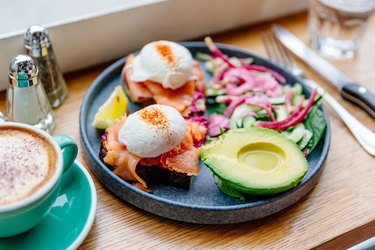
Eating is so often a joyous activity. And, depending on what we're noshing on, our food can make us feel happy in return. It's a win-win: The scientific evidence around the connection between what you eat and how you feel mentally is building.
"The relationship between food and long-term mental wellness has been a fairly foreign concept until recently," registered dietitian Carolyn Williams, PhD, RD, author of the cookbook Meals that Heal tells LIVESTRONG.com.
Video of the Day
Video of the Day
"Growing research suggests that certain foods and nutrients play a much bigger role than we ever thought. Focusing on certain foods could potentially complement treatment for depression or anxiety, and promote overall mental wellness."
To help you eat for happiness, we pulled together 19 foods that research suggests have the potential to boost your mood.
Note that while these foods are associated with decreased depression and anxiety symptoms and/or overall improved mental wellness, eating these foods won't necessarily banish depression, anxiety or other mental health conditions or symptoms. If you live with a mental health condition or are struggling, it's important to work with a health professional as your first line of defense.
1. Walnuts
This brain-shaped nut is quite good for your noggin. Walnut eaters were observed to have 26 percent lower depression scores compared to non-nut eaters, per a January 2019 study in the journal Nutrients.
And people who ate walnuts said they felt more energetic, had a greater interest in doing activities and overall had fewer feelings of helplessness.
2. Green Tea
Drinking green tea on the regular is linked to lower anxiety levels, per an October 2017 study review in Phytomedicine. Researchers think the benefits come from a combination of L-theanine, a compound naturally found in tea leaves, and caffeine.
Drinking green tea is associated with other brain benefits as well, including supporting memory and improving attention, according to the review.
Related Reading
3. Probiotic Kimchi
Fermented foods such as kimchi, kefir, kombucha, sauerkraut and miso are rich sources of probiotics. A systematic review and meta-analysis of 34 studies in July 2019 in Neuroscience and Biobehavioral Reviews concluded that probiotics had "small but significant effects" on depression and anxiety.
More research is still needed to fully support the brain benefits of fermented foods, but the big picture is that adding fermented foods or probiotics to your diet has the potential to help.
4. Probiotic Yogurt
The combination of probiotics and vitamin D (a nutrient that many yogurts offer) appears to be beneficial for mental health. A June 2018 study in the journal Progress in Neuro-psychopharmacology & Biological Psychiatry randomly assigned a combination of probiotic and vitamin D supplements to adults with diabetes and heart disease and gave another group a placebo.
After 12 weeks, those who received the probiotic and D supplement were observed to have significantly improved depression and anxiety scores.
5. Oysters and Mussels
These bivalves — oysters, especially — rank highest on the Antidepressant Food Score, per a September 2018 study in the World Journal of Psychiatry.
Researchers designed the scoring system in an effort to identify the most nutrient-dense foods that are tied to preventing depression and depressive symptoms or promoting recovery from these ailments.
6. Bell Peppers
Also in the World Journal of Psychiatry study, bell peppers were one of the highest-scoring plant foods on the Antidepressant Food Score — perhaps for their vitamin C content, which was a key nutrient researchers suspect has antidepressant properties.
Red peppers are a great source of vitamin B6, and research suggests that women (specifically middle-aged and older adults) who eat a diet that's low in B6 are at a higher risk of having moderate to severe depression, per a study in the November 2020 issue of Nutrients. (Note: This study uses gendered language, but LIVESTRONG.com tries to avoid using gendered language like "man" and "woman" in favor of more inclusive language.)
Nuts, fish and meats are also great sources of B6.
7. Low-Fat Milk
Another vitamin that researchers found to have antidepressant benefits is vitamin B12, per the World Journal of Psychiatry study. Low-fat milk is on the shortlist of the richest food source of B12 — one cup offers 51 percent of your daily recommended dose, per the USDA.
If you don't like — or can't drink — milk, look to clams, king crab, lean beef and fortified cereals for B12.
8. Berries
Pick your favorite or eat a combination of strawberries, raspberries, blueberries and blackberries. Eating more fruits and vegetables — especially berries — is linked to better mental health, per a January 2020 review in Nutrients.
Specifically, people who ate more berries were observed to have better moods, more life satisfaction and optimism and fewer depressive symptoms.
But blueberries get a special shoutout here: They are one of the top food sources of the mineral manganese, providing 22 percent of your daily value per cup, according to the USDA.
Getting enough manganese in your diet is important for your mental health: Japanese adults with the lowest levels of manganese were observed to be more likely to have symptoms of depression and anxiety, according to an April 2019 study in the journal Nutrients.
9. Citrus
In that same January 2020 review in Nutrients, researchers also identified citrus fruits as being particularly beneficial for mental wellness.
Citrus eaters experienced less stress and were less likely to have anxiety or depression.
10. Leafy Green Vegetables
Leafy greens like spinach, kale and broccoli are packed with vitamins that benefit brain health, including vitamin K, lutein and folate, which research suggests can help slow cognitive decline, per Harvard Health Publishing.
Leafy greens have been shown to combat inflammation and severe depression is linked to brain inflammation, according to a March 2015 study in JAMA Psychiatry. Plus, a diet rich in dark leafy vegetables is associated with decreased a specific marker of inflammation over time over time, per December 2019 research in the American Journal of Lifestyle Medicine.
11. Avocado
Avocado is one of the best sources of healthy unsaturated fats. People who ate more monounsaturated and polyunsaturated fats were observed to be less likely to have anxiety, per a February 2020 study in Annals of General Psychiatry. Those who ate more saturated fat were more likely to have anxiety; and the more saturated fat people ate, the higher their odds of anxiety were.
Plus, the creamy green fruit has been tied to increased diversity in your gut microbiome. And that's valuable for your overall mental health, according to the 2016 International Review of Neurobiology.
12. Dried Apricots
This dried fruit, as well as prunes and raisins, offers healthy doses of plant-based iron, per the U.S. National Library of Medicine. One of the symptoms sometimes associated with iron deficiency are sensitivity or irritability. And there's some research that suggests iron deficiency is linked to anxiety.
When researchers looked at kids who had iron deficiency as infants, they found that the children's parents and teachers reported increased concern about the children's anxiety — and this was years after their iron deficiency was remedied, per an older April 2000 study in the journal Pediatrics.
Animal foods like liver, red meat, salmon and tuna are other great sources of iron, especially because your body absorbs it more efficiently than iron from plant foods.
13. Salmon
Salmon and other cold-water fish, including sardines, tuna and trout, are considered mood-boosting foods. They're recommended for their omega-3 fats — specifically, DHA — which has been linked to lower rates of depression and anxiety, per a June 2013 study in the British Journal of Nutrition.
In addition, eating plenty of foods rich in omega-3 fats is one of five key dietary recommendations for preventing depression in a March 2016 article in Nutritional Neuroscience.
14. Whole-Grain Bread
Whole grains are one of the foods highlighted in that 2016 Nutritional Neuroscience study as beneficial. Plus, women who eat moderate amounts of whole grains were observed to have less anxiety and depression compared to women who eat fewer whole grains, according to a November 2017 study in the European Journal of Nutrition.
And conversely, women who ate more refined "white" grains had greater odds of depression and anxiety. Even though the study was conducted on both men and women, researchers didn't observe these relationships in the men in their study. (Note: This study uses gendered language, but LIVESTRONG.com tries to avoid gendered language, in favor of more inclusive terms.)
15. Dark Chocolate
Not that you need an excuse to indulge in a little bit of dark chocolate, but here's a great reason to satisfy your craving: A 1-ounce square of dark chocolate delivers 15 percent of your daily recommendation for magnesium, per the USDA, and that's important because research shows magnesium may help combat anxiety.
One October 2010 review of natural anxiety treatments in Nutrition Journal found magnesium to be a possible remedy, while a more recent January 2017 review in Nutrients that analyzed 18 different studies concluded that magnesium might help treat mild cases of anxiety.
16. Eggs
Eggs are an excellent source of choline: 1 large egg has more than a quarter of your daily choline needs, according to the USDA.
Here's why that matters: People with low blood levels of choline are observed to be more likely to have higher anxiety levels, per an October 2019 study in the American Journal of Clinical Nutrition.
17. Firm Tofu
Tofu, and specifically firm tofu, is one of the leading ways to add the mineral copper to your diet: 1 cup delivers slightly more than an entire day's worth of copper, per the USDA.
Researchers observed that those who didn't get enough copper were more likely to have depression and anxiety symptoms compared to adults who had higher levels of copper in their diets, per the April 2019 study in Nutrients.
- Phytomedicine: "Green tea effects on cognition, mood and human brain function: A systematic review"
- Ann Gen Psychiatry: "Higher dietary fat quality is associated with lower anxiety score in women: a cross-sectional study"
- Nutrients: "Lower Depression Scores among Walnut Consumers in NHANES"
- Nutrients: "Depressive Symptoms in Middle-Aged and Elderly Women Are Associated with a Low Intake of Vitamin B6: A Cross-Sectional Study"
- Neurosci Biobehav Rev: "Prebiotics and probiotics for depression and anxiety: A systematic review and meta-analysis of controlled clinical trials"
- Depression & Anxiety: "Efficacy of probiotics on anxiety—A meta‐analysis of randomized controlled trials"
- Nutrients: "PROFAST: A Randomized Trial Assessing the Effects of Intermittent Fasting and Lacticaseibacillus rhamnosus Probiotic among People with Prediabetes"
- European Journal of Nutrition: "The association of whole and refined grains consumption with psychological disorders among Iranian adults"
- Prog Neuropsychoparmacol Biol Psychiatry: "The effects of vitamin D and probiotic co-supplementation on mental health parameters and metabolic status in type 2 diabetic patients with coronary heart disease: A randomized, double-blind, placebo-controlled trial"
- British Journal of Nutrition: "Dietary intake of fish and PUFA, and clinical depressive and anxiety disorders in women"
- Nutritional Neuroscience: "Dietary recommendations for the prevention of depression"
- Pediatrics: "Poorer Behavioral and Developmental Outcome More Than 10 Years After Treatment for Iron Deficiency in Infancy"
- U.S. National Library of Medicine: "Iron in diet"
- Nutrients: "Low Zinc, Copper, and Manganese Intake is Associated with Depression and Anxiety Symptoms in the Japanese Working Population: Findings from the Eating Habit and Well-Being Study"
- USDA Nutrient Database: "Manganese, Mn"
- NIH: "Manganese"
- USDA: Tofu, Firm
- International Review of Neurobiology: "The Importance of Diet and Gut Health to the Treatment and Prevention of Mental Disorders"
- MyFoodData: "Top 10 Foods Highest in Fiber"
- AJCN: "Choline in anxiety and depression: the Hordaland Health Study"
- MyFoodData: "Top 10 Foods Highest in Choline"
- Neuropharmacology: "Magnesium deficiency induces anxiety and HPA axis dysregulation: Modulation by therapeutic drug treatment"
- MyFoodData: "Top 10 Foods Highest in Magnesium"
- Nutrients: "Fruit and Vegetable Intake and Mental Health in Adults: A Systematic Review"
- Frontiers in Psychology: "Intake of Raw Fruits and Vegetables Is Associated With Better Mental Health Than Intake of Processed Fruits and Vegetables"
- MyFoodData: "Top 10 Foods Highest in B12"
- World Journal of Psychiatry: "Antidepressant foods: An evidence-based nutrient profiling system for depression"
- USDA: "Skim Milk"
- USDA: "Avocado"
- USDA: "Eggs"
- Harvard Health Publishing: "Foods linked to better brainpower"
- JAMA Psychiatry: "Role of Translocator Protein Density, a Marker of Neuroinflammation, in the Brain During Major Depressive Episodes"
- American Journal of Lifestyle Medicine: "Rising Plasma Beta-Carotene Is Associated With Diminishing C-Reactive Protein in Patients Consuming a Dark Green Leafy Vegetable–Rich, Low Inflammatory Foods Everyday (LIFE) Diet"
- Nutrients: "The Effects of Magnesium Supplementation on Subjective Anxiety and Stress—A Systematic ReviewThe Effects of Magnesium Supplementation on Subjective Anxiety and Stress—A Systematic Review"
- Nutrition Journal: "Nutritional and herbal supplements for anxiety and anxiety-related disorders: systematic review"
- USDA: "Dark Chocolate"