Foot Cramps & Stretches
You may experience painful and disruptive foot cramps while exercising or sleeping. Mineral or electrolyte deficiencies, poor circulation, obesity and alcohol consumption may also cause a foot cramp; as well as dehydration, improper footwear and muscle fatigue. Injuries such as plantar fasciitis, a muscle strain or pinched nerve also can lead to foot cramps. Although treatment may vary depending on the cause, stretching while suffering from a foot cramp can help alleviate pain and may prevent future cramps.
Foot Bend and Foot Pointer
The foot bend and foot pointer stretches lengthen or stretch the soft tissue on the bottom of the foot and the top of the foot, respectively. For the foot bend, start in a seated position with your legs crossed, affected leg on top. With your hand, gently pull back on your toes. If you cannot reach your foot, use a towel or resistance band. In the same start position, perform the foot pointer, but instead push your foot forward or down. Hold stretches for 15 to 30 seconds and repeat three times daily.
- The foot bend and foot pointer stretches lengthen or stretch the soft tissue on the bottom of the foot and the top of the foot, respectively.
- For the foot bend, start in a seated position with your legs crossed, affected leg on top.
Transverse Arch
How to Stretch the Foot Arch
Learn More
The transverse arch is along the ball of the foot, and stretching the muscles that support the arch may alleviate cramping. In a seated position with your legs crossed and affected foot on top, grasp your foot on either side, placing your fingers over the ball of your foot. With both hands, push down or forward on your foot to expose the knuckles of your toes, pull back and repeat. Repeat five to 10 times several times daily.
- The transverse arch is along the ball of the foot, and stretching the muscles that support the arch may alleviate cramping.
- With both hands, push down or forward on your foot to expose the knuckles of your toes, pull back and repeat.
Calf Muscles
Calf stretches can prevent tight calf muscles, which can pull on the Achilles tendon and plantar fascia and lead to foot cramps. Standing with a staggered stance or lunge stance, lean forward, keeping your back heel on the floor; you should feel a stretch in the calf of the back leg. You also may stretch your calf in a seated position with your legs straight, and pulling your feet toward you using a towel or resistance band. Hold stretches for 15 to 30 seconds and repeat three times daily.
- Calf stretches can prevent tight calf muscles, which can pull on the Achilles tendon and plantar fascia and lead to foot cramps.
- You also may stretch your calf in a seated position with your legs straight, and pulling your feet toward you using a towel or resistance band.
Considerations
Shin Stretches for Runners
Learn More
When you are having a severe foot cramp, static stretches may be too uncomfortable. Active stretches such as ankle circles and toe curls may be more comfortable than holding a position. Stretching may help alleviate the foot cramp, but unless muscle tightness is the cause, they will not prevent future foot cramps. You can include ice, heat, massage and strengthening exercises in foot cramp treatments, depending on the cause or injury. Consult your physician if you suffer from chronic or worsening foot cramps.
- When you are having a severe foot cramp, static stretches may be too uncomfortable.
- You can include ice, heat, massage and strengthening exercises in foot cramp treatments, depending on the cause or injury.
Related Articles
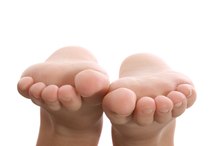
How to Stretch the Foot Arch
Learn More
Shin Stretches for Runners
Learn More
My Heel Hurts & I Have Sharp Pain When I Walk
Learn More
How Long Does it Take to Rehabilitate a Snapped Achilles Tendon?
Learn More
Symptoms of a Torn Tendon in the Big Toe
Learn More

Foot Pain When First Walking in the Morning
Learn More
Stretching Exercises for ACL Injuries
Learn More
How to Increase Flexibility in My Big Toes
Learn More
Signs & Symptoms of a Torn Tendon in the Foot
Learn More
Metatarsalgia Exercises
Learn More
References
Writer Bio
Since 2007 Hannah Mich has written e-newsletters and been published in the "Missouri Journal of Health, Physical Education, Recreation and Dance." She has a Bachelor of Science in exercise science from Truman State University and a Master of Education in applied kinesiology from the University of Minnesota.