
What does fact checked mean?
At SportsRec, we strive to deliver objective content that is accurate and up-to-date. Our team periodically reviews articles in order to ensure content quality. The sources cited below consist of evidence from peer-reviewed journals, prominent medical organizations, academic associations, and government data.
- Mayo Clinic: Hand Exercises for People with Arthristis-Finger Bend
- Mayo Clinic: Hand Exercises for People with Arthritis -- Walk Your Fingers
The information contained on this site is for informational purposes only, and should not be used as a substitute for the advice of a professional health care provider. Please check with the appropriate physician regarding health questions and concerns. Although we strive to deliver accurate and up-to-date information, no guarantee to that effect is made.
Hand Exercises for Writing
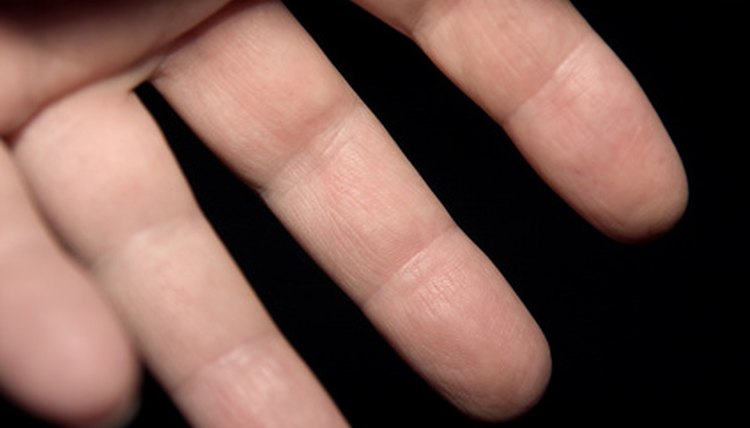
Constant typing or writing can lead to stiffness in your hands, wrist and fingers. Simple exercises you can do at your desk or work area can alleviate pains resulting from this stiffness. Daily stretching and exercises of the hand can also help ease tension in your hands.
Finger Walk
The finger walk exercise is designed to spread and lengthen the joints from your fingers down to the palm of your hands. Place both hands on a flat surface such as a desk, table or wall. Spread your fingers slightly apart and, one at a time, move your fingers toward your thumbs while keeping the other fingers still. Reverse the process and walk your index, middle, ring and pinky fingers away from your thumb. Repeat this process two or three times.
Wrist Circling
When you write, forces of gravity and the table act on the wrist, creating tension and stress on your wrist muscles and bones. Wrist circles can be done at your desk or while standing. Start by extending your arms straight out with your palms facing down. Make a fist with your fingers wrapped around your thumb. Rotate your wrists clockwise and then counter-clockwise six times in each direction.
Shoulder to Finger Roll
This exercises stretches your arms from your fingers up to your shoulders. Sit upright on the floor and extend your legs straight out in front of you. Place the palms of your hands on the floor next to your hips and flatten your fingers so they are pointing outward. Tilt your body weight to the left, rolling support for your body weight from the palm of your hand to your fingertips. Shift your body weight to the right, rolling support for your body weight from your palm to your fingertips. Repeat this process 10 to 15 times.
Finger Bend
This exercise is designed to stretch the muscles in your fingers before, during or after writing or typing. Extend your arms and fingers straight out in front of your chest in a "mummy" position. Keeping your knuckles and wrists straight, bend your fingers until they face your body and then straighten them out. Do not create a fist while bending your fingers; this negates the tension and stretching of the finger muscles.
References
Writer Bio
Paul Lin has been writing professionally since 2010. He has written scripts for the National Science Foundation and short films that have won awards at film festivals. His knowledge of broad topics along with visual scriptwriting allows him to write articles that brings words to life. Lin holds a Bachelor of Arts in scriptwriting from the University of North Texas.