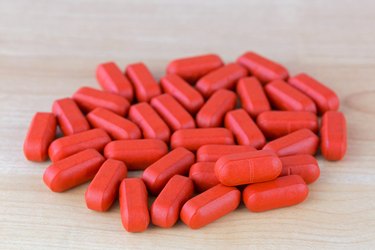
Iron-deficiency anemia can leave you feeling drained, headachy and cold. When your body is low on iron, it can't form red blood cells to carry oxygen to different tissues and organs, so some people might need to take iron supplements for anemia.
But proceed with caution. You should talk to your doctor to figure out exactly why your body is depleting your iron stores faster than you can replenish them with your diet. Your doctor can also guide you on the proper dosage of iron supplement, so you can avoid an iron overdose.
Video of the Day
Video of the Day
Tip
Most healthy adults get all the iron they need from the food they eat and don't need supplementation. Although a doctor may prescribe a larger dosage if you are anemic, you will find most over-the-counter pills have between 18 and 65 milligrams of elemental iron, which is sufficient.
What Causes Anemia?
Characterized by such symptoms as tiredness, paleness, difficulty breathing, headaches, dizziness, feeling cold and having a fast heartbeat, anemia occurs when your body doesn't get enough iron and its stores run low. This could happen for several reasons, but the most common causes of low iron in the body are because a person is losing blood (either through normal menstruation or severe reasons like cancer or ulcers) or because their diet is insufficient.
The Cleveland Clinic lists common dietary sources of iron as beef, beef liver, oysters, tuna, leg of lamb or turkey legs. Plant sources are kidney beans, tofu, whole-wheat bread, peanut butter, whole-grain enriched cereals, spinach and lentils. Iron is not as easily absorbed from plant sources, so vegetarians and vegans need to consume a greater amount of iron.
According to the National Institutes of Health, adult males need 8 milligrams of iron a day, and adult women age 50 and younger need 18 milligrams a day if they are neither pregnant nor lactating. If they are pregnant, they need 27 milligrams, and if they are lactating, they need 9 milligrams. Once they are older than 50, women need the same 8 milligrams as men. People consuming their iron from plant sources need 1.8 times the recommended amount for their demographic.
Taking Iron Supplements for Anemia
When you can't get as much iron as your body needs from dietary sources, you can turn to iron supplements for anemia. There are several types of iron supplements, including capsules, tablets and liquids. These different types of iron supplements will also deliver iron in different forms, such as ferrous sulfate, ferrous gluconate, ferric citrate and ferric sulfate.
Iron supplements' dosage can vary depending on whom they're marketed for. As the National Institutes of Health points out, multivitamins for women have the 18 milligrams that a non-pregnant, non-lactating adult woman needs, but multivitamins created for men or seniors (male or female) will typically have either no iron or very little so as to avoid iron overdose.
If it is a supplement containing only iron — which doctors might recommend to people who are anemic but not deficient in any other nutrient — those iron supplements may have a dosage far exceeding the recommended daily value. Iron supplements with a dosage of 65 milligrams, about 360 percent of the daily recommended value, are common.
The U.S. National Library of Medicine recommends talking to your doctor or health care provider, who can tell you how great a dosage you should take and the types of iron supplements that are best. This is especially important in the case of iron supplements, as too much iron can be toxic. The Cleveland Clinic agrees that your doctor will know best but notes that most iron-deficient adults will take 100 to 200 milligrams.
It's extremely important you do not take too much iron in the form of supplementation. In the case of iron overdose, a person can suffer organ failure, go into a coma, have convulsions and even die.
Once You Start Supplementing
Once you have your iron supplements and your doctor's instructions on how to take it, you're probably ready to get back to feeling like yourself as soon as possible. What are some other things you should know about taking iron supplements for anemia?
There's some debate about whether you should take iron with food or not. Iron is best absorbed when it is taken on an empty stomach, but this could cause nasty side effects like cramps, nausea and diarrhea, so you might find you feel better when you take it with at least a small amount of food.
For best results, take your iron supplement with a source of vitamin C, as vitamin C helps your body absorb the iron. This could be in the form of another supplement, or you could have a glass of orange juice.
You could also spread your intake of supplements out throughout the day, which will help you absorb more of it. You should also avoid taking iron alongside certain foods that could inhibit the absorption, such as milk, caffeine, antacids and calcium. Other interference foods could be those high in fiber like whole grains, raw vegetables and bran.
Iron supplements for anemia aren't without their side effects. The U.S. National Library of Medicine advises that taking iron can cause constipation or diarrhea, and especially high doses can induce nausea and vomiting. People on iron tablets also might notice they have black stools, but this is actually a good sign that the supplement is working. It is only a cause of concern if the stools are tarry or have streaks, or if you are also feeling cramps, sharp pains and soreness in your stomach.
How quickly can you expect to have your iron stores back to normal? It depends on your severity and several other factors. The Cleveland Clinic indicates that it could be as fast as one week, but it might take up to a month.
On the other hand, the U.S. National Library of Medicine says people should expect it to take about two months of supplementation to get their iron levels back to normal, and they should continue taking supplements for another six months to a year to build up their stores.
Once you are no longer anemic, be sure to address the problem of why your iron levels were depleted in the first place and make the necessary lifestyle changes to ensure you don't fall short again.
Was this article helpful?
150 Characters Max
0/150
Thank you for sharing!
Thank you for your feedback!