What does fact checked mean?
At Healthfully, we strive to deliver objective content that is accurate and up-to-date. Our team periodically reviews articles in order to ensure content quality. The sources cited below consist of evidence from peer-reviewed journals, prominent medical organizations, academic associations, and government data.
- Journal of Medicinal Food: Effects of a Spirulina-Based Dietary Supplement on Cytokine Production From Allergic Rhinitis Patients
- Journal of Medicinal Food: Effects of a Spirulina-Based Dietary Supplement on Cytokine Production From Allergic Rhinitis Patients
- MedlinePlus: Blue-Green Algae
The information contained on this site is for informational purposes only, and should not be used as a substitute for the advice of a professional health care provider. Please check with the appropriate physician regarding health questions and concerns. Although we strive to deliver accurate and up-to-date information, no guarantee to that effect is made.
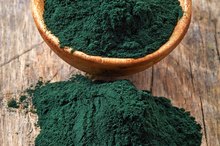
Spirulina, a nutrient-dense type of blue-green algae, is often touted for its rich concentrations of vitamins, minerals and antioxidants 4. While research has determined a number of potential health applications for spirulina, the risks of this supplement should not be overlooked. Spirulina has often been promoted for everything from lowering cholesterol and increasing energy to treating premenstrual syndrome and depression. It should be noted, however, that scientific proof backing these uses is lacking.
Exceptional Nutritional Value
One of the most notable advantages of spirulina is its complete nutritional profile. University of Maryland Medical Center notes that this unique food is rich in B-complex vitamins, zinc, vitamin E, beta carotene, copper, selenium, iron and essential fatty acids 1. In addition, spirulina is about 62 percent protein by weight. The nutritional completeness of spirulina makes it a functional food with multivitaminlike properties. Spirulina can be useful in avoiding nutritional deficiencies and promoting overall good health.
- One of the most notable advantages of spirulina is its complete nutritional profile.
- The nutritional completeness of spirulina makes it a functional food with multivitaminlike properties.
Immune-Boosting and Allergy-Protecting
Spirulina Side Effects
Learn More
Spirulina may help increase the production of antibodies -- substances that help fight off infections and chronic diseases. UMMC notes, however, that these effects have not been tested in humans. A study published in 2005 in the "Journal of Medicinal Food" found that spirulina supplementation was able to help reduce the effects of allergic rhinitis -- allergies of the nose, usually in response to dust, pollen or dander 3. According to UMMC, in test tube trials, spirulina was also effective in promoting the growth of good gut bacteria, known as probiotics.
- Spirulina may help increase the production of antibodies -- substances that help fight off infections and chronic diseases.
- According to UMMC, in test tube trials, spirulina was also effective in promoting the growth of good gut bacteria, known as probiotics.
Watch Out for Toxins
The most well-known drawback of spirulina is its potential to be contaminated with toxins known as micocystins, which can absorb heavy metals. As nutrition expert Michael Greger explains, although spirulina itself is not a toxin-producing algae, the harvesting process can inadvertently include small amounts of other algae that do produce toxins. Greger notes that this explains many tests that have found various spirulina supplements to be contaminated with toxins. UMMC, however, notes that spirulina can only absorb heavy metals from the water in which it's grown; therefore, it is important to purchase it from a trusted manufacturer.
- The most well-known drawback of spirulina is its potential to be contaminated with toxins known as micocystins, which can absorb heavy metals.
- As nutrition expert Michael Greger explains, although spirulina itself is not a toxin-producing algae, the harvesting process can inadvertently include small amounts of other algae that do produce toxins.
Safety and Considerations
Side Effects of Limu
Learn More
MedlinePlus rates spirulina supplements as "possibly safe" for most people, so long as they are free of microcystins, toxic metals and harmful bacteria. Because spirulina stimulates the functioning of the immune system and can increase the symptoms of autoimmune diseases, MedlinePlus recommends those with diseases such as multiple sclerosis, lupus and rheumatoid arthritis avoid it. Pregnant and breast-feeding women should avoid spirulina to be safe, and because children are more sensitive to contaminants, it's even more important that they consume a product free of contaminants.
Related Articles

Spirulina Side Effects
Learn More

Side Effects of Limu
Learn More
Chlorella Spirulina Detox Symptoms
Learn More

What Are the Dangers of Chlorella?
Learn More
Soy Vs. Hemp Protein
Learn More

What Is Liquid Lecithin?
Learn More

How to Use 5 HTP With Rhodiola Rosea to Keep Serotonin for the Brain
Learn More
Are Spirulina & Fish Oil Safe if Taken Together?
Learn More
Side Effects of Cellular Zeolite
Learn More
Can You Take Spirulina in Addition to a Multivitamin?
Learn More
References
- University of Maryland Medical Center: Spirulina
- NutritionFacts.org: Infant Seizures Linked to Mother’s Spirulina Use
- Journal of Medicinal Food: Effects of a Spirulina-Based Dietary Supplement on Cytokine Production From Allergic Rhinitis Patients
- MedlinePlus: Blue-Green Algae
- Park HJ, Lee YJ, Ryu HK, Kim MH, Chung HW, Kim WY. A randomized double-blind, placebo-controlled study to establish the effects of spirulina in elderly Koreans. Ann Nutr Metab. 2008;52(4):322-8. doi:10.1159/000151486
- Man LX. Complementary and alternative medicine for allergic rhinitis. Curr Opin Otolaryngol Head Neck Surg. 2009 17(3):226-31. doi:10.1097/MOO.0b013e3283295791
- Cingi C, Conk-Dalay M, Cakli H, Bal C. The effects of spirulina on allergic rhinitis. Eur Arch Otorhinolaryngol. 2008 265(10):1219-23. doi:10.1007/s00405-008-0642-8
- Lee EH, Park JE, Choi YJ, Huh KB, Kim WY. A randomized study to establish the effects of spirulina in type 2 diabetes mellitus patients. Nutr Res Pract. 2008 2(4):295-300. doi:10.4162/nrp.2008.2.4.295
- Mani UV, Desai S, Iyer U. Studies on the Long-Term Effect of Spirulina Supplementation on Serum Lipid Profile and Glycated Proteins in NIDDM Patients. Journal of Nutraceuticals, Functional & Medical Foods, 2000;2:3, 25-32. doi:10.1300/J133v02n03_03
- Mathew B, Sankaranarayanan R, Nair PP, et al. Evaluation of chemoprevention of oral cancer with Spirulina fusiformis. Nutr Cancer. 1995;24(2):197-202. doi:10.1080/01635589509514407
- Torres-duran PV, Ferreira-hermosillo A, Juarez-oropeza MA. Antihyperlipemic and antihypertensive effects of Spirulina maxima in an open sample of Mexican population: a preliminary report. Lipids Health Dis. 2007;6:33. doi:10.1186/1476-511X-6-33
- U. V. Mani, S. Desai & U. Iyer (2000) Studies on the Long-Term Effect of Spirulina Supplementation on Serum Lipid Profile and Glycated Proteins in NIDDM Patients. Journal of Nutraceuticals, Functional & Medical Foods, 2:3, 25-32. doi:10.1300/J133v02n03_03
- Miczke A, Szulińska M, Hansdorfer-Korzon R, et al. Effects of spirulina consumption on body weight, blood pressure, and endothelial function in overweight hypertensive Caucasians: a double-blind, placebo-controlled, randomized trial. Eur Rev Med Pharmacol Sci. 2016;20(1):150-6.
Writer Bio
Clay McNight is currently a nutrition writer with Demand Media Studios.