What does fact checked mean?
At Healthfully, we strive to deliver objective content that is accurate and up-to-date. Our team periodically reviews articles in order to ensure content quality. The sources cited below consist of evidence from peer-reviewed journals, prominent medical organizations, academic associations, and government data.
- Academy of Nutrition and Dietetics: What is Glycemic Index?
- Kids Eat Right: A to Avocados
- Academy of Nutrition and Dietetics: Healthy Fats?
- Office of Dietary Supplements: Vitamin B6
- Office of Dietary Supplements: Vitamin E
- Office of Dietary Supplements: Vitamin C
The information contained on this site is for informational purposes only, and should not be used as a substitute for the advice of a professional health care provider. Please check with the appropriate physician regarding health questions and concerns. Although we strive to deliver accurate and up-to-date information, no guarantee to that effect is made.
Avocados, a Low Glycemic Food
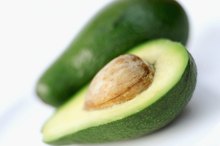
A dark green, bumpy exterior and teardrop shape give the avocado a unique look, but there is much more to this super fruit than meets the eye. As a low-glycemic food, avocados are an excellent choice for people who strive for stable blood sugar levels. Low-glycemic foods do not raise blood sugar as much or as quickly as high-glycemic foods.
Avocados and the Glycemic Index
According to the Academy of Nutrition and Dietetics, the glycemic index is a rating system that shows how quickly blood sugar levels will rise after eating a certain food. Low-glycemic index foods are useful for people who need to control their blood sugar levels or are trying to reverse insulin resistance. However, avocados contain so few carbohydrates that they do not have an official glycemic index value. The American Journal of Clinical Nutrition states that although there are not enough carbohydrates in an avocado to measure the fruit's official glycemic index, it is not likely that eating a large number of avocados would cause a "significant rise in blood sugar." This means that although avocados are not included on the glycemic index list, they are still a low-glycemic food because they have a low-glycemic load 1.
- According to the Academy of Nutrition and Dietetics, the glycemic index is a rating system that shows how quickly blood sugar levels will rise after eating a certain food.
- This means that although avocados are not included on the glycemic index list, they are still a low-glycemic food because they have a low-glycemic load 1.
Avocados and Carbohydrates
List of Food Carb Values
Learn More
The healthiest type of carbohydrates are naturally occurring, such as those found in fruits like the avocado. A 1-ounce serving of avocado contains only 3 grams of carbohydrates. Fiber takes up 2 grams of carbohydrates in the avocado, leaving less than 1 gram of carbohydrates for sugar. For the avocado to register on the glycemic index chart, it would need at least 25 grams of carbohydrates in one serving. The extremely low level of carbohydrates and sugar in avocados makes it a low-glycemic food.
- The healthiest type of carbohydrates are naturally occurring, such as those found in fruits like the avocado.
- The extremely low level of carbohydrates and sugar in avocados makes it a low-glycemic food.
Avocados and Fat
Avocados have about 25 to 30 grams of fat each, which is surprising for a food that is touted as a healthy option. The fat in avocados is primarily monounsaturated fat, and it does not increase blood sugar. Monounsaturated fat could improve blood sugar levels, and reverse insulin resistance, according to the Academy of Nutrition and Dietetics. Saturated fat contributes to insulin resistance, a precursor to Type 2 diabetes.
- Avocados have about 25 to 30 grams of fat each, which is surprising for a food that is touted as a healthy option.
- The fat in avocados is primarily monounsaturated fat, and it does not increase blood sugar.
Health Benefits of Avocados
The Signs of an Avocado Being Spoiled
Learn More
In addition to their low-glycemic benefits, avocados have a myriad of other health benefits and nutritional qualities. Avocados are a source of folate, a vitamin especially important for pregnant women. Other vitamins in avocados include vitamins E, C, B6 and potassium. These vitamins help bolster the immune system and metabolic functions in adults. Additionally, vitamin B6 is critical for fetal brain development during pregnancy. The plant sterols in avocados can lower cholesterol. The antioxidants in avocados may even contribute to cancer prevention.
- In addition to their low-glycemic benefits, avocados have a myriad of other health benefits and nutritional qualities.
- Avocados are a source of folate, a vitamin especially important for pregnant women.
Related Articles

List of Food Carb Values
Learn More

The Signs of an Avocado Being Spoiled
Learn More

The Carb Count in Carrots
Learn More

Is Butter on the Glycemic Index?
Learn More

Avocado & the Liver
Learn More

Blood Sugar & Honeydew
Learn More

Essential Fatty Acids in Avocados
Learn More
Is Avocado Bad on a Diet?
Learn More

Which Fruits Lower Triglycerides?
Learn More

What Are the Benefits of Apples, Oranges & Grapes?
Learn More
References
- Reader's Digest: Avocado
- Office of Dietary Supplements: Vitamin B6
- Office of Dietary Supplements: Vitamin E
- Office of Dietary Supplements: Vitamin C
- Avocados, raw, all commercial varieties. U.S. Department of Agriculture.
- Can You Eat Too Much Avocado?. Cleveland Clinic. Published August 7, 2018.
- Gordon B. Choose Healthy Fats. Academy of Nutrition and Dietetics. Published August 6, 2019.
- Glycemic Index and Diabetes. American Diabetes Association.
- Park E, Edirisinghe I, Burton-Freeman B. Avocado fruit on postprandial markers of cardio-metabolic risk: A randomized controlled dose response trial in overweight and obese men and women. Nutrients. 2018;10(9):1287. Published 2018 Sep 12. doi:10.3390/nu10091287
- Avocados: Delicious and Nutritious. American Diabetes Association.
- Fulgoni VL 3rd, Dreher M, Davenport AJ. Avocado consumption is associated with better diet quality and nutrient intake, and lower metabolic syndrome risk in US adults: results from the National Health and Nutrition Examination Survey (NHANES) 2001-2008. Nutr J. 2013;12:1. 2013 Jan 2. doi:10.1186/1475-2891-12-1
- Mahdy Ali K, Wonnerth A, Huber K, Wojta J. Cardiovascular disease risk reduction by raising HDL cholesterol--current therapies and future opportunities. Br J Pharmacol. 2012;167(6):1177–1194. doi:10.1111/j.1476-5381.2012.02081.x
- Heskey C, Oda K, Sabaté J. Avocado intake, and longitudinal weight and body mass index changes in an adult cohort. Nutrients. 2019;11(3):691. Published 2019 Mar 23. doi:10.3390/nu11030691
- Why does fruit make my throat swell and itch?. American College of Allergy, Asthma, and Immunology.
- The Hass Avocado. Avocados From Mexico.
- Avocados: delicious and nutritious. American Diabetes Association. Web. 2016.
Resources
Writer Bio
Dakota Karratti has been writing fitness and health articles since 2010. Her work has appeared in the "Salisbury University Flyer" and "WomanScope NewsMagazine." Karratti has been a Certified Nursing Assistant in Delaware since 2008. She is currently enrolled in The University of Alabama's Nutrition and Food Science BS program.