What does fact checked mean?
At Healthfully, we strive to deliver objective content that is accurate and up-to-date. Our team periodically reviews articles in order to ensure content quality. The sources cited below consist of evidence from peer-reviewed journals, prominent medical organizations, academic associations, and government data.
The information contained on this site is for informational purposes only, and should not be used as a substitute for the advice of a professional health care provider. Please check with the appropriate physician regarding health questions and concerns. Although we strive to deliver accurate and up-to-date information, no guarantee to that effect is made.
Diuretics and Low Blood Pressure
Diuretics, also called water pills are drugs used to treat edema or water retention caused by such medical conditions as high blood pressure, heart failure, glaucoma, kidney failure and ascites 124. Ascites is the accumulation of fluids in the abdominal cavity due to liver disease. Diuretics work by preventing the kidneys from reabsorbing sodium, which leads to increased removal of sodium and water from the body.
Diuretics and Low Blood Pressure
Hypotension or low blood pressure is a side effect of diuretics. Diuretics cause the kidneys to flush out sodium and water from the body. Sodium is a mineral that maintains proper blood volume and pressure by causing the body to retain water. Patients taking diuretics often experience orthostatic, or postural, hypotension, which is a sudden drop in blood pressure upon rising from a prone or sitting position. Patients with orthostatic hypotension may experience dizziness and fainting due to reduced blood flow to the brain.
- Hypotension or low blood pressure is a side effect of diuretics.
- Patients with orthostatic hypotension may experience dizziness and fainting due to reduced blood flow to the brain.
Managing Hypotension
Name Different Kinds of Fluid Pills
Learn More
Patients taking diuretics are often advised on self-care measures to prevent hypotension. Patients should stand up gradually to allow the body to adjust to the sudden blood pressure changes. Patients who experience orthostatic hypotension should consult the doctor about having their diuretic dosage lowered. Wearing elastic stockings can also help prevent orthostatic hypotension by preventing the pooling of blood in the leg veins. Increased fluid intake helps prevent orthostatic hypotension in healthy people. Patients with heart problems, such as heart failure and hypertension, should consult the doctor before increasing fluid intake because excess fluids can worsen their conditions.
- Patients taking diuretics are often advised on self-care measures to prevent hypotension.
- Patients with heart problems, such as heart failure and hypertension, should consult the doctor before increasing fluid intake because excess fluids can worsen their conditions.
Hypotension Treatment
Prolonged hypotension causes decreased blood flow to vital body organs, which leads to poor functioning of many body systems. Patients on diuretics should always assess their blood pressure levels before taking diuretics. Low blood pressure levels should be reported to the doctor immediately. Severe hypotension is treated using blood administration and medications to increase blood pressure and the heart's pumping force, according to PubMedHealth.
- Prolonged hypotension causes decreased blood flow to vital body organs, which leads to poor functioning of many body systems.
- Severe hypotension is treated using blood administration and medications to increase blood pressure and the heart's pumping force, according to PubMedHealth.
Types of diuretics
Taking Potassium & Water Pills at the Same Time
Learn More
Commonly used diuretics drugs include loop, thiazide and potassium-sparing diuretics 123. Loop diuretics are used to treat hypertension and edema caused by congestive heart failure, cirrhosis or kidney failure 1. Examples of loop diuretics include furosemide, bumetanide and torsemide, according to Drugs.com.Thiazide diuretics are mainly used to treat high blood pressure 123. Thiazide diuretics decrease fluid retention by causing increased urination 2. Examples of thiazide diuretics include Esidrix, Hydrocholothiazide and Chlorothiazide 2. Potassium-sparing diuretics reduce the amount of fluid in the body by causing the kidneys to increase the flow of urine 3. Unlike some other diuretics, these medications do not cause the body to lose potassium 3. Examples of potassium-sparing diuretics include aldactone, Amiloride and spironolactone 3.
Related Articles

Name Different Kinds of Fluid Pills
Learn More
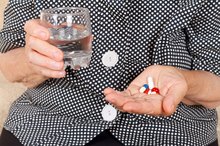
Taking Potassium & Water Pills at the Same Time
Learn More

Water Pills & Dehydration
Learn More

Water Pill Side Effects
Learn More
What Are the Adverse Side Effects of Magnesium Citrate?
Learn More

How to Treat Seeing Stars After Bending Over
Learn More
How Does Creatine Affect the Kidneys?
Learn More
Benicar & Potassium
Learn More
Does Sodium and Potassium Imbalance Lead to Swollen Ankles?
Learn More

Cardiac Side Effects of Lithium
Learn More
References
- Drugs.com: Loop Diuretics
- Drugs.com: Thiazide Diuretics
- Drugs.com: Potassium-Sparing Diuretics
- FDA: High Blood Pressure: Medicines to Help You
- Duarte JD, Cooper-DeHoff RM. Mechanisms for blood pressure lowering and metabolic effects of thiazide and thiazide-like diuretics. Expert Rev Cardiovasc Ther. 2010;8(6):793–802. doi:10.1586/erc.10.27
- U.S. National Library of Medicine, StatPearls. Thiazide Diuretics. Updated February 4, 2019.
- U.S. National Library of Medicine, StatPearls. Loop Diuretics. Updated October 15, 2019.
- Elsevier ScienceDirect. Hypokalemia: Adjuncts to Therapy. Published 2017.
- American Heart Association. Types of Blood Pressure Medications. Reviewed October 31, 2017.
- National Health Service, UK. Furosemide. Reviewed January 10, 2019.
- Johns Hopkins Lupus Center. Blood Pressure Medications (Anti-hypertensives).
- Leone A. Does Smoking Act as a Friend or Enemy of Blood Pressure? Let Release Pandora's Box. Cardiol Res Pract. 2011;2011:264894. Published 2011 Jan 19. doi:10.4061/2011/264894
- Harvard Health Publishing, Harvard Medical School. Tips for Taking Diuretic Medications. Updated September 25, 2019.
- American Heart Association. Changes You Can Make to Manage High Blood Pressure. Reviewed November 30, 2017.
Writer Bio
Destiny Simmons has worked as a professional health writer since 2005. She specializes in health and nutrition articles. Her work has appeared in various health Web sites. Destiny holds a Bachelors of Science in nursing from Boston University and a Master of Public Health Nutrition from Tufts University.