
Diet for Rowers
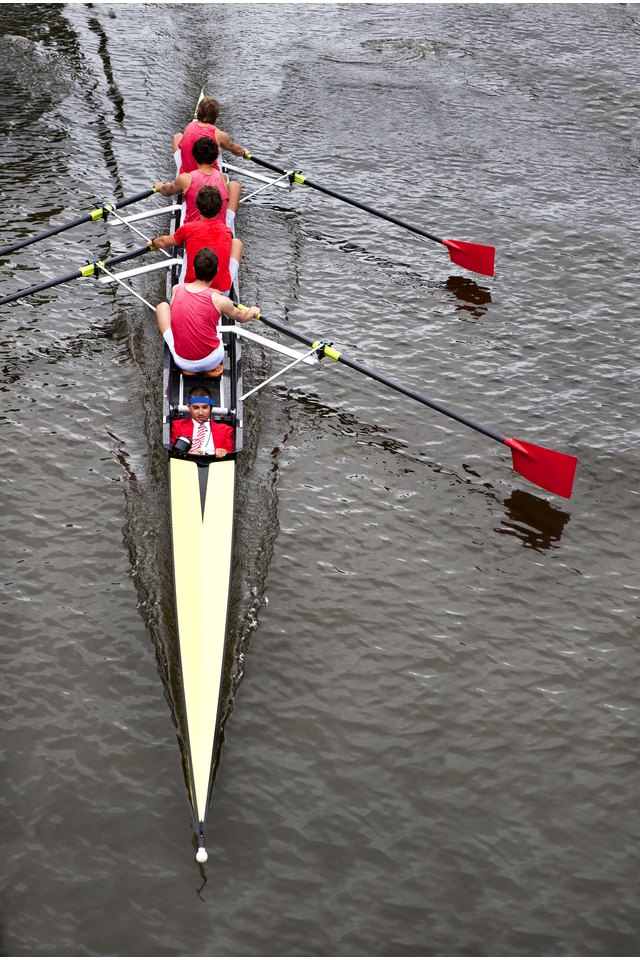
Consuming a proper diet, tailored for sports nutrition, helps maximize a rower’s athletic performance. That's particularly important for those who compete. Even if you row just for fun, following a well-balanced meal plan helps you look and feel your best. Your total daily calorie needs are based on your caloric expenditure and weight-management goals.
Calories for Competitive Athletes
You can burn a significant number of calories rowing, which is why competitive athletes often have high caloric requirements. In just 30 minutes of vigorous rowing, a 155-pound person expends about 316 calories, according to Harvard Health Publications. Competitive male rowers may require more than 22.7 calories per pound of body weight daily, while female athletes often need 20 to 23 calories per pound of body weight daily. This equates to 4,086 calories for a 180-pound male rower and 2,700 to 3,105 calories per day for a 135-pound female competitive rower.
Calories for Recreational Rowers
If you generally row at a low to moderate intensity, your daily caloric needs may be lower than the requirements of competitive athletes. Harvard Health Publications reports that a 155-pound person burns 260 calories in 30 minutes rowing at a moderate pace. While active adults often need about 18 calories per pound of body weight daily, moderately active individuals generally need 16 calories per pound of body weight each day, notes Harvard Medical School. Therefore a 180-pound recreational rower may require 2,880 to 3,240 calories daily, while a 135-pound recreational female rower might need 2,160 to 2,430 calories per day.
Preworkout Meals
To maximize a rower's athletic performance, getting a nutritious preworkout meal and snack is a must. Sports Dietitians Australia recommends eating a high-carb meal -- such as breakfast cereal with low-fat milk, an English muffin with jam or fruit with low-fat yogurt -- two to four hours before a competition. St. Lawrence University suggests eating 100 to 200 calories -- such as an energy breakfast bar, sports drink, banana or a bagel -- 30 to 45 minutes before early-morning workouts.
Post-Workout Nutrition
To properly recover, eat a carb-containing snack within an hour and a well-balanced meal within two to four hours of a rowing event. Post-workout snacks may include sports drinks, sandwiches, fruit or cereal bars, notes Sports Dietitians Australia. St. Lawrence University suggests eating 15 to 20 grams of protein with each carb-containing small meal or snack. Protein-rich choices include yogurt, cottage cheese, milk, nuts, seeds, peanut butter, lean meats, legumes, eggs, chicken and soy products.
References
Writer Bio
Erin Coleman is a registered and licensed dietitian. She also holds a Bachelor of Science in dietetics and has extensive experience working as a health writer and health educator. Her articles are published on various health, nutrition and fitness websites.