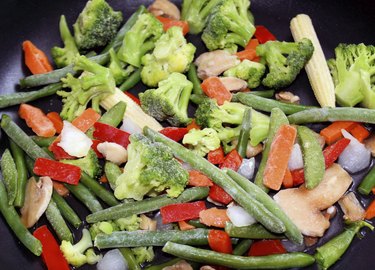
In-season vegetables add a garden-fresh flavor and texture to your meals and snacks, but during the off-season prices of fresh produce can put a strain on your wallet. According to the USDA's ChooseMyPlate website, adults should eat between 2 and 3 cups of vegetables each day. When the cost of fresh vegetables breaks your budget, frozen varieties provide a convenient, affordable and nutritious option to help you meet your daily vegetable recommendations.
Fresh vs. Frozen
Video of the Day
A refrigerator full of fresh vegetables may be pleasing to the eye, but frozen vegetables have a few nutritional advantages over fresh options. The nutrient content of fresh vegetables begins to decline after picking.This decline continues during warehouse storage, shipment to your local grocery store, and storage in your refrigerator or on your counter. FruitsAndVeggiesMoreMatters.org, a website run by the Produce for Better Health Foundation, states that food manufacturers process frozen vegetables immediately after harvest, which retains their peak nutrition for longer periods of time. The fresh green beans you buy at the grocery store may turn limp and brown in your refrigerator after several days, but a bag of frozen green beans will keep in your freezer for months with no change in quality. For best quality, FruitsAndVeggiesMoreMatters.org recommends that you use most frozen vegetables within eight months.
Video of the Day
Nutrients in Frozen Vegetables
The nutrient profile of frozen vegetables depends on the variety you buy. The 2010 Dietary Guidelines for Americans recommends that adults regularly eat different types of vegetables, including dark green vegetables, red and orange vegetables, beans and peas, and starchy vegetables to get the necessary nutrition. Enjoy vegetables from several different groups with bags of frozen mixed vegetables. A frozen mixture of corn, lima beans, snap beans, green peas and carrots contains 118 calories and less than 1 gram of fat per cup. The carrots in the mix provide an excellent source of vitamin A, an important vitamin for eye and skin health, and the green vegetables provide vitamin K, a crucial nutrient for blood clotting. This mix contains 5 grams of protein per cup, mostly from the beans and peas, and 8 grams of fiber, a necessary plant carbohydrate for cholesterol and blood sugar stabilization and digestive health. The Institute of Medicine recommends that women get 25 grams of fiber a day and men get 38 grams. One cup of this mix provides 21 to 32 percent of your daily needs.
Frozen Vegetables with Sauces
Frozen vegetables packaged with added sauces can make a flavorful side dish, but some brands contain a high amount of sodium. High-salt diets raise the risk of hypertension and heart disease, and the Institute of Medicine recommends that adults get no more than 2,300 milligrams of sodium a day. According to Texas A&M Agrilife Extension, green peas frozen in cream sauce contain 420 milligrams of sodium per 2.6 ounces, equaling 18 percent of the daily recommendation. Cream and cheese sauces may also contain a lot of saturated fat, the type of fat that can lead to cholesterol buildup in your blood vessels. If you prefer the convenience or taste of frozen vegetables packed in sauce, look for low-sodium and low-fat varieties in your supermarket.
Tips for Cooking
Put aside the salt shaker and season your frozen vegetables the healthy way with black pepper, nut and seed oils, garlic and fresh herbs, and spices. Cooking methods also count. If you boil vegetables in water, you will lose some vitamin C and B-complex vitamins because they are water-soluble nutrients. To retain the most nutrients from your frozen vegetables, choose fast-cooking methods with minimal water. According to the Harvard Medical School's Family Health Guide, microwaving vegetables retains nutrients better than many other cooking methods due to the shorter cooking times required. GoAskAlice, a service of Columbia University, also recommends steaming, blanching or stir-frying vegetables to retain nutrients.
- ChooseMyPlate.gov: How Many Vegetables Are Needed Daily or Weekly?
- FruitsandVeggiesMoreMatters.org: About the Buzz: Frozen and Canned Fruits and Vegetables Vs. Fresh
- U.S. Department of Health and Human Services: Dietary Guidelines for Americans, 2010
- USDA National Nutrient Database: Vegetables, Mixed, Frozen, Cooked, Boiled, Drained, Without Salt
- Institute of Medicine: Dietary Reference Intakes for Energy, Carbohydrate, Fiber, Fat, Fatty Acids, Cholesterol, Protein, and Amino Acids
- MedlinePlus: Vitamin K
- Institute of Medicine: Dietary Reference Intakes: Water, Potassium, Sodium, Chloride, and Sulfate
- Texas A+M Agrilife Extension: The Sodium Content of Your Foods
- The Harvard Medical School Family Health Guide: Microwave Cooking and Nutrition
- Columbia Health: Go Ask Alice: Cooking Veggies and Vitamin Loss?