
What Do You Have to Wear in Football?
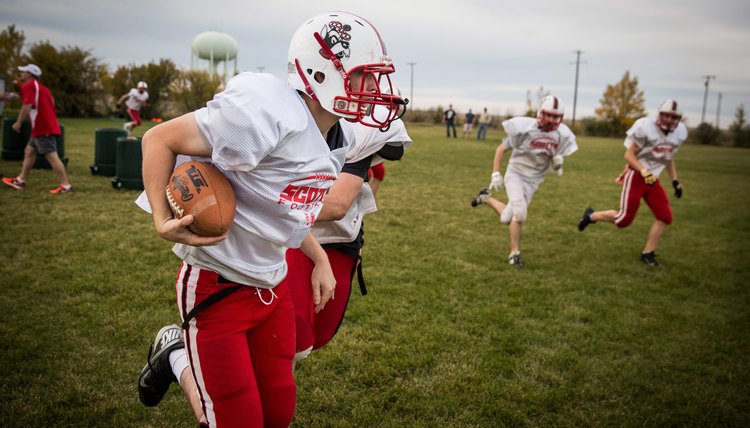
Football is a fast-paced sport that is filled with incredible runs, passes and catches, as well as violent hits and dangerous tackles. Every play in a football game ends with a tackle and, in some cases, it takes a group of players to bring down a runner or a receiver. Football players of all ages wear a variety of football equipment which helps protect their bodies and reduces the risk of injuries during gameplay.
Uniform
Every football player wears a uniform that consists of a team jersey and pants. The uniform makes it easier for fans, officials, teammates and coaches to identify the players. Most uniform jerseys have the team name, the team logo, the player's number and the player's name on the shirt. Football pants can be worn over pads, or they can have pads built into them.
Helmet and Face Mask
The helmet is the most important part of a football player's uniform. It protects the player's head from injuries such as concussions. Football helmets have a hard plastic outer shell and are heavily padded on the inside. The helmet must be snug and have a chin strap that fits well and meets the standards established by the National Operating Committee on Standards for Athletic Equipment. Every football helmet needs to have a face mask. The face mask is a cage-like mask that protects the player's face from injury.
Shoulder Pads and Neck Roll
All football players need to wear shoulder pads when they are playing the game. Shoulder pads absorb most of the impact when players are hit. They have a hard, adjustable plastic shell that is heavily padded underneath. The pads protect the shoulders, collarbones, chest and back. The neck roll is a pad that snaps onto the back of a player's jersey. Neck rolls help lessen the impact of a head-on collision and reduce the chance of a severe neck injury.
Body Padding, Athletic Supporters and Mouth Pieces
Hip and tailbone pads, thigh pads, knee pads and shock pads cover vulnerable areas of players' bodies which helps protect them from impact and injury. These pads can be snapped into the lining of the uniform or worn under the shoulder pads. All male football players are required to wear an athletic supporter with a cup to protect their genital area from injury. Players should wear custom-fitted mouth guards to protect their teeth and reduce the risk of a broken jaw or a concussion.
Shoes and Gloves
Football shoes have cleats on the bottoms of them that help players run and cut as they are playing the game. The shoe should be comfortable and well-fitting, and should offer the player support in the foot and ankle. Wearing the wrong shoe can cause injuries to the ankle and knee. The type of turf that players are going to be running on determines what type of cleat is best. Although gloves aren't necessary, may wide receivers choose to wear them because they improve their grip. Offensive and defensive linemen wear thickly padded gloves to protect their hands from injury as they perform their lineman duties.