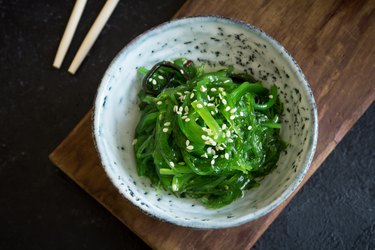
If you want to liven up your daily servings of vegetables, consider adding kelp to your diet. A staple in Asian cuisine, kelp is a natural source of important vitamins and minerals and offers antioxidants, which are linked to disease prevention.
While there are many purported benefits, there are also some sea kelp side effects to be aware of, as it can be high in iodine and arsenic.
Video of the Day
Video of the Day
Warning
Sea kelp has many health benefits thanks to its nutrient content. But taking kelp supplements can have serious side effects, as they may contain too much iodine and harmful amounts of arsenic, a toxic heavy metal.
What Is Kelp?
Some forms of kelp are brown in color and can grow up to 100 feet in length. Others like Ecklonia radiata are native to the waters surrounding western Australia.
Giant canopies of kelp exist in shallow water, and provide shelter and nutrition to a variety of marine life, according to the National Ocean Service. Just like plants on land, sea kelp requires light from the sun and prefers growing in bodies of water that are rich in nutrients.
Certain sea kelp, like sugar kelp, (Saccharina latissima) thrive in cold waters, off the coast of Connecticut and Maine. These are being grown and harvested as a new sea vegetable. According to the Connecticut Department of Agriculture, seaweeds like sea kelp are able to extract nutrients, both inorganic and organic, from seawater, making themselves naturally nutrient-rich.
6 Kelp Benefits
1. It's Low in Calories
There are so many benefits of kelp to consider. Sea kelp contains relatively few calories but boasts several important nutrients. A 3.5-ounce serving of raw sea kelp has just 43 calories, according to the USDA.
Eating plant foods that are low in calories and high in nutrients may help lower your risk of a number of health conditions, including heart disease, according to Harvard Health Publishing.
2. It's a Powerhouse of Minerals
Because it absorbs the nutrients from its surrounding saltwater environment, kelp is rich in minerals.
Sea kelp is high in minerals like sodium, which is responsible for maintaining the body's fluid balance, according to the U.S. National Library of Medicine. A serving of kelp has 10 percent of the recommended daily amount of sodium.
Minerals like iron, zinc phosphorus and potassium are also available in sea kelp, in smaller amounts.
It has 168 milligrams of calcium, which is more than many vegetables, including collard greens and kale, according to UCSF Medical Center. Your body needs calcium to maintain strong bones and muscle function.
Kelp also has high amounts of magnesium, offering 121 milligrams or 29 percent DV per serving. Magnesium benefits include maintaining muscle and nerve function and regulating blood pressure.
Kelp is also a good source of iron, boasting 2.8 milligrams, or 16 percent of the DV, per serving. Iron help you maintain healthy blood cells.It also has some manganese, potassium and zinc, which may help fight oxidative stress in the body.
3. It's Rich in Vitamins
Kelp is an excellent source of vitamin K and supplies 82 percent of your daily value per serving, per the USDA. Vitamin K is required for proper blood clotting and bone metabolism.
Folate is an important nutrient for pregnant people to help prevent birth defects. A serving of kelp supplies 180 micrograms, or 45 percent of your DV, making it a good source of the nutrient.
Kelp also contains the B vitamins riboflavin, pantothenic acid and thiamine required for proper metabolism and energy production. Plus, you'll get some vitamin C and vitamin E, which help fight oxidative damage to your cells.
Warning
If you're taking blood thinners such as warfarin, too much vitamin K can have negative side effects. Talk to your doctor before adding kelp to your diet.
4. It Has Antioxidants
Seaweeds like kelp contain antioxidants, which may help reduce disease-causing free radicals and lower your risk of conditions like cancer and heart disease.
The antioxidant compounds in seaweed were linked to a slower progression of cancer, particularly colorectal and breast cancers, according to September 2014 research in Marine Drugs. The researchers emphasized the importance of seaweed in the fight against certain cancers.
5. It Offers Iodine
The recommended daily amount of iodine for adults is 150 micrograms, according to the National Library of Medicine. Pregnant or breastfeeding people need 50 percent more.
Your body needs iodine for proper thyroid hormone production. In turn, low iodine levels can lead to hypothyroidism, causing symptoms of fatigue, depression, weight gain and inability to tolerate cold, according to the Mayo Clinic.
6. It Could Help With Obesity
Seaweed has a number of compounds that may have anti-obesity benefits. A natural fiber derived from kelp called alginate may help block fat absorption in the intestines by 75 percent, according to a March 2014 study in Food Chemistry. The researchers suggest it may be a viable treatment option for people with obesity.
To help prevent the problem of deficiency, iodine is commonly added to table salt. If you're on a low-sodium diet or eat specialty salts that don't contain iodine, kelp is one of the best natural food sources of iodine.
Severe iodine deficiency can result in an enlarged thyroid gland, known as goiter, according to the NIH. A moderate iodine deficiency can also cause low IQ in infants and children and impaired cognitive ability in adults. Not taking in enough iodine during pregnancy may cause permanent harm to the fetus.
Sea Kelp Supplement Side Effects
Eating kelp is generally considered safe, but kelp supplements can have side effects for certain people.
Iodine in Kelp and Hypothyroidism
For example, kelp supplements may have an adverse effect on people with hypothyroidism because of the high amount of iodine. Kelp supplements often contain several thousand times the daily recommended limit of iodine, which can do more harm than good.
Too much iodine may worsen the symptoms of hypothyroidism in patients with abnormal thyroid glands, especially if a lack of iodine is not the primary cause of the under-active thyroid, according to the Mayo Clinic.
The recommended daily allowance for adults is 150 milligrams of iodine and between 220 to 290 milligrams for people who are pregnant or lactating, according to the American Thyroid Association.
Arsenic in Sea Kelp
Sea kelp supplements can also be particularly high in arsenic. High levels of arsenic are toxic and carcinogenic in nature, according to August 2017 research in Analytical Methods: Advancing Methods and Applications.
Kelp supplements have been reported to cause side effects like diarrhea, nausea and overall body weakness, according to February 2018 research in Analytical and Bioanalytical Chemistry. While authors initially thought arsenic might be to blame, others later argued that the excess iodine could also have been the cause.
How Much Is Too Much?
Although kelp has many health benefits, its high iodine content can make taking too much dangerous. Talk with your doctor before taking kelp supplements if you have a thyroid disorder, an allergy to iodine, kidney or liver disease.
Although the upper limit for iodine is 1,100 micrograms, the FDA set the safety standard for iodine content in a kelp supplement to not more than 225 micrograms per daily serving, according to Consumer Lab.
Eating kelp as food is safe, but too much iodine from kelp supplements can overstimulate your thyroid, causing inflammation and increasing your risk of thyroid cancer. A very large dose of iodine can create nausea, fever, weak pulse or a burning sensation in the throat, mouth and stomach.
Kelp Interactions
Certain medications, drugs and vitamins can interact with kelp supplements. Harmful side effects can result from taking kelp together with:
- Digoxin (Lanoxin)
- Potassium supplements
- Potassium-sparing diuretics such as triamterene (Dyrenium, Maxzide, Dyazide), amiloride and spironolactone (Aldactone)
- Thyroid medicines such as levothyroxine (Levoxyl, Synthroid), liothyronine (Cytomel), liotrix (Thyrolar), and thyroid (Armour Thyroid)
How to Eat Kelp
Although kelp is available in supplement form, it's always best to get your nutrients from whole food. Kelp can be found in Japanese or Korean restaurants and dishes, and you can buy it in many specialty grocery stores, raw or dried.
It's easy to incorporate kelp into your diet along with plenty of vegetables from both the land and sea. You can add organic dried kelp to soups or use raw kelp strips in salads and main dishes. Use dried kelp flakes as seasoning.
Kelp can be eaten hot in soup or stew, cold with oil and sesame seeds, or even blended into a smoothie or vegetable juice.
- UCSF Medical Center: Calcium Content of Foods
- Food Chemistry: The Modulation of Pancreatic Lipase Activity by Alginates
- Marine Drugs: Anticancer Effects of Different Seaweeds on Human Colon and Breast Cancers
- Mayo Clinic: Hypothyroidism (Underactive Thyroid)
- Harvard Health Publishing: What is a Plant-based Diet?
- USDA MyFoodData: Sea Kelp
- National Ocean Service: "What Is a Kelp Forest?"
- Mayo Clinic: "Can Iodine Supplements Help Regulate Thyroid Function in a Person With Hypothyroidism?"
- American Thyroid Association: "American Thyroid Association (ATA) Issues Statement on the Potential Risks of Excess Iodine Ingestion and Exposure"
- Analytical Methods: Advancing Methods and Applications: "SI Traceable Determination of Arsenic Species in Kelp (Thallus laminariae)"
- Analytical and Bioanalytical Chemistry: “Development of a Kelp Powder (Thallus laminariae) Standard Reference Material"
- Environmental Science and Pollution Research International: "Comparative Study on Metal Biosorption by Two Macroalgae in Saline Waters: Single and Ternary Systems”