Let's debunk a dangerous myth right away: Not all fats are created equal and not all fat is unhealthy.
Fat is an important nutrient that gives your body energy, supports cell growth, protects your organs, keeps your body warm and helps your body absorb nutrients and produce certain hormones, according to the American Heart Association (AHA).
Video of the Day
Omega-3 fatty acids, which are a type of polyunsaturated fat, are particularly important in maintaining heart health and brain health (specifically central and peripheral nervous system functioning), per the Harvard T.H. Chan School of Public Health. Omega-3s are essential, which means your body can't make them, so getting them from your diet is extremely important.
There are three types of omega-3 fatty acids:
Video of the Day
- Eicosapentaenoic acid (EPA)
- Docosahexaenoic acid (DHA)
- Alpha-linolenic acid (ALA)
EPA and DHA primarily come from fish and ALA is most commonly found in vegetable oils, nuts, seeds, grass-fed animals and some leafy vegetables, per the Harvard T.H. Chan School for Public Health. You can also find these as supplements over the counter, but doctors typically prefer you get them from your diet.
How Much Omega-3 Do You Need?
There aren't any guidelines for daily intakes of EPA and DHA, but experts recommend that adults assigned female at birth get 1.1 grams of ALA per day and adults assigned male at birth get 1.6 grams a day, per the National Institutes of Health (NIH).
Spoiler: You can eat foods high in omega-3s that are not fish. Read on for a list of foods high in omega-3s ranked by their percentages of Adequate Intake (AI). Adequate intake is the recommended average daily nutrient intake level, per the NIH.
1. Flaxseeds: 6,479 mg, 405% Adequate Intake (AI)
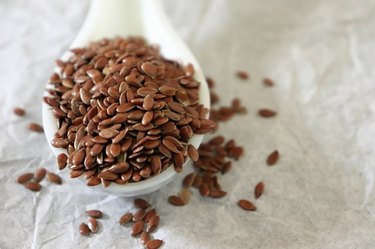
There's good reason you should be grinding up flaxseeds and mixing them into your favorite dishes. Ground flaxseeds are easier to digest than whole seeds, per the Mayo Clinic, and they have a mild, almost nutty, flavor.
Just 1 ounce provides 405 percent of the AI for omega-3 fatty acids and nearly 8 grams of fiber. Flaxseeds also contain 5 grams of plant-based protein.
2. Chia Seeds: 5,064 mg, 316% AI
Chia seeds were famous in the '90s not for their health benefits but for their... pets. Remember Chia Pets, those terracotta figurines that sprouted chia that resembled hair or fur?
Well, chia seeds offer an incredible amount of omega-3 fatty acids: 316 percent of the AI per 1 ounce. Like flax seeds, they also provide fiber and plant-based protein. Check out these creative ways to incorporate chia seeds into your daily diet.
3. Herring: 4,527 mg 283% AI
Pacific Herring has 283 percent of the AI for omega-3s per 6 ounces cooked. Herring, like other fatty fish, offers a solid amount of protein and vitamin B12, making it a nice substitute if you're getting bored of salmon.
4. Salmon: 4,252 mg, 266% AI
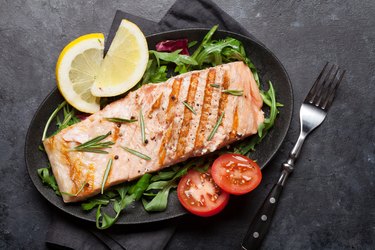
Speaking of salmon, if you're remotely familiar with omega-3s, you probably know that this popular fish is a great source of the nutrient.
The AHA recommends adults eat about 7 ounces of fish per week, and a 6-ounce cooked serving of salmon gives you 266 percent of the AI for omega-3s. Darker-flesh fish, like salmon, tend to have higher levels of omega-3s than lighter fish, per Seafood Health Facts.
5. Oysters: 2,692 mg, 168% AI
If you like shellfish, oysters pack a nutritional punch with 168 percent of the AI for omega-3s as well as 32 grams of protein and through-the-roof levels of immune-supporting zinc and vitamin B12 per 3-ounce serving.
6. Walnuts: 2,579 mg, 161% AI
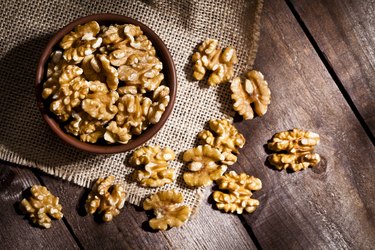
A 1-ounce serving provides 161 percent of the AI for omega-3s, plus fiber and plant-based protein.
Adding walnuts to your daily diet is linked to decreased risk and progression of brain disorders, including Parkinson's disease, stroke and depression, as well as heart disease and type 2 diabetes, per a February 2020 study in Nutrients.
7. Canned Sardines: 1,649 mg, 103% AI
Some folks might have a hard time eating these little fish straight from the can, but adding sardines to your plate can mean good things for your health. A 1-cup serving has about 103 percent of the AI for omega-3s, 73 percent of the Daily Value (DV) for protein and 36 percent of the DV for vitamin D — the latter being almost unheard of in a food source.
And thanks to their tiny bones — which, yep, you can eat — sardines are high in calcium, too. Try the briny fish in these delicious sardine recipes.
8. Tofu: 1,467 mg, 92% AI
Like nuts and seeds, tofu is one of the best foods high in omega-3 that's not fish. A 1-cup serving of tofu provides 92 percent of the AI for omega-3, and it's also a powerhouse for complete plant-based protein. (Complete protein, by the way, means it has all nine essential amino acids.)
Try it in these anything-but-bland tofu recipes.
9. Canola Oil: 1,279 mg, 80% AI
Olive oil tends to get all the love thanks to its abundance of unsaturated fats that deem it a heart-healthy option for cooking and salad dressings. But oft-overlooked canola oil is high in omega-3 fatty acids, while olive oil is not.
Per 1-tablespoon serving, canola oil boasts 80 percent of the AI for omega-3s.
10. Granola: 887 mg, 55% AI
Certain types of granola, particularly those with flaxseed, can be good sources of omega-3 fatty acids. For example, pumpkin flax granola provides 55 percent of the AI for omega-3s per 3/4 cup. Try making your own at home with these low-sugar granola recipes.
11. Edamame: 560 mg, 35%
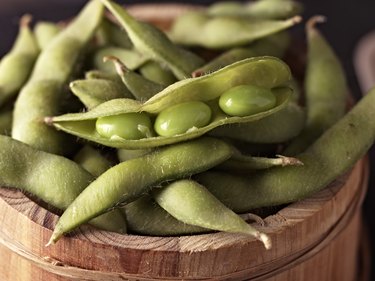
Edamame, or boiled soybeans, are a popular appetizer and a tasty vegan food high in omega-3s. While the pod itself isn't edible, the beans inside provide 35 percent of the AI for omega-3 per 1-cup serving, as well as complete plant protein and fiber.
Edamame makes for a tasty, nutritious stir-fry mix-in or salad topper.
12. Hubbard Squash: 332 mg, 21%
Hubbard squash is one of many squash varieties that's known for its high levels of vitamin A. Hubbard squash also offers some omega-3 fats, with 21 percent of the AI per cup cooked — and it makes for a great low-calorie, filling food thanks to its fiber content.
Beans are generally a low-fat, fiber-rich food, but the fat that navy beans have is unsaturated and primarily omega-3s. Per 1 cup cooked, navy beans boast 20 percent of the AI for omega-3s.
Navy beans, like its bean sisters and other legume cousins, are also an excellent source of plant-based protein. They're also a good source of non-heme (or plant-based) iron.
14. Kidney Beans: 301 mg, 19% AI
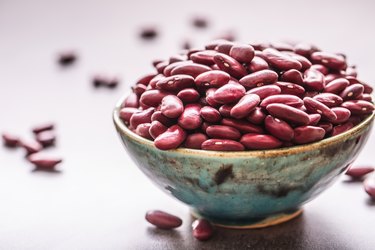
Kidney beans, or red beans, are another bean variety that provides top-notch plant-based nutrition. They give you 19 percent of the AI for omega-3s per cup cooked, as well as high amounts of non-heme iron, protein, fiber and phosphorous.
Try them in these healthy canned bean recipes.
15. Brussels Sprouts: 270 mg, 17% AI
Most fruits and vegetables don't have much, if any, fat. Instead, they pack complex carbohydrates, fiber and other important nutrients.
But Brussels sprouts have some omega-3 fatty acids: 17 percent of the AI per 1 cup cooked. They're also high in fiber, and vitamins C and K. Try them in these creative Brussels sprouts recipes.
16. Avocados: 223 mg, 14% AI
While avocados are rich in healthy, unsaturated fat, they're much lower in omega-3 fatty acids, packing 14 percent of the AI per single avocado. Try one of these delicious avocado recipes to get more fiber and vitamin E in your diet.
17. Broccoli: 186 mg, 12% AI
Perhaps the favored cousin of Brussels sprouts, broccoli is another cruciferous veggie that offers some omega-3 fatty acids: 12 percent of the AI per 1-cup cooked, deeming it one of the best vegetarian foods high in omega-3s.
Broccoli is also an excellent source of vitamin C, with 112 percent of the DV per cup.
18. Blackberries: 135 mg, 8% AI
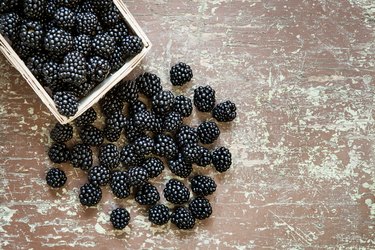
Blackberries, like other bright berries — strawberries, raspberries, blueberries — have phenolic compounds, which are powerful antioxidants, per an October 2015 review in the International Journal of Molecular Sciences.
And while there is limited update research regarding phenolic compounds, one older November 2009 review in Oxidative Medicine and Cellular Longevity did point out that phenolic compounds are associated with decreased rates of chronic illness. There are also a variety of food options with omega-3s and phenolic compounds.
Just 1 cup of blackberries provides 8 percent of the AI for omega-3s and more than a quarter of your DV for fiber.
- American Heart Association: "Dietary Fats"
- Harvard School for Public Health: "Omega-3 Fatty Acids: An Essential Contribution"
- National Institutes of Health: "Omega-3 Fatty Acids"
- Mayo Clinic: "Does Ground Flaxseed Have More Health Benefits Than Whole Flaxseed?"
- American Heart Association: "Fish and Omega-3 Fatty Acids"
- Seafood Health Facts: "Omega-3 Content of Frequently Consumed Seafood Products"
- Nutrients: "Beneficial Effects of Walnuts on Cognition and Brain Health"
- Oxidative Medicine and Cellular Longevity: "Plant Polyphenols as Dietary Antioxidants in Human Health and Disease"
- International Journal of Molecular Sciences: "Bioactive Compounds and Antioxidant Activity in Different Types of Berries"