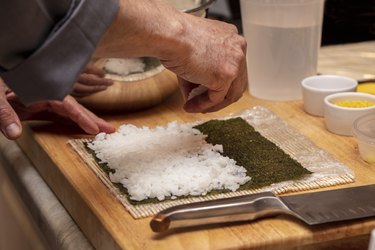
Sushi has a long history, dating back some 2,000 years. Together with rice, sushi often uses a range of vegetables and raw or cooked fish.
Sushi has a place in a nutritious, balanced diet — no matter what type of sushi rice you use.
Video of the Day
Video of the Day
Types of Sushi Rice
Sushi rice, also known as Japanese sticky rice, also called japonica or shari, is rice traditionally used for sushi. It's usually a form of short-grain rice.
Of the two starches contained in rice — amylopectin and amylose — sushi rice usually has a higher amylopectin content, according to March 2017 research in Scientific Reports. This makes the rice stickier and allows it to be used to hold the sushi form together. White sushi rice has had the bran removed, whereas brown or whole-grain sushi rice retains a natural bran content and light brown color.
There's another type of rice on the block called nishiki rice. It's a medium-grain rice that also becomes sticky when cooked due to the amylopectin content, making it perfect for sushi, poke bowls and rice balls.
Can You Use Regular Rice for Sushi?
It's not recommended to use typical rice varieties for homemade sushi. If you keep options like Basmati or Jasmine rice at home, you’ll want to save these for a different meal. Only use short-grain or medium-grain rice for sushi. Sushi requires a variety of rice that becomes sticky when cooked, and long-grain varieties will not work.
Sushi Rice Nutrition Facts
One cup of sushi rice is equal to a single serving. According to the USDA, one serving of about ¾ cup, cooked (or 100 grams) contains the following nutrition.
White Sushi Rice
- Calories: 160
- Total fat: 0.2 g
- Cholesterol: 0 mg
- Sodium: 10.5 mg
- Total carbs: 38 g
- Dietary fiber: 0 g
- Sugar: 0 g
- Protein: 2 g
Brown Sushi Rice
According to the USDA, a 3/4-cup serving of cooked short-grain brown rice contains:
- Calories: 164
- Total fat: 1.4 g
- Cholesterol: 0 mg
- Sodium: 165 mg
- Total carbs: 38 g
- Dietary fiber: 2.9 g
- Sugar: 0.7 g
- Added sugar: 0 g
- Protein: 2.9 g
Sushi Rice Macros
- Total fat: One serving of white sushi rice has 0 grams of total fat, which includes polyunsaturated fat, monounsaturated fat, saturated fat and trans fat.
- Carbohydrates: One serving of white sushi rice has 38 grams of carbs, which includes 0 grams of fiber and 0 grams of naturally occurring sugars. Sushi rice contains slightly fewer carbs per cup compared to other types of rice like long-grain varieties, jasmine or basmati. Brown sushi rice offers more fiber, with 2.9 grams per serving.
- Protein: One serving of white sushi rice has 2 grams of protein.
Vitamins, Minerals and Other Micronutrients
- Thiamin (B1): 48% Daily Value (DV)
- Folate (B9): 38% DV
- Vitamin A: 22% DV
- Niacin (B3): 15% DV
- Vitamin B6: 13% DV
Sushi Rice Health Benefits
1. It's Fat-Free
Sushi rice is virtually fat-free, and a typical sushi meal is low in both overall fat content and calorific value. Sushi rice prepared without cooking oil is naturally a low-calorie option.
2. Brown Sushi Rice Contains Fiber
Brown rice has the added benefit of providing dietary fiber, which supports your heart and digestive health as well as helps regulate blood sugar levels, per the Academy of Nutrition and Dietetics. A 3/4 cup of cooked brown sushi rice gives you almost 3 grams of fiber — that's about 10 percent of your DV.
The way sushi rice is usually served, wrapped around individual sushi pieces, also aids portion control and can help you avoid overeating.
3. It's a Good Source of B Vitamins
A 3/4 cup of sushi rice is an excellent source of vitamin B1 and B9 and a good source of vitamin B3 and B6. B vitamins are important because they help your body make energy from the food you eat as well as produce red blood cells, according to the National Library of Medicine.
Is Sushi Rice Healthier Than White Rice?
Sushi rice is nutritionally comparable to white rice, and thus one is not necessarily more nutritious than the other. If you order or make your sushi with brown rice, you'll get extra fiber.
Sushi Rice Health Risks
Both white and brown sushi rice contribute a relatively high amount of carbohydrates to your daily nutritional intake without much protein. This may mean that you use up your daily calorie and carbohydrate limits without getting enough protein.
White sushi rice, in particular, is a high-starch refined carbohydrate, so make sure to include lean sources of protein and foods high in fiber in your diet throughout the rest of your day.
Is Sushi OK for People With Diabetes?
Sushi absolutely can be part of a carb-conscious diet. Sushi made with fish is relatively balanced, with both carbs and protein to help stabilize blood sugar after eating.
Sushi Rice Preparation and Buying Tips
How to cook sushi rice: Sushi rice becomes sticky when cooked due to the excess starch. Sushi experts agree that soaking and washing your rice helps remove the starch and create the right consistency for sushi. Follow these steps to cook rice in a steamer.
How to buy sushi rice: Remember, the type of rice matters. Choose short-grain rice for sushi when you can — medium-grain is the second-best option and you'll want to avoid long-grain rices for sushi in general. See the products listed below for our recommendations:
- Nishiki Medium Grain Rice ($6.73 per 5-lb. bag on Amazon)
- Kokuho Sushi Rice ($17.00 per 5-lb. bag on Amazon)
- Shirakiku Rice ($40.30 per 15-lb. bag on Amazon)
- 4Sisters Authentic Short Grain Japonica Sushi Rice ($9.98 per 2-lb. bag on Amazon)
- Lundberg Family Farms Organic Brown Short Grain Rice ($10.91 per 2-lb. bag on Amazon)