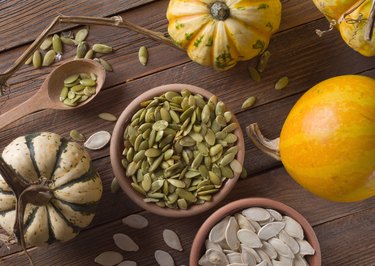
When you carve your pumpkin this fall, rather than just tossing the seeds, roast them in the oven or eat them raw for a nutritious snack.
Pepitas are the unshelled version of pumpkin seeds — so pumpkin seeds have a shell and pepitas don't. They are a natural source of vitamins, minerals and essential fatty acids that can add an array of nutritional benefits to any dish as well as a satisfying crunchy texture.
Video of the Day
Video of the Day
Pumpkin Seeds Nutrition
As with any other edible seed, pepitas are a wholesome food and highly nutritious. They're a solid source of all three macronutrients: protein, carbs and fats. A 1-ounce serving contains:
- Calories: 159
- Total fat: 13.6 g
- Saturated fat: 2.4 g
- Cholesterol: 0 mg
- Sodium: 0 mg
- Total carbs: 4.1 g
- Fiber: 1.8 g
- Sugar: 0.4 g
- Protein: 8.3 g
- Copper: 39% Daily Value (DV)
- Magnesium: 36% DV
- Phosphorous: 26% DV
- Zinc: 29% DV
Health Benefits of Pepitas
1. They're High in Healthy Fat
While the seeds are high in fat, they are made up of primarily monounsaturated and polyunsaturated fats, Sarah Canterman, RD, says.
These heart-healthy fats are linked to raising HDL (good) cholesterol levels and reducing the risk of heart disease, according to the Harvard T.H. Chan School of Public Health.
2. They're High in Minerals
Pepitas contain beneficial minerals such as zinc, a trace element and crucial factor in promoting immune system health and a healthy metabolism, Canterman says.
Pumpkin seeds are also high in magnesium, a mineral responsible for more than 600 chemical reactions in the body, including those related to cellular repair, protein synthesis and nervous system function.
Although this mineral is essential for overall health, 60 percent of Americans don't get the daily recommended amount of magnesium, according to a January 2015 review in Physiological Reviews.
3. They're Linked to Urinary and Prostate Benefits
A randomized, placebo-controlled study in a 2008 issue of the journal Urology treated 476 people with lower urinary tract symptoms and benign prostatic hyperplasia with pumpkin seeds.
The results showed a significant improvement of 6.8 points, which was 1.2 points over the placebo group.
4. They're Linked to Increased Testosterone
Magnesium helps to regulate levels of a number of other nutrients in your body and supports the action of enzymes. Research in the April 2011 edition of Biological Trace Element Research links magnesium to increased testosterone levels.
5. They're Linked to a Better Mood
Pumpkin seeds are a dietary source of tryptophan, an amino acid that has a positive effect on sleep, anxiety, mood, appetite and pain.
For mild to moderate depression, tryptophan is linked to decreased depressive symptoms and less anxiety, per April 2016 research in the Archives of Psychiatric Nursing. It increases the serotonin in the brain, which affects mood.
6. They're Linked to Better Sleep
Pumpkin seeds contain two compounds that can help improve your ability to fall and stay asleep. The mineral magnesium has been shown in research, such as a December 2012 study in the Journal of Research of Medical Sciences, to improve people's perception of their sleep quality — including sleep time, early morning awakening and sleep efficiency.
Pumpkin seeds are also a source of tryptophan, an amino acid that has some sleep moderating effects according to a July 2015 review in Evidence-Based Complementary and Alternative Medicine. Tryptophan is the compound in turkey that makes your Thanksgiving dinner famously nap-inducing.
7. They Might Improve Sports Performance
Pumpkin seeds contain essential fatty acids and zinc, both of which help keep athletes their healthiest. Research in the March 2011 issue of the Australasian Medical Journal recommends pumpkin seeds, along with fatty fish and walnuts, as good sources of fat for athletes.
Vegan athletes, in particular, can turn to pumpkin seeds as a source of protein and zinc in pumpkin seeds, suggests 2017 analysis from the Journal of the International Society of Sports Nutrition.
8. They Promote Digestive Health
A 1-ounce serving of pumpkin seeds contains about 2 grams of fiber. A diet high in fiber promotes digestive health.
Aim for about 25 grams to 38 grams per day, according to the Academy of Nutrition and Dietetics.
Can You Eat Pumpkin Seeds While Pregnant?
Yes, pumpkin seeds are safe to eat during pregnancy — and they also contain many of the most important nutrients for prenatal development.
These nutrients include:
- Iron: Iron deficiency is a common concern during pregnancy, according to the Mayo Clinic. Iron aids in the production of red blood cells, which carry oxygen throughout the body. During pregnancy, the body produces a higher number of red blood cells in order to fuel the baby's growth, which is why iron is more important than ever.
- B Vitamins: The primary role of B vitamins is energy production, and energy needs are much higher during pregnancy. For this reason, pregnant people need higher amounts of B vitamins. Folate is the most important B vitamin during pregnancy, as it helps prevent neural tube defects, per the Mayo Clinic. One ounce of pumpkin seeds provides about 4 percent of your DV.
- Zinc: Pumpkin seeds contain zinc, an important mineral for pregnant people. Zinc aids in the production of DNA and helps fuel the rapid cell growth that occurs in a developing baby, per the World Health Organization.
Preparation and Pepita Recipes
With a sweet, nutty taste and chewy texture, pepitas make a healthful addition to just about any sweet or savory recipe. A small handful really goes a long way.
Or try one of these pepita recipes or meal prep ideas:
- Eat as a satisfying snack on their own (1/4 cup or about 30 grams)
- Add to homemade granola bars and trail mixes
- Toss in salads
- Sprinkle atop smoothies, guacamole or oatmeal
- Grind and add to mole sauces
- Add pepita paste to pesto
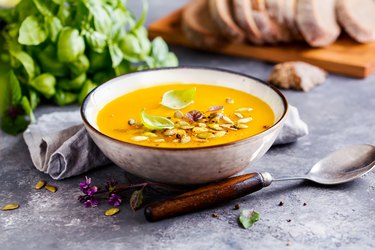
- Garnish soup, like these Butternut Squash Soup Shooters
- Sprinkle onto avocado toast
Tip
Although there are different varieties of pumpkin seeds to choose from, it's best to eat them raw, Canterman says. Although roasted pumpkin seeds are still a great snack, the roasting process can denature some of the minerals. Not to mention, they're often heavily salted when roasted.
While you can certainly snack on pepitas, you can also add them as a topping to spice up your daily lunch.
A Pumpkin Spice Pepita Trail Mix Recipe
This easy-to-make recipe is high in healthy fats, low in sugar and provides a balanced blend of carbohydrates and protein for all your activity needs, Canterman says.
Once you've gathered the ingredients below, all you have to do is combine in a plastic baggie and shake it up.
Ingredients:
- 2 cups of nuts of choice (raw or roasted work but Canterman prefers raw almonds and walnuts)
- 1/2 cup pepitas
- 1/2 cup dried cranberries (no sugar added)
- 1/2 cup dark chocolate chips or yogurt chips (optional)
- 1 teaspoon pumpkin spice seasoning
Additional reporting by Paula Martinac and Bojana Galic.
- United States Department of Agriculture: Nutrient Data Laboratory
- National Institutes of Health: Nutraceutical in Prostate Disease: The Urologist's Role
- American Family Physician: Omega-3 fatty acids.
- USDA National Nutrient Database: Seeds, Pumpkin and Squash Seed Kernels, Roasted, without Salt
- Institute of Medicine: Dietary Reference Intakes: Macronutrients
- Office of Dietary Supplements: Zinc
- Journal of Diabetes: Antidiabetic effect of flax and pumpkin seed mixture powder
- Journal of Traditional & Complement Med: Pumpkin Seed Oil Extracted From Cucurbita maxima Improves Urinary Disorder in Human Overactive Bladder
- MedlinePlus: Tryptophan
- Biological Trace Element Research; Effects of Magnesium Supplementation on Testosterone Levels of Athletes and Sedentary Subjects at Rest and After Exhaustion
- The Journal of Sports Medicine and Physical Fitness; Leucine Supplementation and Serum Amino Acids, Testosterone, Cortisol and Growth Hormone in Male Power Athletes During Training
- The American Journal of Clinical Nutrition; Effect of Fat Saturation on Satiety, Hormone Release and Food Intake