
History of the Baseball Ball
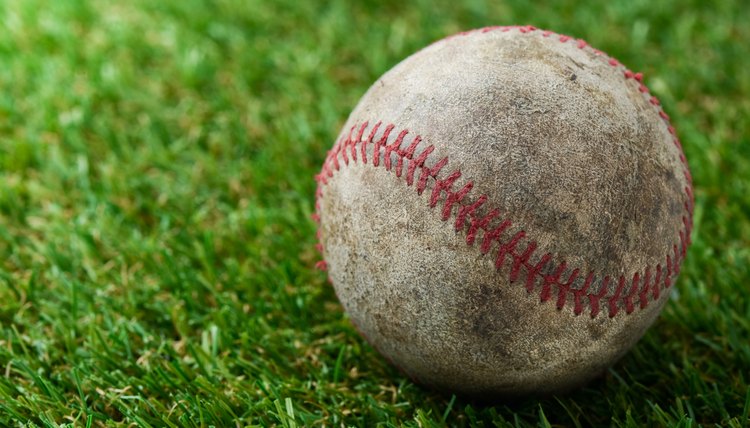
There are very few objects more iconic in the sporting realm than the baseball ball. Ever since the first baseball ball was commercially made in the 1850's, it has been a vital part of the sport and even has its own history. Since then, the ball has gone through many transformations in the 19th century on its way to becoming the baseball used by Major League Baseball today.
What were the first baseball balls made of?
The first baseballs had anything from a walnut to a rock in its core. Baseball makers would then wrap their solid object of choice in yarn or string and then encase it in leather. Players made their own or had them made for them to their own specifications. Since the custom was for the first teams of the 1850s to supply the balls for a game, games were dramatically swayed by the ball choice of the teams playing.
When were baseball balls first regulated?
As the sport of baseball became more organized in the 1850s, meetings periodically took place between teams and governing bodies to decide on the best weight, dimension and construction of the baseball.
In 1854, three New York teams decided they would use balls that weighed 5½ to 6 ounces. The weight changed to between 6 and 6¼ ounces three years later.
In 1858, it was decided that the center be made of India rubber. In 1860, everything changed again. The official weight of a baseball was reduced to 5 ¼ ounces in 1867.
In 1871, it was decided that the weight of the rubber inside should be no more than 1 ounce. This became the norm and the baseball did not change again throughout the remainder of the 19th century.
The last notable change to baseballs came about in 1974 when MLB changed the outside covering to cowhide from horsehide, as horsehide became hard to come by.
MLB rules specify that the center can be made of any rubber or cork and the ball must weigh between 5 and 5¼ ounces.
On February 5, 2021 MLB released a report that after extensive testing Rawlings reduced the bounce in ball.
Also, baseball teams began to request the use of humidors for baseball storage. Teams use the humidor to keep the ball at the manufacturer's size specifications. The humidor combats the drying effect; making the ball easier to grip for the pitcher.
Who made the baseball balls?
Through most of the 1800s, a few companies dominated the manufacturing of baseballs as the sport progressed. H.P. Harwood and Sons produced the first commercially made baseballs in 1858. John Van Horn, who also played second base for the Baltic Club in New York, was the leading producer of baseballs in the 1860s.
Albert Spalding’s company took over in 1878 until 1977 when the MLB switched to Rawlings. The MLB bought Rawlings in 2018 and now has total control over the making of the modern baseball.
The MLB bought Rawlings in 2018 and now has total control over the making of the modern baseball.
How are modern baseballs tested?
Major League Baseball now puts its baseballs through stringent testing before play. They are shot from an air cannon at a speed of 85 feet per second at a wall of northern white ash and must rebound at no more than 0.578 percent of their original speed.
The MLB has admitted to also experimenting with the making of the ball, even going so far as to use two different balls in 2021.
Writer Bio
Beverly Bird has been writing professionally since 1983. She is the author of several novels including the bestselling "Comes the Rain" and "With Every Breath." Bird also has extensive experience as a paralegal, primarily in the areas of divorce and family law, bankruptcy and estate law. She covers many legal topics in her articles.