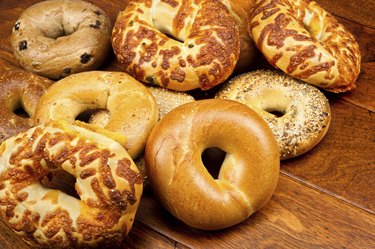
If you're short on time in the morning, a bagel serves as a convenient breakfast food. If you're intent on following a low-carbohydrate diet, however, this baked treat isn't necessarily ideal. Regardless of their specific nature, bagels contain plenty of carbs.
Plain Bagels
Video of the Day
Many standard varieties of plain bagel have dozens of carbs. A 3.5-ounce wheat bagel contains 48 grams of carbohydrates. A 3.7-ounce oat bran or egg bagel each has 56 grams of carbs.
Video of the Day
Flavored Bagels
Expect a flavored bagel to contain roughly the same number of carbohydrates. A 3.7-ounce cinnamon-raisin bagel has 58 grams of carbs, which is only slightly higher than a plain bagel. A 3.7-ounce bagel topped with poppy seeds, sesame seeds or onion flakes contains 53 grams of carbs.
Bagel Breakfast Sandwiches
Grabbing a breakfast sandwich on a bagel at a fast-food restaurant gives you significantly more calories than consuming a plain or flavored bagel, but you won't experience a major increase in carbs. A bagel loaded with ham, egg and cheese contains 52.4 grams of carbs, while a bagel with egg, cheese and a sausage patty has 49.6 grams of carbs. With a piece of steak in lieu of ham or sausage, the breakfast sandwich has 58.4 grams of carbs.
Dressing Your Bagel
Spreading a standard topping on your bagel increases its carb count to varying degrees. Two tablespoons of low-fat cream cheese adds just 2.4 more grams of carbs to the bagel, but 2 tablespoons of reduced-fat peanut butter increases the meal's carb count by 12.8 grams. Two tablespoons of jam or preserves adds an extra 27.5 grams of carbohydrates to the bagel.
- USDA National Nutrient Database: Bagel, Wheat
- USDA National Nutrient Database: Bagels, Oat Bran
- USDA National Nutrient Database: Bagels, Egg
- USDA National Nutrient Database: Bagels, Cinnamon-Raisin
- USDA National Nutrient Database: Bagels, Plain, Enriched, With Calcium Propionate (Includes Onion, Poppy, Sesame)
- USDA National Nutrient Database: Fast Foods, Bagel, With Ham, Egg, and Cheese
- USDA National Nutrient Database: Fast Foods, Bagel, With Egg, Sausage Patty, Cheese, and Condiments
- USDA National Nutrient Database: Fast Foods, Bagel, With Breakfast Steak, Egg, Cheese, and Condiments
- USDA National Nutrient Database: Cheese, Cream, Low Fat
- USDA National Nutrient Database: Peanut Butter, Smooth, Reduced Fat
- USDA National Nutrient Database: Jams and Preserves