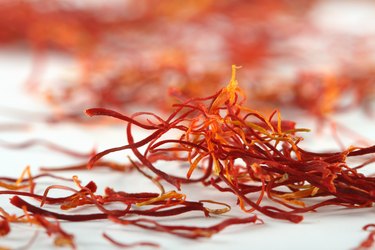
Saffron is the world's most expensive spice, so when you use it, you want to use it correctly. You'll find saffron in two forms, threads and powder. Saffron threads are the whole stigma from the saffron crocus, while saffron powder has been gently dried and ground. Whichever form of saffron you choose, it should be high quality and pure, without the addition of paprika, turmeric or other spices.
Choosing Saffron
Video of the Day
Purchase your saffron from a reputable spice company. If you're buying saffron threads, they should be a deep red color, with a slightly lighter shade at the ends. Saffron is rated by its coloring strength, and you should look for a saffron with a coloring strength rating of at least 220. Expect saffron to be costly, and walk away if a deal seems too good to be true, whether you're buying threads or saffron powder.
Video of the Day
Saffron Threads
You cannot just add saffron threads to your dish. The threads need heat to activate their flavor and color. You can lightly toast them on the stove, being especially careful not to burn them, soak them in hot water or soak them in drinking alcohol. Add 3 tsp. of hot liquid for every teaspoon of saffron threads and allow to soak for two hours before you use them in your dish. Use twice the quantity of saffron threads if you are substituting threads for powder. Avoid using a wire whisk when cooking with saffron threads.
Saffron Powder
You can add saffron powder directly to a dish without toasting or pre-soaking. Powdered saffron dissolves easily into foods, evenly flavoring the entire dish. Use half the amount of powdered saffron if your recipe calls for saffron threads. While powdered saffron provides the rich gold color associated with paella and other dishes, there will not be any visible threads in your finished dish.
Considerations
Most recipes use a very small amount of saffron, so measure carefully. Err on the side of too little saffron, particularly if the dish will be eaten the following day. Avoid using wooden utensils when cooking with saffron. Your wooden spoon will absorb the flavor and color, leaving you with wasted saffron and a ruined spoon. If necessary, you can substitute turmeric for saffron; however, the flavor is substantially different.