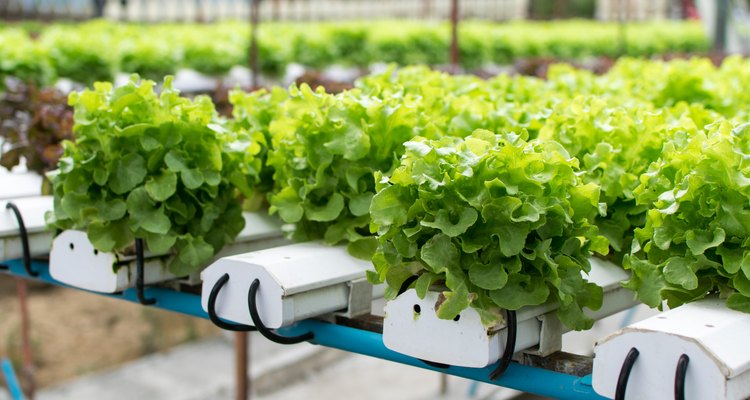
zenstock/iStock/Getty Images
Hydroponic and organic produce offer shoppers alternative choices for purchasing fresh vegetables. The philosophy of either growing method recognizes the importance of nutritional value and safe foods. Both methods minimize the environmental impact of farming, giving you an additional reason to consider using these types of vegetables.
Significance
According to the U.S. Department of Agriculture, there are more than 14,000 organic farming operations in the United States. The industry generated over $3 billion in 2008, showing promise for continued growth. The agricultural industry as a whole has experienced tremendous growth from 2002 to 2007, according to the USDA. Agricultural sales reached nearly $300 billion in 2007, with vegetable sales accounting for almost $20 billion.
What Is Hydroponic?
Hydroponic vegetables are grown in a nutrient solution, foregoing the use of soil. The advantage is the control you have over the growing conditions. If outdoor space is limited, it offers a viable alternative. A hydroponic set up will require growing lamps, a filtration system for both the water and the air and a means of climate control. The controlled settings provide the ideal environment for research and testing, explains the University of Wisconsin-Madison. It can also result in higher yields.
What Is Organic?
The Organic Trade Association defines organic agriculture as a means of growing produce with minimal impact on the land. The vegetables, therefore, are free of residues associated with synthetic pesticide and fertilizer use. These methods may impact the quality and nutrient content of organic produce by reducing the negative environmental effects of chemicals used in farming practices. Hydroponic produce can be considered organic if production follows organic farming best management practices.
Nutritional Value
The nutritional value of organic versus hydroponic vegetables may rest on the presence of micro-organisms. These micro-organisms ensure the availability of nutrients to the growing plants. A 2008 study by the Organic Center found that nutritional value of organic produce outpaced conventional produce nearly two to one. When compared to hydroponic vegetables, a 2000 study in the journal, "Practical Hydroponics & Greenhouses" confirmed that hydroponic produce can be superior in nutrition and taste, depending upon the hydroponic solutions. Stronger nutrient solutions can ensure a better product than conventionally produced vegetables.
Considerations
The research findings indicate that nutritional value is subject to farming practices whether done with soil or without. While a soil environment may leave organic plants open to pests, likewise hydroponic set ups must take precautions to ensure that the solution the vegetables are in stays bacteria free. The warm, moist environment sets up ideal conditions for bacteria growth which can impact yield and nutritional value. In either case, both hydroponic and organic vegetables offer nutritious, delicious ways to enjoy fresh produce.
Related Articles

The Effects of Organic Fertilizer on ...

Organic Vs. Conventional Olive Oil

How to Preserve Rutabagas

The Advantages of Pickling Foods

Are Pickled Vegetables Allowed on a Raw ...

Alfalfa Hay Nutrition Information

Benefits of GMO Foods

Does Food Lose Nutritional Value After ...

Fresh Vs. Canned Foods
Health Benefits of Organic Foods Vs. ...
Fruits & Vegetables: Carbon Dioxide ...

Potassium Permanganate to Wash ...

Why Should You Use Filtered Water in a ...

How to Grow Wine Grapes in Virginia

List of Ways to Conserve Mother Nature

Maximum Storage Temperature of Canned ...

Benefits of Lotus Stem
Nutrition Facts About Raw or Cooked ...

How to Make Organic Shoe Polish

Uses of Macadamia Nut Shells
References
Writer Bio
Chris Dinesen Rogers has been online marketing for more than eight years. She has grown her own art business through SEO and social media and is a consultant specializing in SEO and website development. Her past work experience includes teaching pre-nursing students beginning biology, human anatomy and physiology. Rogers's more than 10 years in conservation makes her equally at home in the outdoors.
Photo Credits
zenstock/iStock/Getty Images