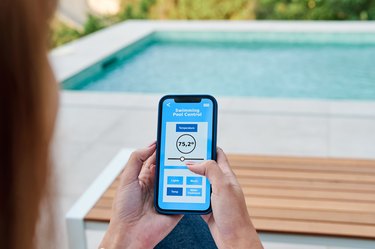
Some days you might feel like taking a plunge in the cold pool, whereas other days you might prefer lounging in the hot tub. And while most people can safely swim in slightly cold or hot water, knowing what water temperature is good for swimming can help you avoid any dangerous extremes.
Here, learn the best temperatures for swimming recreationally and competitively so you can stay safe in the water.
Video of the Day
Video of the Day
What Water Temperature Is Good for Swimming?
Mildly warm temperatures allow you to comfortably spend prolonged periods in the water without putting your body at risk. But what is warm water temperature, exactly?
The ideal water temperature for swimming and other moderate-intensity water activities is typically 78.8 to 86 degrees Fahrenheit, according to the World Health Organization (WHO).
However, what water temperature is comfortable for swimming can vary from person to person based on your age, sex, physical exertion and your personal comfort in different water temperatures, per 2013 research in the International Journal of Aquatic Research and Education.
Here's a breakdown of the researchers' Red Cross pool temperature guidelines based on age and activity:
- Swimming lessons for infants to age 6: Minimum 89.6 degrees Fahrenheit
- Swimming lessons for ages 6 to 15: Minimum 84.2 degrees Fahrenheit
- Low-intensity swimming for ages 15 to 55: 84.2 to 89.6 degrees Fahrenheit
- High-intensity swimming for ages 15 to 55: 78.8 to 82 degrees Fahrenheit
If the swim water temperature is extremely hot or cold, though, it won't allow your body to function properly and can potentially lead to serious problems like hypothermia, heat stroke or loss of consciousness, according to the WHO.
Outdoor Pool Temperature vs. Air Temperature
If you're looking for an ideal pool temperature in summer, the general recommendation is to stick to the WHO-recommended 78.8 to 86 degrees Fahrenheit. However, you might adjust that temperature slightly depending on the average outdoor temperature in your location, according to the University of Central Florida.
What Water Temperature Is Too Hot for Swimming?
While 78.8 to 86 degrees Fahrenheit is a good water temperature for swimming, sometimes you might be looking to soak in the hot tub instead.
But it's possible for warm water temperatures to get, well, too warm. According to the WHO, spending time in water that's above 104 degrees Fahrenheit can lead to drowsiness, loss of consciousness, heat stroke and even death.
This is especially true if you're physically exerting. Prolonged swimming in high water temperatures doesn't allow your body to properly cool itself and can lead to hyperthermia, per the Cleveland Clinic. Symptoms can include:
- Blurred vision
- Dizziness
- Fast breathing
- Fatigue
- Headache
- Light-headedness or fainting
- Low blood pressure
- Muscle aches or cramps
- Nausea and vomiting
- Weakness
What Water Temperature Is Too Cold for Swimming?
Perhaps you like to swim in cold water — after all, it can feel refreshing to take a cool dip on a hot summer day. But how cold is too cold to swim?
Per the National Center for Cold Water Safety, you should generally avoid swimming in water below 77 degrees Fahrenheit because anything colder than that can start to affect your ability to breathe.
But what about lower temperatures — for instance, is 70-degree water too cold to swim in? While you can swim in 70-degree water, it's not advisable without a wetsuit, according to U.S. Masters Swimming. That's because swimming in 70-degree water can lead to muscle spasms and dangerously low body temperatures.
Exposing yourself to cold water temperatures below that can put you at risk for a slowed heart beat, hypothermia, loss of coordination, difficulty breathing, muscle cramps and loss of consciousness, per the WHO.
The shock of sudden cold water immersion can also cause you to involuntarily inhale underwater, which can lead to drowning, according to the National Weather Service.
Is 70 Degrees Outside Too Cold to Swim?
Well, that depends on the temperature of the water you're swimming in. Unheated water typically hovers around the average outdoor temperature, in which case you should avoid swimming if it's 70 degrees Fahrenheit outside, per the University of Central Florida.
Water Temperature and Swimming Performance
It's evident that water temperature can affect your body's ability to function at it's best. And that can translate to your performance in the pool.
On one hand, if the water is too hot during a higher-intensity practice or race, you run the risk of overheating and experiencing dehydration, cramping, dizziness or reaching the point of heat exhaustion, according to U.S. Masters Swimming.
On the other hand, swimming in water that's too cold means your body has to expend extra energy to stay warm. This can lead to increased heart rate, higher blood pressure and muscle spasms, all of which can affect your performance.
Competitive Swimming Pool Temperatures
Competition pool temperatures — for instance, the temperature of an Olympic swimming pool — are closely regulated by U.S. Masters Swimming.
According to their rule book, competition or Olympic pool temperature should be between 77 and 82 degrees Fahrenheit. Outdoor swimming pool temperature guidelines are the same. And open water competitions aren't allowed in water that's less than 60.8 degrees Fahrenheit unless there are special precautions.
The temperatures of Olympic and competition pools are in place to help swimmers avoid dehydration, overheating, muscle cramps, and other problems.


Is the Bahamas' Weather in February Warm Enough to Swim?
The weather in the Bahamas in February typically involves mean air temperatures between 65.3 and 79.9 degrees Fahrenheit, according to the Bahamas Department of Meteorology.
And beyond the weather for the Bahamas in February, the average water temperature at that time of year is 74.5 degrees Fahrenheit, per the National Oceanic and Atmospheric Administration.
So even though February weather in the Bahamas may feel warm, you should still consider using a wetsuit if you enter the water for prolonged periods — remember, swimming in water below 77 degrees Fahrenheit (especially without extra protection) isn't typically advisable, per the National Center for Cold Water Safety.
How to Stay Safe While Swimming
While you probably won't be taking a thermometer with you to test the lap pool's temperature, there are other ways to stay safe while swimming. Enter the water slowly to test it instead of diving in. If you feel nauseous or lightheaded, take a break to cool off. And bring plenty of drinking water.
Off-season water temperatures can be dangerous, and even if you're on a boat and not planning on getting into the water, accidents can occur. Wear warm clothes and a lifejacket in case of accidental exposure, according to the National Weather Service.
Don't forget: Just because it's warm outside, doesn't mean the water is warm too.
- Outdoor Swimming Society: "How to Acclimatize to Cold Water
- World Health Organization: "Guidelines for safe recreational water environments"
- International Journal of Aquatic Research and Education: "Appropriate Water Temperatures in Which to Conduct American Red Cross Aquatic Instructional Programs Red Cross Aquatic Instructional Programs"
- National Center for Cold Water Safety: "Defining Cold Water"
- U.S. Masters Swimming: "What's a Safe Pool Temperature?"
- University of Central Florida: "For Pools"
- Cleveland Clinic: "Hyperthermia"
- National Weather Service: "Cold Water Hazards and Safety"
- National Oceanic and Atmospheric Administration: "Coastal Water Temperature Guide"
- Bahamas Department of Meteorology: "MEANS & EXTREME VALUES OF CLIMATIC ELEMENTS 1991 - 2020"