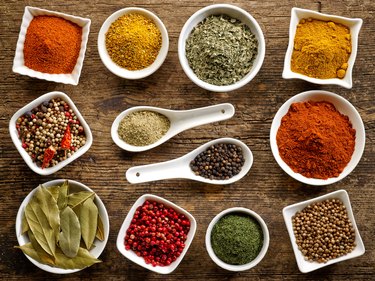
Herbs and spices are known to be among the most antioxidant-rich foods in the entire food supply, according to a September 2012 review in Antioxidants, and they're also linked to lower cholesterol and blood pressure when you use them to replace salt in your food. So surely they must offer some sort of weight-loss benefit, as well, right?
While relying solely on herbs and spices for weight loss isn't going to provide successful results all on its own, research does suggest that some herbs and spices may offer unique slim-down benefits — such as supporting your metabolism, helping ward off hunger or balancing your blood sugar levels — when combined with other healthy weight practices, such as eating nutritious foods and staying active.
Video of the Day
Video of the Day
And although more research is needed to show their exact effects, it is well-established that adding herbs and spices to already healthy dishes can help bring (low-calorie) excitement back to your diet, and enjoying what you eat is an important part of sustainable weight management.
Check out these 11 herbs and spices that could aid you on your weight-loss journey.
1. Fenugreek
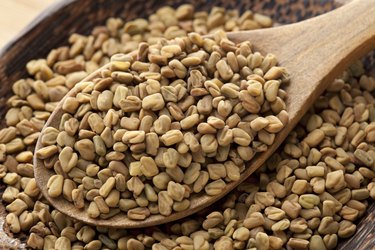
Fenugreek is an herb found in the Mediterranean, Middle East, India, China and, more recently, Canada, according to an article in the March/April 2017 issue of Nutrition Today. The seeds are a common ingredient in Indian dishes, widely used in curry recipes, chutney, spice blends and some vegetable soups.
Because it's so high in fiber, fenugreek can help keep you feeling fuller longer, which helps with diet and weight management, according to a March 2019 paper in the Journal of AOAC International. It could also stimulate insulin and slow the absorption of sugars in the stomach, which is why some people with diabetes use it to help manage their blood sugar levels, but larger studies are needed to bear out these associations.
A small September 2014 study in the Journal of Nutrition and Metabolism found fenugreek lowered blood sugar levels after eating and increased fullness among people with overweight and obesity. Further research is necessary to measure its effect on insulin, though.
Take caution: Fenugreek can cause diarrhea and more serious reactions, such as breathing problems. People who are pregnant should not take fenugreek, and it may be unsafe for people with hormone-sensitive cancers such as breast cancer, per the Memorial Sloan Kettering Cancer Center. It may also interact with certain drugs, so talk to your doctor before using it.
Try It: Beef Wat
2. Cayenne Pepper
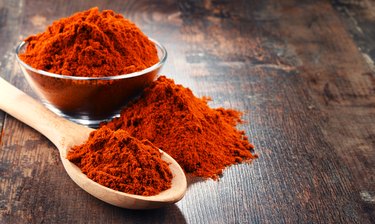
Turning up the heat on your food might help boost those weight-loss efforts. Cayenne pepper (which comes from a type of chili pepper) is a source of capsaicin, a phytochemical known for its anti-inflammatory and pain-relieving properties.
It's suggested that capsaicin acts as a thermogenic chemical, meaning it can produce heat to stimulate your metabolism and help burn fat, according to the Cleveland Clinic.
Capsaicin may also play a role in increasing your sense of fullness, according to a January-June 2017 review article in Pharmacognosy Reviews.
Separately, a June 2017 review in the International Journal of Food Sciences and Nutrition suggests chili peppers may be linked to weight loss, especially among people who don't usually eat the spice, although the optimal dose remains unclear.
Just don't overdo it, because the National Capital Poison Center states that eating too much hot pepper can result in diarrhea, nausea, vomiting, abdominal pain and a burning feeling. It can also lead to heartburn, per a study in the October-December 2010 issue of Revista de Gastroenterologia de Mexico, so you may want to avoid this spice if you have gastroesophageal reflux (GERD).
Try It: Carrot, Mandarin and Cayenne Smoothie
3. Chili Powder
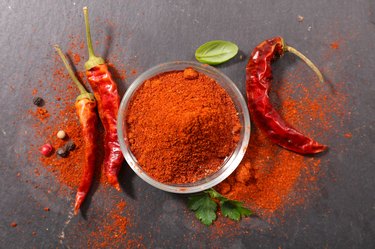
Like cayenne pepper (but way milder in taste!), chili powder, which comes from chili peppers, contains fat-burning capsaicin.
You might immediately think of a bowl of chili when you think of chili powder, but here's another idea for eating the spice: Sprinkle chili powder on fruit for weight loss. Tropical fruits like papaya, mango and pineapple are especially good pairings. Chili powder kicks up the flavor without adding calories.
Just like cayenne, make sure you don't overdo it with this spice, especially if you have GERD.
Try It: Savory Lentil Chili With Cumin Cream
4. Dry Ginger Powder
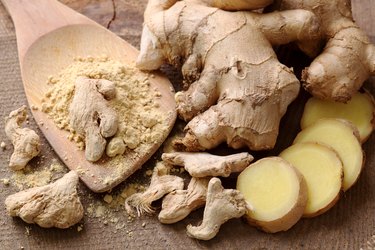
Search any homeopathic website and you'll find ginger-based products that promise to shrink your waistline. Research suggests ginger may help with high blood pressure, blood sugar, inflammation and digestion.
A very small April 2012 study in Metabolism found that people who ate 2 grams of dry ginger powder with their breakfast reported feeling fuller three hours later than those who didn't have any ginger. It also showed increased thermogenesis (calorie burn), which suggests a potential role for ginger in weight management.
Similarly, a small April 2015 study in Phytotherapy Research included 80 people with obesity who either received two 1-gram ginger powder tablets daily or a placebo supplement daily for 12 weeks. Those that were in the ginger group showed a slight decrease in body measurements as well as their actual appetite.
These trials suggest a link between ginger and obesity management, but they were both very small, so we can't draw any firm conclusions just yet. Plus, much more research is needed on ginger's various forms (powder, extract or the active components) and what they do.
Ginger can have side effects such as abdominal discomfort, heartburn, diarrhea and mouth and throat irritation, so go easy when adding it to recipes, according to the National Center for Complementary and Integrative Health (NCCIH). And consider avoiding it altogether if you have GERD.
5. Cumin
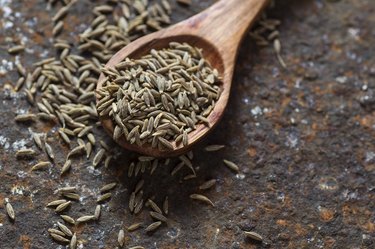
Research reveals that cumin may be a natural weight-loss aid, helping to decrease body fat.
A small November 2014 study in Complementary Therapies in Clinical Practice found that women who had overweight or obesity and ate a little less than 1 teaspoon of cumin powder a day (or 3 grams) lost 3 pounds more than a control group of women over a three-month period.
The cumin-eating group also decreased their body fat percentage by about 14.6 percent — almost three times that of the non-cumin group (4.9 percent).
Still, this is just one small study, so we can't say for sure that cumin is directly linked to weight loss.
Keep in mind that the spice is considered safe but, like anything else, should be eaten in moderation. Too much can lead to side effects such as bleeding, respiratory complications and dermatitis, according to a November 2018 review in Phytotherapy Research.
Try It: Spicy Roasted Cauliflower
6. Rosemary
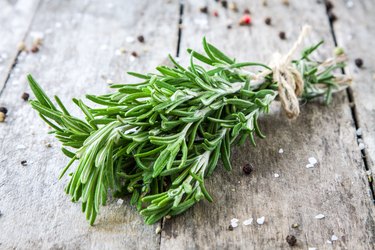
Approved in Europe for the treatment of various ailments, rosemary has been used for years for its medicinal benefits, according to a September 2018 paper in Medicines.
Rosemary is rich in the antioxidant carnosic acid, and there's some evidence that this property of the herb can help ward off hunger and may aid with weight loss, but studies are limited, as most were done on animals.
Keep in mind that eating rosemary in excess can have some serious side effects, like vomiting, spasms, coma and, in some cases, pulmonary edema (fluid in the lungs) as well as miscarriage, according to the Icahn School of Medicine at Mount Sinai.
Try It: Herb Lovers’ Popcorn
7. Mustard
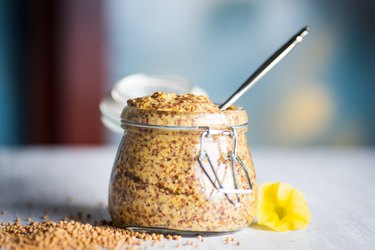
Mustard seeds, the small round seeds of various mustard plants, may slightly boost your metabolism. A small study in the February 2013 issue of the British Journal of Nutrition found mustard tended to be a thermic food.
Plus, as far as condiments go, mustard is relatively low in calories, per the USDA, which can help keep your overall calorie intake down. Not to mention, mustard seed is a good source of protein and minerals.
Some people can actually have an anaphylactic reaction to mustard, as reported in a June 2014 article in Archives of Medical Science, so use caution if you haven't eaten it before.
Try It: Mustard-Glazed Carrots
8. Turmeric and Curcumin
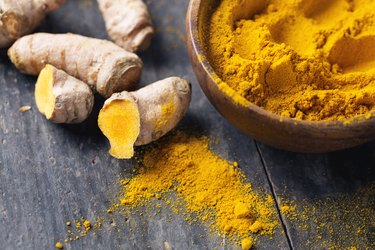
For centuries, the plant turmeric has been used to treat a variety of conditions, including infections and digestive problems, as it is the major source of the polyphenol curcumin, according to an article in the October 2017 issue of Foods. It's thought that turmeric may help decrease inflammation, which could also have weight-loss benefits.
The curcumin in turmeric has been linked to improved insulin sensitivity and blood pressure, lower inflammation and even reductions in the formation of fat cells. A review in the January-February 2013 issue of Biofactors also strongly tied curcumin and weight loss, stating that it reduces obesity and its adverse health effects.
Turmeric is one of the spices found in curry powder. A bowl of rich, spicy curry makes for a satisfying meal, but whether it will align with your weight-loss plan depends on how you make it. Stick to a single serving size, look for lighter recipes and make substitutions to lower the calorie content, such as using nonfat yogurt instead of coconut milk and fish instead of fattier cuts of meat.
Turmeric is generally safe but may cause gastrointestinal trouble when people ingest too much of it over time, according to the NCCIH.
Try It: Spicy Turmeric Chicken
9. Black Pepper
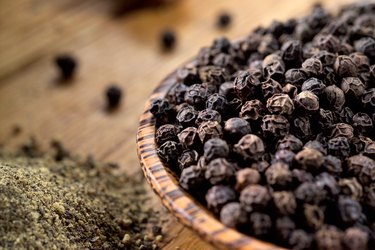
Could an ingredient in black pepper help you slim down? Well, maybe.
A preliminary April 2012 study on mouse cells in the Journal of Agricultural and Food Chemistry suggests that piperine, the pungent-tasting component in black pepper, may interfere with the formation of new fat cells. The researchers think piperine may also set off a metabolic chain reaction that helps keep fat in check in other ways; however, human studies are needed to confirm this.
A small April 2018 study in Food & Function suggests black pepper may curb your appetite. A group of 16 people was given a black pepper beverage and a control beverage (not containing the spice) before a meal. The black pepper drink reduced hunger and promoted fullness. But gulping down a black pepper cocktail doesn't sound too appetizing, does it?
Lastly, not only is black pepper thought to have a ton of other health benefits, it also helps with the absorption of curcumin, per the University of Massachusetts Medical School. And as noted above, curcumin may aid in weight management, as well.
Regardless, as a calorie-free flavor enhancer that's easily available, it's certainly a smart way to spice things up. Just remember: As with any pepper, don't get too carried away.
10. Holy Basil (Tulsi)

Holy basil (Ocimum sanctum Linn.) is an ancient herb used in Ayurvedic medicine. In India, the green and purple plant is known as tulsi and is grown for its many health benefits, according to a review in the October-December 2014 issue of the Journal of Ayurveda and Integrative Medicine.
Holy basil has gained popularity in Western countries because it has been associated with lowering blood sugar and lipid levels as well as blood pressure.
Tulsi is linked to the prevention of weight gain and a lowering of cortisol levels related to stress in animal studies, according to the Journal of Ayurveda and Integrative Medicine review. It is said to be an adaptogen, which might further soothe the nerves when dieting. And it is low in calories, which may make it a good tea for dieters.
Per the Parkinson's Resource Organization, you should stay away from holy basil if you're allergic to mint, because they come from the same family.
Eugenol is the active ingredient in holy basil. When taken in excess, it can cause nausea, a racing heart, shallow breathing, blood in the urine or sputum, throat burns, dizziness, seizures and coma.
Finally, you should be careful with tulsi if you have low blood sugar or take any medications, and you should avoid it altogether if you're pregnant or breastfeeding.
11. Cinnamon
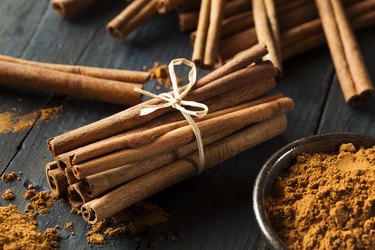
Popular with both kids and adults for its trademark sweet aroma and flavor, according to a June 2015 review in Pharmacognosy Research, cinnamon is rich in antioxidants and has anti-inflammatory properties. Plus, it may help control blood sugar levels.
While this isn't a direct weight-loss benefit, many people with type 2 diabetes need to closely manage both their weight and blood sugar levels. However, according to the NCCIH, more research needs to be done in this area.
Cinnamon is generally safe for most people, but don't use cinnamon in place of your diabetes medication, the NCCIH cautions. If you have diabetes, be sure to discuss this and any other supplement with your doctor.
Try It: 6 Healthy Cinnamon Desserts
- Antioxidants: "Antioxidant Activity of Spices and Their Impact on Human Health: A Review"
- Journal of AOAC International: "Health Benefits of Culinary Herbs and Spices"
- Nutrition Today: "Fenugreek"
- Journal of Nutrition and Metabolism: "Trigonella Foenum-Graecum Seeds Lowers Postprandial Blood Glucose in Overweight and Obese Individuals"
- Cleveland Clinic: "Can Cayenne Pepper Speed Up Your Metabolism?"
- Pharmacognosy Reviews: "Current Understanding of Antiobesity Property of Capsaicin"
- International Journal of Food Sciences and Nutrition: "Chili Pepper as a Body Weight-Loss Food"
- National Capital Poison Center: "Capsaicin: When the 'Chili' Is Too Hot
- Metabolism: "Ginger Consumption Enhances the Thermic Effect of Food and Promotes Feelings of Satiety Without Affecting Metabolic and Hormonal Parameters in Overweight Men: A Pilot Study"
- Phytotherapy Research: "Effect of Zingiber officinale Supplementation on Obesity Management with Respect to the Uncoupling Protein 1 -3826A>G and ß3-adrenergic Receptor Trp64Arg Polymorphism"
- National Center for Complementary and Integrative Health: "Ginger"
- Complementary Therapies in Clinical Practice: "Effect of Cumin Powder on Body Composition and Lipid Profile in Overweight and Obese Women"
- Phytotherapy Research: "Cumin (Cuminum cyminum L.) Is a Safe Approach For Management of Lipid Parameters: A Systematic Review and Meta‐Analysis of Randomized Controlled Trials"
- Medicines: "Antioxidant and Antimicrobial Properties of Rosemary (Rosmarinus officinalis, L.): A Review"
- Icahn School of Medicine at Mount Sinai: "Rosemary
- British Journal of Nutrition: "Acute Effects of Mustard, Horseradish, Black Pepper and Ginger on Energy Expenditure, Appetite, Ad Libitum Energy Intake and Energy Balance in Human Subjects"
- Archives of Medical Science: "Dangerous Anaphylactic Reaction to Mustard"
- Foods: "Curcumin: A Review of Its’ Effects on Human Health"
- Biofactors: "Curcumin and Obesity"
- National Center for Complementary and Integrative Health: "Turmeric"
- Journal of Agricultural and Food Chemistry: "Piperine, a Component of Black Pepper, Inhibits Adipogenesis by Antagonizing PPARy Activity in 3T3-L1 Cells
- Food & Function: "Black Pepper-Based Beverage Induced Appetite-Suppressing Effects Without Altering Postprandial Glycaemia, Gut and Thyroid Hormones or Gastrointestinal Well-Being: A Randomized Crossover Study in Healthy Subjects"
- University of Massachusetts Medical School: "Using Black Pepper to Enhance the Anti-Inflammatory Effects of Turmeric
- Journal of Ayurveda and Integrative Medicine: "Tulsi - Ocimum sanctum: A Herb for All Reasons"
- Parkinson’s Resource Organization: "Holy Basil to Beat Stress and Sleep Better"
- Pharmacognosy Research: Cinnamon: Mystic Powers of a Minute Ingredient"
- National Center for Complementary and Integrative Health: "Cinnamon"
- USDA FoodData Central: "Mustard"
- Revista de Gastroenterologia de Mexico: "Capsaicin induction of esophageal symptoms in different phenotypes of gastroesophageal reflux disease"