Yobab/iStock/Getty Images
The more protein you obtain from plant-based sources instead of animal sources like red meat, the lower your risk of heart disease, cancer and diabetes, reports the Harvard School of Public Health. Nuts, seeds, soy products and whole grains like quinoa may leap to mind when you think of high-protein plant products, but many vegetables are also good ways to fulfill your daily requirement. Aim to eat a variety of vegetables each day.
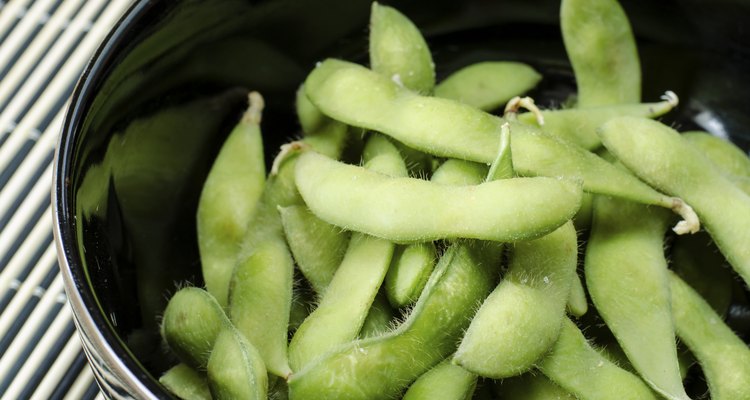
Get To Know Edamame
According to the U.S. Department of Agriculture, cooked green soybeans -- also known as edamame -- contain 22 grams of protein in a 1-cup serving. Men need approximately 56 grams of protein per day, and 1 cup of edamame would supply nearly 40 percent of that requirement. For women, who should have 46 grams daily, each cup would be 48 percent of their protein needs. Edamame is a complete protein: It contains all of the amino acids your body requires. Steam the pods and eat the seeds as an appetizer or add the shelled seeds to stir fries or soups.
Bring on the Beans
All beans and legumes are an excellent source of protein. Black-eyed peas have the most, with 14 grams of protein in each cooked cup -- 25 percent of a man's recommended daily allowance and 30 percent of a woman's -- while cooked lima beans have 12 grams per cup, or 21 percent of the RDA for men and 26 percent for women. Beans and legumes are considered incomplete proteins because they lack some essential amino acids. You can obtain these by eating a variety of other vegetables and whole grains throughout the day.
Look For Leafy Greens
While dark green, leafy vegetables are most known for their high concentration of essential nutrients like vitamin K, potassium, calcium, iron, magnesium and fiber, some are also rich in protein. A cup of cooked chopped broccoli provides 5.7 grams of protein -- 10 percent of a man's 56-gram daily protein requirement and 12 percent of that for a woman. Turnip greens have 5.5 grams of protein per cooked cup, and a cup of cooked asparagus has 5.3 grams. Supplement these vegetables with grains like brown rice or whole-wheat pasta for complete protein.
Winter Squash is a Winner
Winter squashes are a superior source of protein when compared to most vegetables, though the Hubbard squash variety stands out from the rest. Each 1-cup serving of baked, cubed Hubbard squash fulfills 9 percent of the protein requirement for men and 11 percent of the requirement for women with its 5.1 grams of the nutrient. Use cooked, mashed Hubbard squash as a nutrient-dense substitute for mashed potatoes or add cubes of the vegetable to braises, stews or soups. Whole grains and other high-protein plant foods eaten throughout the day can supply the amino acids that the squash lacks.
Related Articles
How Much Protein is in Vegetables?

The Nutrition of 15-Bean Soup
Serving Size of Steamed Asparagus
The Nutritional Value of Edamame Beans
List of Vegetables That Contain Protein ...
Rice & Lentil Diet
Bulgur Vs. Farro
Nutrition Information on Blueberries
Do Boiled Vegetables Still Have Fiber?

Which Vegetables Produce the Most ...
Top Vegetables With Selenium
Vegetables That Are Considered to Be ...
Fruits & Vegetables Rich in Potassium ...

A List of Foods That Contain Choline
Foods With 20 Grams of Fiber

Nutritional Values of Vegetables ...
How Much Protein is in Vegetables?
Nutritional Value of String Beans
What Is the Nutrition for Cranberry ...
Peanuts Vs. Pistachios
References
Writer Bio
Michelle Kerns writes for a variety of print and online publications and specializes in literature and science topics. She has served as a book columnist since 2008 and is a member of the National Book Critics Circle. Kerns studied English literature and neurology at UC Davis.
Photo Credits
Yobab/iStock/Getty Images