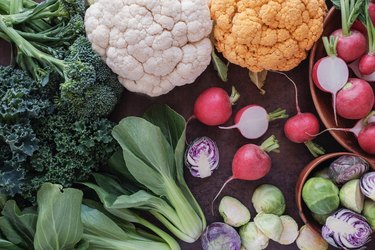
"Eat your greens!" might not have been your favorite message to hear as a kid, but it was a wise one. Veggies contain powerful plant compounds called phytochemicals with a number of benefits for your health. One group of those phytochemicals are called indoles, and they've been linked to health-boosting effects including reduced cancer risk.
Foods High in Indoles
Video of the Day
"Indoles are compounds supplied in the highest amounts by vegetables of the crucifer family, including broccoli, Brussels sprouts, cauliflower and cabbage," says Seattle-based registered dietitian Ginger Hultin, RDN.
Video of the Day
Other cruciferous vegetables, according to the Academy of Nutrition and Dietetics, include:
But spinach, though highly nutritious, is not a cruciferous veg, so it's not a source of indoles, Hultin says.
Health Benefits of Indoles
"Most of the research into the health benefits of indoles relates to a potential role in the prevention of some cancers," Hultin says.
Indoles are phytochemicals with some hormone-balancing and anti-estrogenic (estrogen-lowering) effects, she says, which could be theoretically useful in protecting against hormonally driven cancers, such as prostate, colon and breast cancer.
Specific indole molecules (derived in the gut from the breakdown of the glucobrassicin in cruciferous vegetables) that have shown estrogen-reducing effects in preclinical (animal and laboratory) studies are indole-3-carbinol (I3C) and 3,3'-diindolylmethane (DIM), according to the Micronutrient Information Center at Oregon State University (OSU). The idea here is these molecules might help balance your hormones, but more research is needed to truly understand this possible link.
That said, according to a large July 2018 study in International Journal of Cancer that recorded the eating habits of over 180,000 nurses and their health outcomes over two to three decades, those who ate lots of cruciferous veggies and yellow and orange veggies were less likely to develop breast cancer, particularly aggressive forms.
What Indole Supplements Do
Supplements containing the indoles I3C and DIM can be found online and in some pharmacies and health food stores, but Hultin urges caution.
"Supplements can have powerful effects, and they can interact with drugs and other supplements that you take, so you'll need to talk to your doctor and pharmacist before starting a supplement of either one of these — especially if you're going through cancer treatment," she says.
DIM is also found in some bodybuilding supplements, but Hultin is equally skeptical about these. "The theory here," she says, "seems to be that the hormone-balancing effect of indoles might extend to boosting testosterone levels, but there's really very little evidence for this."
However, Hultin says, if you are advised to take a supplement of indoles, be sure it's coming from a credentialed health professional.
Eat Your (Cruciferous) Veggies
For most people, food is likely the best way to get indoles, Hultin says.
"Eating plenty of cruciferous vegetables gets you both I3C and DIM, always at safe levels and without worrying about interactions, like you need to with supplements," she says.
Fruits and non-starchy vegetables also contain a large number of other healthy components that work together.
According to the World Cancer Research Fund, indoles are just one piece of the jigsaw — other compounds in these foods that may help with cancer protection include:
- Fiber
- Carotenoids
- Vitamins C and E
- Selenium
- Phenols
The takeaway? Stick with cruciferous veggies. "As a registered dietitian, I say: Eat your broccoli," Hultin says.
- Ginger Hultin, MS, RDN, registered dietitian; author, Anti-Inflammatory Diet Meal Prep, Seattle, Washington
- Academy of Nutrition and Dietetics: “The Beginner's Guide to Cruciferous Vegetables”
- Oregon State University: “Indole-3-Carbinol”
- International Journal of Cancer: “Fruit and Vegetable Consumption and Breast Cancer Incidence: Repeated Measures Over 30 Years of Follow‐Up”
- European Journal of Clinical Nutrition: “Cruciferous Vegetables and Colorectal Cancer Risk: A Hospital-Based Matched Case-Control Study in Northeast China”
- World Cancer Research Fund: “Wholegrains, Vegetables and Fruit”