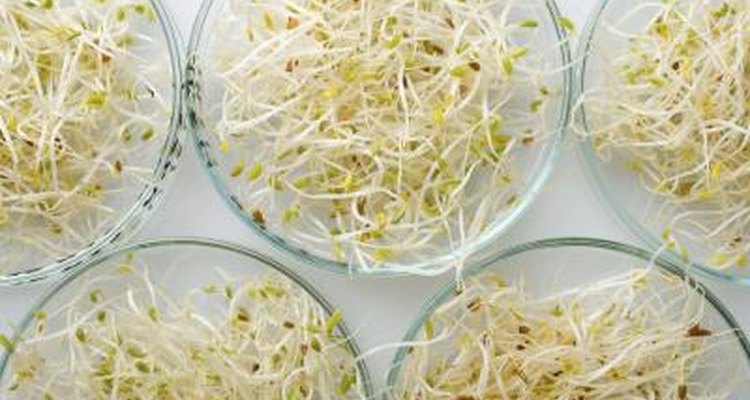
Fresh produce should be a staple in a pregnant woman's diet because of the abundance of vitamins and minerals they provide. There is, however, one key exception: Alfalfa sprouts. Though sprouts can be part of a healthy diet during other life stages, the risk of foodborne illnesses such as salmonella, listeria and E.coli means pregnant women should avoid this food.
Risk of Disease
Since 1996, at least 30 cases of foodborne illness hav been attributed to raw and lightly cooked sprouts, according to FoodSafety.gov. Although pregnant women are not an increased risk of contracting these illnesses, they can be damaging to the fetus if the mother falls ill. In rare cases, salmonella can trigger a miscarriage, says NSW Food Authority. Rinsing the sprouts does not reduce the risk; if you must consume them, cook the sprouts thoroughly first.
Related Articles
How Long Do Shucked Oysters Stay Fresh?

The Common Procedures of a Catholic ...
How to Cook Queenella Chitterlings
How to Reheat Leftover Pork Chops ...
How to Store Alfalfa Sprouts
How to Dry Artichokes
Can You Freeze Cut Carrots, Broccoli & ...
How to Know If Pork Chops Have Gone Bad

How to Not Get Holes in silk cashmere ...
How Long After Catching Should You Cook ...
Does Canned Soup Go Bad?
Bok Choy Nutrition

How to Respond to a Compliment From a ...

How Long Can a Bagel With Cream Cheese ...
How to Store Brussels Sprouts

How to Eliminate Bitterness in Broccoli
Bugs That Get Into Pantry & Food
How to Repair a Mink Coat That Is ...
Does Falafel Go Bad?

Laws About Leaving a Child Home Alone ...
References
Writer Bio
Kelsey Casselbury is a freelance writer and editor based in central Maryland. Her clients have included Livestrong, School Nutrition magazine, What's Up? Media, American Academy of Clinical Chemistry, SmartBrief and more. She has a formal education in personal training/nutrition and a bachelor's degree in journalism from The Pennsylvania State University.
Photo Credits
Pedro Antonio SalaverrA-a Calahorra/iStock/Getty Images