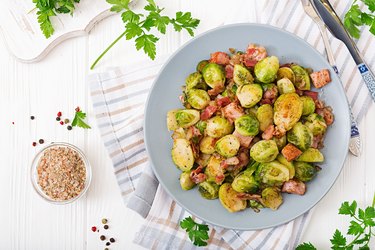
Cruciferous vegetables boast plenty of health perks, one of which is sulforaphane — a lesser-known but important nutrient.
Sulforaphane is a phytochemical that some research suggests may play a role in preventing cancer, per The University of Texas MD Anderson Cancer Center. You can get it by eating cruciferous vegetables like broccoli or cauliflower. Sulforaphane benefits the body by neutralizing toxins, reducing inflammation and potentially protecting DNA and slowing tumor growth.
Video of the Day
Video of the Day
When food is chewed or prepared, the enzyme myrosinase turns glucoraphanin (a type of glucosinolate) found in cruciferous vegetables into sulforaphane, per Oregon State University Linus Pauling Institute.
Find out which vegetables contain the most sulforaphane in the list below.
How Much Sulforaphane Per Day Do You Need?
There is no daily value for sulforaphane. Supplements come in a variety of doses, but it’s generally best for most people to get nutrients through food. Always speak to your doctor before starting a new supplement.
1. Broccoli
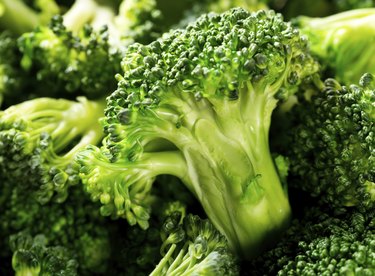
Broccoli is a cruciferous vegetable that's a good source of sulforaphane, per Oregon State University.
How much sulforaphane is in broccoli will depend on how it's prepared. For instance, cooking broccoli sous vide (in a vacuum-sealed bag) may lead to more sulforaphane compounds than boiling it would. Boiling can prevent the creation of sulforaphane compounds (because the myrosinase doesn't activate), per a June 2013 study in Food Chemistry.
Plus, you maximize sulforaphane in broccoli when you simply eat it raw — participants had 10 times more sulforaphane in their blood and urine when they ate raw broccoli versus cooked broccoli in a November 2008 Journal of Agricultural and Food Chemistry study.
2. Brussels Sprouts
Brussels sprouts are one of the top sulforaphane foods, per Oregon State University. They provide 182 percent of the daily value (DV) for vitamin K and 107 percent of the DV for vitamin C per cup cooked.
Try them in these delicious Brussels sprouts recipes.
3. Cabbage
Cabbage is a cruciferous vegetable that offers sulforaphane, stored as its precursor, glucosinolate, per a February 2016 study in Seminars in Oncology. A staple in coleslaw and sauerkraut, cabbage provides 2.2 grams of heart-healthy fiber and just 22 calories per cup raw.
Getting 25 to 29 grams of fiber daily is linked to a 15 to 30 percent lower risk of all-cause and heart-related death, per a February 2019 meta-analysis published in The Lancet. However, most people get less than 20 grams of fiber per day.
4. Cauliflower
Cauliflower makes the list of foods high in sulforaphane, per the Seminars in Oncology study. Plus, it's a great way to replace starchy foods and, in turn, reduce calories (and boost your fiber intake), per Harvard Health Publishing.
For instance, go for riced cauliflower instead of white rice or mashed cauliflower instead of mashed potatoes. And try the veg in these low-carb cauliflower recipes.
5. Kale
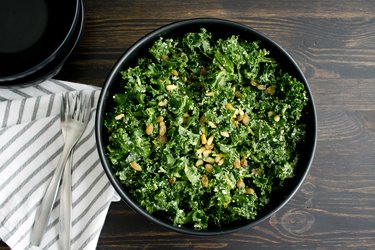
Often touted as a superfood, kale can increase your intake of sulforaphane. It is a good source of glucoraphanin, the glucosinolate that's a precursor to sulforaphane. Overall, kale contains 67 milligrams of glucosinolates per cup chopped, according to Oregon State University.
Try these creative ways to eat kale.
6. Watercress
Watercress is a good source of sulforaphane. This leafy green is 96 percent water and has just 4 calories per cup raw.
Toss it into a salad, stack it onto a sandwich and blend it into your favorite homemade pesto recipe to reap its benefits.
7. Turnips
Turnips also provide sulforaphane, though not in as high amounts as cabbage, broccoli and Brussels sprouts, per a January 2010 study published in the Journal of Advanced Research.
Still, turnip extracts were shown to inhibit lung cancer cell growth in lab studies. One large, raw turnip also provides 43 percent of the DV for vitamin C and 3.3 grams of fiber.
8. Bok Choy
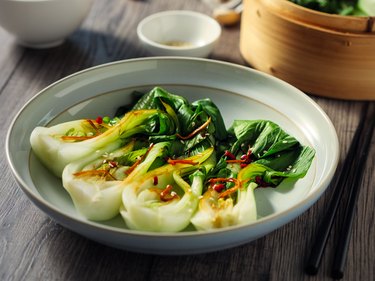
Bok choy is another cruciferous source of sulforaphane, per The University of Texas MD Anderson Cancer Center.
Bok choy is 96 percent water and has just 9 calories per cup raw. It also provides 35 percent of the DV for vitamin C and 27 percent of the DV for vitamin K.
Is There a Sulforaphane-Testosterone Link?
Some research has explored whether there’s a connection between sulforaphane and higher testosterone, but results have been mixed and more studies are needed. For instance, when 68 men ate either alfalfa sprouts (which don’t have sulforaphane) or broccoli (which has sulforaphane), testosterone levels were significantly increased in the alfalfa group but not the broccoli group, per an October 2018 study in the Journal of Translational Science.
- The University of Texas MD Anderson Cancer Center: "Sulforaphane benefits: How broccoli and Brussels sprouts may help reduce your cancer risk"
- Oregon State University Linus Pauling Institute Micronutrient Information Center: "Isothiocyanates"
- Food Chemistry: "The potential to intensify sulforaphane formation in cooked broccoli (Brassica oleracea var. italica) using mustard seeds (Sinapis alba)"
- Journal of Agricultural and Food Chemistry: " Bioavailability and kinetics of sulforaphane in humans after consumption of cooked versus raw broccoli"
- MyFoodData: "Brussels Sprouts (Cooked)"
- Seminars in Oncology: "Frugal Chemoprevention: Targeting Nrf2 with Foods Rich in Sulforaphane"
- MyFoodData: "Cabbage"
- The Lancet: "Carbohydrate quality and human health: a series of systematic reviews and meta-analyses"
- Harvard Medical School: "Vegetable of the month: Cauliflower"
- Journal of Translational Science: "Daily intake of alfalfa sprouts, but not broccoli sprouts, influence plasma levels of androgen in middle-aged males"
- Journal of Agricultural and Food Chemistry: "Assessing the Fate and Bioavailability of Glucosinolates in Kale (Brassica oleracea) Using Simulated Human Digestion and Caco‑2 Cell Uptake Models"
- Toxicology and Applied Pharmacology: "Broccoli and watercress suppress matrix metalloproteinase-9 activity and invasiveness of human MDA-MB-231 breast cancer cells"
- MyFoodData: "Watercress"
- Journal of Advanced Research: "Sulforaphane composition, cytotoxic and antioxidant activity of crucifer vegetables"
- MyFoodData: "Turnips"
- MyFoodData: "Bok Choy"