
Toe Pain From Soccer Cleats
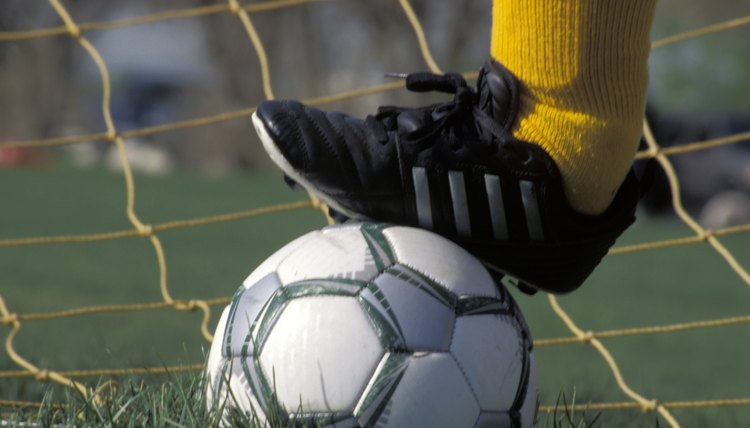
Soccer cleats provide the grip and traction players need in order to make their way around a soccer field. For some, it may also be the source of aggravating toe pain. Toe pain may occur for a wide variety of reasons, including undiagnosed foot injuries or ill-fitting or worn out cleats. Speak to a podiatrist to assess the condition of your feet and to discover the soccer cleats or orthotics support that is right for you.
Foot Condition and Injuries
Bunions, blisters, calluses, corns and other conditions of the foot may contribute to toe pain while wearing soccer cleats. According to the Foot and Ankle Center of Washington, soccer cleats tend to be smaller than running shoes, which may cause your toes to rub up against each other or against the inside of the cleats. Undiagnosed injuries, such as metatarsalgia, stress fractures or turf toe, may also cause pain in the toes. Make an appointment with a podiatrist to rule out any foot conditions or injuries.
Check Your Cleats
To play better and control the ball, soccer players prefer tightly fitted shoes. According to Podiatry Today, tightly fitted shoes may lead to toe pain and problems, such as ingrown toenails. When you wear your cleats, make sure your toes are not pressed against the sides or top of the shoe. Also make sure that there is enough wiggle room between the top of your big toe and the top of the shoe. A podiatrist may replace the insole with an orthotic device to prevent your feet from sliding in the shoe.
Cleats Buying Guide
Replace your cleats every season. When it's time to buy a new pair of cleats, always have your feet measured by a professional. Break in your cleats prior to the start of soccer season by walking around outside of the house an hour or so a day. Always wear socks when wearing cleats. Leather cleats provide a better fit compared to cleats made of other materials. However, if the cleats are too small, it may contribute to toe pain. Consider purchasing gel inserts to help reduce the amount of foot and toe pain, as well.
Other Considerations
Have your feet checked out by a podiatrist regularly. Flat feet, slight changes in the curve of your foot, postural defects or the development of hammertoes may all contribute to toe pain. To prevent ingrown toenails, trim to round the edges of your toenails. If you suffer from blisters, corns or other foot conditions, silicone toe pads offer a cushion and provide pain relief for your toes. If you still experience toe pain, speak to a podiatrist.
References
Writer Bio
Susan Diranian is a writer for various online publications and magazines, specializing in relationships, health, fashion, beauty and fitness. She holds a Bachelor of Arts in English with a concentration in nonfiction writing and editing.