
Hard Vs. Clay Court Tennis Balls
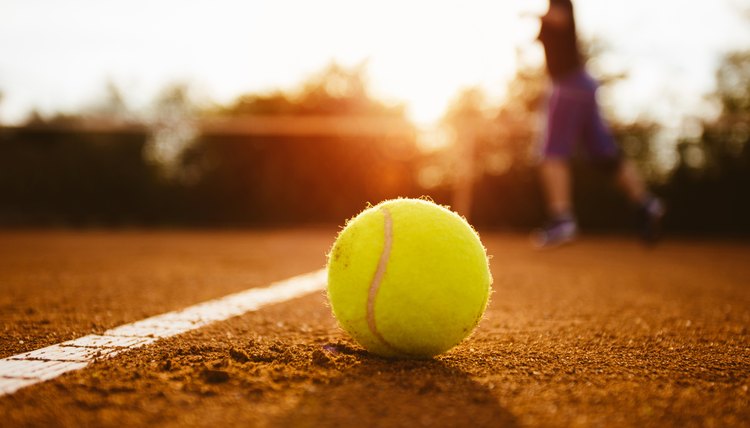
You might think a tennis ball is simply a felt-covered rubber object. For the most part this is true. However, manufacturers make several types of tennis balls for different playing surfaces and conditions. Balls designed for hard courts differ from ones designed for clay courts. The subtle differences directly affect the speed, bounce and durability of the ball.
Doing Their Duty
The top three tennis ball makers have lines of balls for players at all levels. In general, at the top of the line is a premium ball for professional tournaments followed by a championship ball for local tournaments, leagues and all round use. Also included in their lines are balls for high-altitude play, for small children and durable balls for practice. Balls for hard courts are commonly called extra duty while clay court balls are regular-duty balls.
It's All About the Felt
The balls are similar in size and weight and must bounce between 53 to 58 inches when dropped from a height of 100 inches. The only difference is the felt claims Jason Collins, global business director for Wilson tennis balls. The felt of the extra-duty ball has a high nylon content combined with wool, has a looser weave and is slightly thicker than the regular-duty. The felt of the regular-duty ball has a higher wool content and a shorter nap.
Court Characteristics
Extra-duty balls are designed for matches on outdoor hard courts. The thick felt doesn't wear away as quickly, which adds to their durability. Regular-duty balls are designed for matches played on clay as well as carpet and indoor hard courts. Clay courts are not as hard on regular-duty balls. Because of a tighter weave and less fluff, regular-duty balls don't pick up as much of the clay material. This keeps the ball from becoming heavier over the course of a match. Collins also said regular-duty balls are better for indoor hard courts because they minimize the amount of court fuzz.
Of Fluff and Friction
Over the course of a match, the regular-duty ball fluffs very little. That makes the ball play faster and move quicker due to less air friction. On abrasive surfaces and in humid conditions the extra-duty ball fluffs up more, which causes the ball to drag. Collins claims the additional fluff causes the ball to "sit" on the strings longer, which creates the sensation that the ball is "heavier."