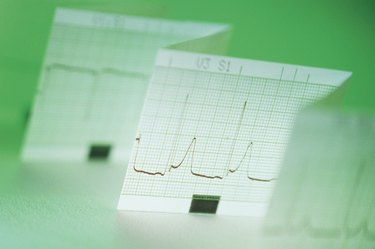
The heart is a muscular organ that is extraordinarily sensitive to disturbances in electrolyte balance. This is because electrolytes are required to maintain the electrical activity of the heart. Electrolytes are normally obtained from the diet and, under normal conditions, are maintained in proper portions in the blood by the kidneys. Some conditions can deplete one or another electrolyte, disturbing the balance and affecting the heart's electrical activity. This produces changes in heart function.
Heart Rhythm
Video of the Day
The heart is a mechanical pump that beats at a rate or rhythm controlled by electrical activity. The electrical control originates from both the autonomic nervous system as well as the heart's own intrinsic nerve network. The neural control of the heart as well as the individual heart muscles themselves are influenced by a variety of factors. One major factor is the level of electrolytes in the blood. Electrolytes help maintain normal heart rhythm but can also cause problems, such as irregular heartbeats, when electrolytes are not in optimal concentrations. One abnormality of the heart rhythm is called heart palpitations or the sensation of irregular heartbeats.
Video of the Day
Function of Electrolytes
Electrolytes are substances that, when placed in water, can carry an electrical charge. Electrolytes are required for almost every physiological function, such as maintaining water balance in cells, making enzymes and creating energy. Two of the most important electrolytes to cell function are potassium and sodium, according to the "Textbook of Physiology." Their relative ratios in the blood are controlled by the kidneys. Also, different cell types have their own individual control mechanisms to maintain these two electrolytes in tight relative balance. This balance is particularly important in certain tissues that depend on electrical activity to function properly. The heart is extraordinarily sensitive to electrolyte balance since its rhythm is controlled electrically.
Potassium
All electrolytes are important for maintaining normal heart function. "The Encyclopedia of Surgery" notes that potassium is particularly important because small differences in the relative levels of serum potassium and other electrolytes, such as sodium and magnesium, can have an enormous effect on the heart's rhythm. Potassium concentration affects both the heart's electrical system and the heart muscle directly. According to Pediatric Critical Care Medicine, when serum levels of potassium fall below 3.5 mEq per liter, cardiac cells start to become electrically unstable. When serum levels of potassium fall below, 2.5 mEq per liter, which is considered severe hypokalemia, the electrical effect on the heart can be dangerous.
Palpitations
An excess of any one or another electrolyte can produce a shift in the relative amounts of electrolytes required to keep cells electrically active. Electrolyte excess can produce inequalities between a cell's interior and exterior electrical charge, resulting in an electrical disturbance across the cell membrane. Removing electrolyte, as occurs with diarrhea, or adding electrolytes, as occurs with a high magnesium diet, also can have profound effects on electrically controlled organs such as the heart. Potassium deficiency, called hypokalemia, also can cause the heart's electrical system to produce palpitations. This usually occurs with severe hypokalemia. Similarly, too much potassium, or hyperkalemia, can cause the heart to fibrillate, which means the heart's electrical system is out of synchrony, causing rapid and irregular beats. To reestablish normal rhythm, replace the potassium electrolyte either intravenously or by oral administration. Other electrolytes, such as sodium, chloride, magnesium and calcium, should be monitored to ensure proper balance with potassium.
- Encyclopedia of Surgery: Electrolyte tests
- American Family Physician: Diagnostic Approach to Palpitations
- Cleveland Clinic: Diseases and Conditions: Management of Arrhythmias
- Pediatric Critical Care Medicine: Fluid Management and Electrolyte Disturbances
- University of Maryland Medical Center: Potassium
- diet.com: Electrolytes
Is this an emergency? If you are experiencing serious medical symptoms, please see the National Library of Medicine’s list of signs you need emergency medical attention or call 911.