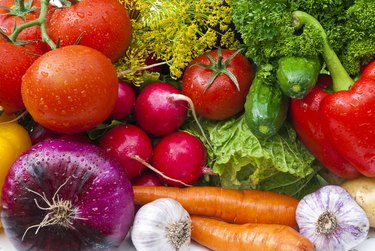
The 7-Day Color Diet is a clever way to get you to eat fruits and vegetables. It uses the principles from the National Cancer Institute's 2002 "Savor the Spectrum" program, which promotes healthy eating by suggesting that people eat five to nine servings of fruit and vegetables a day. Inspired by the concept of colorful foods being healthy, artist Mindy Weisel, along with her two daughters, wrote the book "The 7-Day Color Diet" in 2003.
Colors of Food
Video of the Day
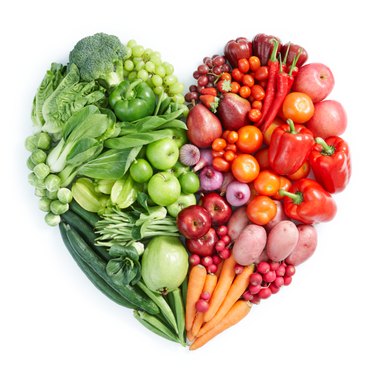
Different colored foods have different nutritional benefits. The 7-Day Color Diet provides recipes using nutritional foods based on scientific evidence. Each day of the week is devoted to a specific color. Day one is white, day two is red, day three is green, day four is orange, day five is purple, day six is yellow, and on day seven you eat the rainbow of colors. If you follow and stick with the diet, you should lose weight, maintain a healthy weight and maybe even improve your complexion.
Video of the Day
White, Red and Green
Dr. Julie Garden-Robinson, a food and nutrition specialist, explains the particular benefits of each food color group in a pamphlet put out by the North Dakota State University Extension Service. Foods in day one's white group are bananas, cauliflower, garlic, ginger, jicama, mushrooms, onions and potatoes. White foods contain anthoxanthins, which may lower blood pressure and cholesterol. Foods in day two's red group are red apples, beets, cherries, pink grapefruit, red grapes, red peppers, red potatoes, strawberries, tomatoes and watermelon. Red foods contain lycopene, which may reduce prostate cancer risk. Spaghetti sauce made with tomatoes, for example, is an excellent way for your body to absorb lycopene. Foods in day three's green group are green apples, artichokes, avocados, asparagus, broccoli, green beans, cucumbers, green grapes, peas, lettuce, limes, green pepper, spinach and zucchini. Green foods contain chlorophyll. Some contain lutein, which combined with zeaxanthin -- found in grapes, corn, red pepper, egg yolks and oranges -- may reduce cataracts. Other green vegetables can help protect against some forms of cancer.
Orange, Purple and Yellow
Foods in day four's orange group and in day six's yellow group are yellow apples, apricots, butternut squash, carrots, grapefruit, lemons, nectarines, mangoes, oranges, peaches, pears, yellow peppers, pineapple, corn, sweet potatoes and tangerines. Orange/yellow foods contain carotenoids, which help with eye health, reduce the risk of some cancers, help prevent heart disease and improve your immune system. Foods in day five's purple group are blackberries, blueberries, plums, eggplant, figs, purple grapes, prunes and raisins. Purple foods contain anthocyanins, which are antioxidants that protect your cells from damage. Blueberries, in particular, can help with memory loss due to aging.
Examples
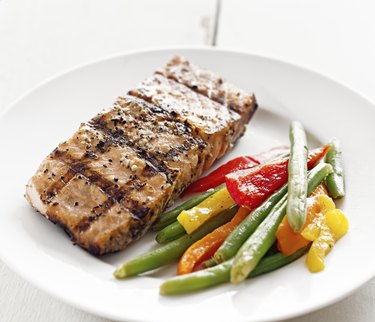
If you are disciplined, you can eat a rainbow of colorful foods every day. Make your plate visually pleasing by eating vibrantly colored fresh foods. If you want to give this new way of eating a kick start, follow the day-by-day color suggestions. Even though each day stars one particular color, your diet can still contain variety. For example, on white day, some salads from which to choose are cold cauliflower salad with nonfat yogurt and Dijon mustard, mushroom and endive salad with herb vinaigrette or white day luncheon salad with vinaigrette dressing that contains white cabbage, low-fat Swiss cheese, lettuce and an egg. If you prefer soup, try the Russian mushroom soup on white day made with chicken stock and seasoned with caraway seeds, paprika and dill.