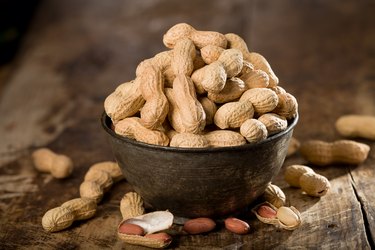
Despite their name, peanuts are neither nuts nor peas. They belong to the legume family, which includes lentils, chickpeas and beans. Unlike nuts, which grow on trees, peanuts start growing on the ground and eventually burrow underground, where they mature.
Peanuts are nutritionally dense; in fact, peanut butter is often the food of choice in polar expeditions because it is high in protein and calories, and requires no cooking or preparation. Interestingly, while peanuts are rich in fat, the fat they contain is actually heart-healthy.
Video of the Day
Video of the Day
Peanuts and Heart Health
Peanuts can be part of a heart-healthy diet, and even reduce your risk of cardiovascular disease. Nutrients in nuts and peanuts that may be responsible for these effects include protein, fiber, essential minerals including magnesium, and other beneficial plant compounds, called phytonutrients. Peanuts are low in saturated fat, which can be detrimental to heart health, and is totally free from trans fats.
In 2003, the Food and Drug Administration issued a qualified claim that scientific evidence suggests — but does not prove — that eating 1.5 ounces of peanuts a day as part of a diet low in saturated fat and cholesterol may reduce the risk of cardiovascular disease. Additionally, a 2016 review of 29 studies, published in BMC Medicine, determined that peanut consumption was associated with an overall decrease in risk for heart disease.
Read more: Peanuts and Cholesterol
Antioxidant Content
Peanut skins are rich in antioxidants, compounds that protect your cells against damage from oxidants that occur naturally in the environment, as well as those that are manmade, such as smoke and air pollution.
A diet rich in antioxidants can improve heart health by reducing the risk of disease. A study published in 2018 in the International Food Research Journal determined that roasted peanut skins have a higher antioxidant content than unroasted skins.
Peanuts also contain resveratrol, a phenolic compound that's best known as being in red wine. You don't have to drink up to get the benefits of resveratrol. A review of studies published in 2017 in NPJ Precision Oncology noted that clinical trials show that resveratrol had a positive effect on cardiovascular diseases.
Read more: What Vitamins Are in Peanuts?
A Word on Peanut Butter
Peanut butter is often considered unhealthy because it's high in saturated fat and sodium, generally considered detrimental to heart disease risk. However, peanut butter's ratio of saturated fat to unsaturated fat — 3.3 grams to 12.3 grams — is around the same as olive oil's, and it's acceptable to be eaten in moderation.
Peanut butter also contains fiber and potassium, the latter of which helps counteract the harmful effects of the sodium content. Keep in mind, though, that one serving of peanut butter is just 2 tablespoons—not the entire jar, eaten with a spoon.
- Nutrition Metabolism and Cardiovascular Diseases: Nut Consumption, Weight Gain and Obesity: Epidemiological evidence
- Linus Pauling Institute: Resveratrol
- The Peanut Institute: Health and Nutrition Research
- International Food Research Journal: Antioxidant activity of roasted and unroasted peanut skin extracts
- Harvard Medical School: Is peanut butter healthy? Yes, says the Harvard Heart Letter
Is this an emergency? If you are experiencing serious medical symptoms, please see the National Library of Medicine’s list of signs you need emergency medical attention or call 911.