Eating more meat, bacon and cheese, and less bread, fruit and sweets may help you lose weight, but it may not help lower low-density lipoprotein, or "bad" cholesterol, according to a 2016 review study published in the British Journal of Nutrition.
In fact, it may have the opposite effect. Making a few modifications to your protein choices and eating a low-carb, low-cholesterol diet with more healthy plant foods and fats might do the trick, however. If your cholesterol levels are going up, consult your doctor to discuss treatment options and recommended low-carb, cholesterol-lowering foods.
Video of the Day
Video of the Day
Tip
Eating a low-carb, low-cholesterol diet that's primarily plant-based is an effective way to reduce unhealthy, low-density lipoprotein cholesterol. Experiment with a variety of low-carb, low-cholesterol recipes to find your favorite healthy foods.
Focus on Healthy Carbs
Eating 150 grams of carbohydrates or less a day is considered a low-carb diet. However, many popular plans restrict carbs to as few as 20 grams a day. If your LDL cholesterol level concerns you, you might want to adjust your diet to focus largely on healthy vegetarian foods, according to Harvard Health Publishing.
That doesn't mean you should eat more pasta and white bread. Those extra carbs should come from low-carb, cholesterol-lowering foods, including vegetables, low-carb fruits and plant proteins such as beans, lentils and peas. A number of healthy veggies have 10 grams or less per serving, including spinach, broccoli, kale, peppers, tomatoes, asparagus and cauliflower. Pumpkin, technically a fruit, is also very low in carbs with 6 grams in a 1/2-cup serving.
Using net carbs — total carbs minus fiber — some fruits that might fit your plan include raspberries with about 14 grams per cup and strawberries with about 11 grams per cup. Legumes are little higher in carbs; a 1/2-cup serving of cooked lentils, kidney beans or garbanzo beans has about 20 grams of carbs.
Read more: High-Protein, Low-Carb Foods
Eat Lean Animal Proteins
High saturated fat intake on a low-carb diet may explain why LDL cholesterol levels increase. These fats are found in high-fat beef and pork products such as bacon, sausage and porterhouse steak; full-fat cheese; and skin-on chicken and turkey. Instead of filling your plate with these high-fat meats, go for lean cuts of beef and pork such as sirloin or pork loin, white meat chicken and turkey, eggs and seafood.
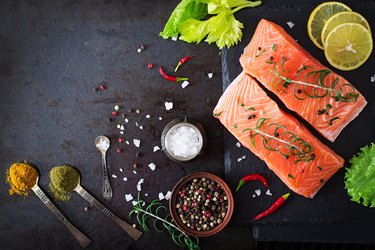
Adding fatty fish twice a week to your menu may help lower cholesterol too. The omega-3 fats found in salmon, tuna, mackerel and sardines are good for your heart and may help improve your numbers.
Best Fat Choices
Like high-fat meats, fats such as butter, cream and lard are also high in saturated fat. When you're trying to lower LDL on your low-carb diet, replace those fats with plant-based, low-carb, cholesterol-lowering foods, such as olive oil, sunflower oil, avocados, olives, nuts and seeds.
While oils are naturally carb-free, nuts, seeds, avocados and olives aren't, but the amount is small. A serving of 23 almonds has about 6 grams of carbs and 1/2 cup of hulled sunflower seeds has 14 grams, for example.
Note that of all the macronutrients, saturated and trans fats have the greatest effect on raising LDL cholesterol. For people who need to lower their LDL cholesterol, the American Heart Association recommends eliminating trans fats entirely and consuming no more than 5 to 6 percent of daily calories from saturated fats.
Low-Carb, Cholesterol-Lowering Foods
You might have a tough time fitting in some of the plant-based proteins if you're on a very-low-carb plan, but if you're up to 60 grams a day, you should be able to add them in. By focusing on a low-carb, low-cholesterol diet with healthy carb and minimal saturated fats, you may be able to reduce LDL levels to a healthy range.
Try experimenting with different low-carb, low-cholesterol recipes for your meals and snacks. For breakfast, make an omelet stuffed with 1/2 cup of button mushrooms, served with half an avocado, 1/2 cup of sliced red peppers and 1 cup of whole strawberries.
Toss 1 cup of cooked cauliflower, 1 cup of cooked broccoli, 2 tablespoons of red onions, five sliced cherry tomatoes and 1/2 cup of chickpeas with 2 tablespoons of creamy Italian dressing and serve with 19 pecans for lunch.
Salmon with 1 cup of green beans tossed with olive oil and 12 slivered almonds makes a heart-healthy low-carb dinner. To check the macronutrient profile of any food, use an online calculator or read nutrition labels.
What you drink in addition to any low-carb, low-cholesterol recipes is important too. Aim for at least 64 ounces of water a day — or more if you're exercising, pregnant or going outdoors in hot weather. If you like beverages with flavor, go for herbal tea, unsweetened almond or soy milk or flavored seltzer.
Coffee and tea sweetened with artificial sweeteners also work. Creamers are carb-free but high in saturated fat, and fat-free creamers contain carbs. Drink coffee and tea black or add unsweetened soy or almond milk; if you can't do without regular creamer, limit it to 1 tablespoon a day.
- British Journal of Nutrition: "Effects of Low-Carbohydrate Diets V. Low-Fat Diets on Body Weight and Cardiovascular Risk Factors: A Meta-Analysis of Randomised Controlled Trials"
- Atkins: "List of Low Carb Foods for Atkins 20, Phase 1"
- MyFoodData: "Nutrition Comparison of Kidney Beans, Chickpeas (Garbanzo Beans) (Cooked), and Lentils (Cooked)"
- Atkins: "What Are Net Carbs?"
- American Heart Association: "The Skinny on Fats"
- MyFoodData: "Nutrition Comparison of Almonds, Pecans, and Dried Sunflower Seeds"
- National Center for Biotechnology Information: "Low Carbohydrate Diet"
- Ohio State University Wexner Medical Center: "How Much Water Should You Drink Per Day?"
- MyFoodData: "Nutrition Data Tools"
- Harvard Health Publishing: "11 Foods That Lower Cholesterol"
- American Heart Association: "Fish and Omega-3 Fatty Acids"
- MyFoodData: "Nutrition Facts for Raspberries"
- MyFoodData: "Nutrition Facts for Strawberries"
- MyFoodData: "Nutrition Facts for Cooked Pumpkin"
- HealthAliciousNess.com: Nutrition Facts Comaparison Tool: Strawberries, Raspberries, Half and Half
- Ohio State University Medical Center:
- HealthAliciousNess.com: Nutrition Facts Comaparison Tool: Fat-Free Creamer