Heart disease is the leading cause of death in the United States, accounting for one in every four deaths, according to a June 2018 report in Nutrients. The underlying cause of heart disease is a condition known as atherosclerosis, which is characterized by chronic inflammation and an accumulation of plaques on the artery walls that can lead to heart attack, stroke and heart failure.
High-density lipoprotein, or HDL, commonly referred to as "good cholesterol," has been shown to help protect your body from atherosclerosis in a number of ways. Although the cholesterol you get from food isn't in the form of HDL (dietary cholesterol has a different structure), certain foods that you eat can increase the amount of the good cholesterol in your blood.
Video of the Day
Video of the Day
Tip
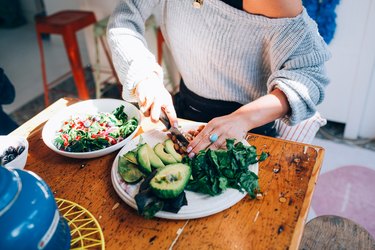
You can't get HDL cholesterol directly from the food you eat, but certain foods increase the amounts of HDL in your blood. These foods include avocados, almonds, berries, olive oil, fish, chia seeds, green tea, tomatoes and flaxseed.
LDL Cholesterol Versus HDL Cholesterol
Cholesterol is a waxy substance that can't dissolve in your blood. In order to effectively move through the body, it must be carried by other substances called lipoproteins. Lipoproteins are protein-rich compounds that pick up fat and cholesterol and transport them wherever they need to go in your body.
There are two major categories of lipoproteins in your blood: low-density lipoprotein, or LDL, and high-density lipoprotein, or HDL. Although these compounds aren't really cholesterol, they're often referred to as "bad cholesterol" and "good cholesterol" respectively, because of the way they behave in your body.
LDL carries cholesterol from your liver to the rest of your body. When there's too much LDL in your blood, or more specifically too many small, dense forms of LDL, it can contribute to plaque buildup and atherosclerosis. On the other hand, HDL picks up excess cholesterol from the blood and artery walls and carries it back to the liver, where it's removed from the body.
Functions of HDL
Because HDL picks up excess cholesterol and prevents it from building plaque on the artery walls, it's considered cardio-protective. In other words, it reduces your risk of heart disease. In addition to carrying cholesterol out of the blood, HDL prevents LDL particles from becoming oxidized.
Oxidation occurs when free radicals damage the chemical structure of the LDL, making it more likely to contribute to atherosclerosis, or the buildup of plaque on the arteries. Oxidation also decreases the effectiveness of antioxidants and contributes to the development of metabolic syndrome, a condition that increases your risk of heart attack, stroke and diabetes, according to a report published in Diabetes in February 2017.
HDL also helps reduce inflammation on the artery walls, prevents blood clots from forming inside the arteries and increases the production of nitric oxide, a gas that can help relax the walls of blood vessels and arteries, which helps lower blood pressure, according to July 2014 report in the Journal of Clinical Hypertension.
Healthy Cholesterol Levels
As a general rule, the higher your HDL numbers, the better. Optimal levels of HDL are defined as 60 mg/dL or higher for both men and women. When HDL numbers fall below 40 mg/dL for men and 50 mg/dL for women, it can signal an increased risk of heart disease.
On the other hand, the goal is to keep your LDL numbers lower. Ideally, the total amount of LDL cholesterol in your blood should fall below 100 mg/dL.
Although medications are available, lifestyle changes are often enough to increase the amount of HDL in your blood and balance your cholesterol levels without any side effects.
Foods That Increase HDL
Only about 10 to 20 percent of the cholesterol in your blood comes from the foods you eat. The remaining 80 percent is made by your liver. However, certain nutrients, like monounsaturated fats and omega fatty acids, can increase your HDL while also lowering your LDL. These good cholesterol foods include:
- Avocados
- Almonds
- Cashews
- Pine nuts
- Walnuts
- Brazil nuts
- Olive oil
- Sesame oil
- Sesame seeds
- Chia seeds
- Flaxseeds
- Tuna
- Salmon
- Sardines
- Mackerel
A report published in Advances in Nutrition in March 2017 also found that flavonoids, a type of polyphenol in plants, may increase HDL levels and help reduce inflammation. Some foods rich in flavonoids are:
- Berries (elderberries, black currant, raspberries, blueberries, blackberries, strawberries)
- Cocoa
- Grape juice
- Green tea
- Tomatoes
- Citrus fruits (orange, lemon, grapefruit, lime)
Things That Lower HDL
But it's not just about what you're eating — it's also about what you're not eating. Certain types of foods and nutrients can decrease HDL, so they're best avoided.
Trans fats are one of the worst things for healthy HDL levels. Not only do trans fats decrease HDL levels, but they simultaneously increase LDL levels. Although the FDA is requiring that all trans fats be completely phased out of foods by January 2021, foods that commonly contain trans fats include:
- Fried foods (fried chicken, French fries, doughnuts)
- Baked goods (cookies, cakes, pies, muffins)
- Frozen foods
- Margarine and shortening
- Processed foods (dressings, sauces, pie crusts)
Refined carbohydrates, like sugar, white bread, pasta and many breakfast cereals, also contribute to lower HDL levels. Cutting refined carbohydrates out of your diet and replacing them with lean proteins, healthy fats, fruits and vegetables can also boost your HDL numbers.
Read more: The 13 Worst Diet Wreckers
Other Things That Boost HDL
In addition to paying attention to your diet, there are other things you can do to balance your cholesterol levels and increase your HDL. If you're overweight, losing just 5 to 10 percent of your body weight can raise HDL, while also reducing your blood pressure, reducing inflammation and balancing your blood sugar levels, according to the Obesity Action Coalition.
Quitting smoking and exercising more can also boost HDL levels. According to a report published in High Density Lipoproteins in December 2014, regular aerobic exercise can increase HDL levels by up to 10 percent and increase the size of both HDL and LDL particles — two factors that reduce your risk of atherosclerosis.
- Mayo Clinic: "HDL Cholesterol: How to Boost Your 'Good' Cholesterol"
- Harvard T.H. Chan School of Public Health: "Cholesterol"
- Advances in Nutrition: "Effects of Dietary Flavonoids on Reverse Cholesterol Transport, HDL Metabolism, and HDL Function"
- Nutrients: "Dietary Cholesterol and the Lack of Evidence in Cardiovascular Disease"
- Hypercholesterolemia: "Role of Oxidized LDL in Atherosclerosis"
- Diabetes: "Oxidized LDL Is Associated With Metabolic Syndrome Traits Independently of Central Obesity and Insulin Resistance"
- The Journal of Clinical Hypertension: "Acute Effects of an Oral Nitric Oxide Supplement on Blood Pressure, Endothelial Function, and Vascular Compliance in Hypertensive Patients"
- American Heart Association: "Trans Fats"
- U.S. Food and Drug Administration: "Final Determination Regarding Partially Hydrogenated Oils (Removing Trans Fat)"
- High Density Lipoproteins: "HDL and Lifestyle Interventions"
- MedlinePlus: "Cholesterol Levels: What You Need to Know"
- PLoS One: "The LDL-HDL Profile Determines the Risk of Atherosclerosis: A Mathematical Model"
- Obesity Action Coalition: "Benefits of 5-10 Percent Weight Loss"
- National Lipid Association: "HDL-C"
- Harvard Health Publishing: "Cholesterol: What's Diet Got to Do With It?"
Is this an emergency? If you are experiencing serious medical symptoms, please see the National Library of Medicine’s list of signs you need emergency medical attention or call 911.