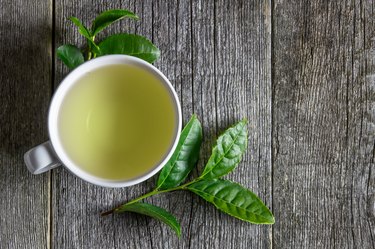
You've heard all about the potential benefits of drinking green tea, but you may wonder if green tea raises blood sugar. Having a cup or two is totally safe for people with diabetes, but knowing how to prepare green tea for diabetes is key — it's what you add to it that you need to watch out for.
Popular the world over, green tea is made from the leaves of the Camellia sinensis plant, says the National Center for Complementary and Integrative Health (NCCIH). It has an earthy and herbaceous flavor and is pale in color because it's made from tea leaves that, unlike black tea, aren't aged. It's also essentially calorie-free, according to the USDA.
Video of the Day
Video of the Day
Green tea contains caffeine as well as several micronutrients and other plant compounds, like epigallocatechin-3-gallate (EGCG), which are thought to provide many of its potential health benefits, NCCIH points out. The concentration of compounds like caffeine and EGCG depends on the strength of your brew.
Green Tea and Diabetes
"There's some evidence that green tea may help lower blood sugars," says Julie Cunningham, RD, CDE, a private practice dietitian and certified diabetes educator in Hendersonville, North Carolina. According to the NCCIH, drinking green tea regularly may also provide some protection against heart disease.
But there's the possibility that potential benefits of green tea for people with diabetes are overstated.
Most of the evidence in support of green tea for improving your blood sugar levels comes from animal studies, according to a review published in August 2017 in the Diabetes & Metabolism Journal. In fact, this review, which investigated the effects of green tea on blood sugar control in humans, found that it had no significant effect. Regardless, if you enjoy drinking green tea, there's no reason you can't continue to enjoy it.
Preparing Green Tea for Diabetes
Be careful about what you add to your green tea. Sugar, honey, agave syrup and other calorie-containing sweeteners are all considered added sugars, which can rapidly increase your blood sugar levels, according to the American Diabetes Association.
To get any of the potential benefits of green tea, Cunningham says, "You would need to drink it without sugar." So, to reap the most benefit from your green tea habit, try cultivating a taste for the tea with no sugar or sweetener.
While a dairy product like half-and-half is extremely low in carbs and unlikely to have any significant effect on your blood sugar levels, its saturated fat and calories might not help heart health or weight loss efforts. Opt for low-fat or nonfat milk instead, according to the National Institute of Diabetes and Digestive and Kidney Diseases. And definitely be careful with any packaged flavored creamers, as they usually contain a lot of added sugar.
Be sure to read labels on packaged green tea drinks because some contain sugar, according to Consumer Reports. These can include bottled green teas and many green tea shakes and frappes found at coffee shops. Keep track of your daily intake of even unadulterated green tea — the NCCIH warns against drinking more than eight cups of green tea per day because of its caffeine content.
Read more: How Much Green Tea Should You Drink Per Day?
A Word About Green Tea Supplements
Many weight loss supplements are made with green tea extract, which is high in caffeine. But, according to the NCCIH, there's little evidence that these supplements help with weight loss. The caffeine in them may give a slight boost to your daily calorie burn, which could provide a small benefit.
Additionally, while these green tea supplements aren't outright harmful in most cases, including if you have diabetes, the NCCIH warns that they may cause liver damage in high doses. If you have liver disease, you should avoid supplements that are made with green tea extract.
- American Diabetes Association: “Types of Carbohydrates”
- Diabetes & Metabolism Journal: “The Effectiveness of Green Tea or Green Tea Extract on Insulin Resistance and Glycemic Control in Type 2 Diabetes Mellitus: A Meta Analysis”
- Julie Cunningham, MPH, RD, LDN, CDE, private practice dietitian, certified diabetes educator, Hendersonville, North Carolina
- National Center for Complementary and Integrative Health: “Green Tea”
- U.S. Department of Agriculture: “Tea, Hot, Leaf, Green”
- Consumer Reports: “Is Iced Tea Good for You?”
- National Institute of Diabetes and Digestive and Kidney Diseases: “Diabetes Diet, Eating, and Physical Activity”