
How to Become a Certified Fitness Instructor in Canada
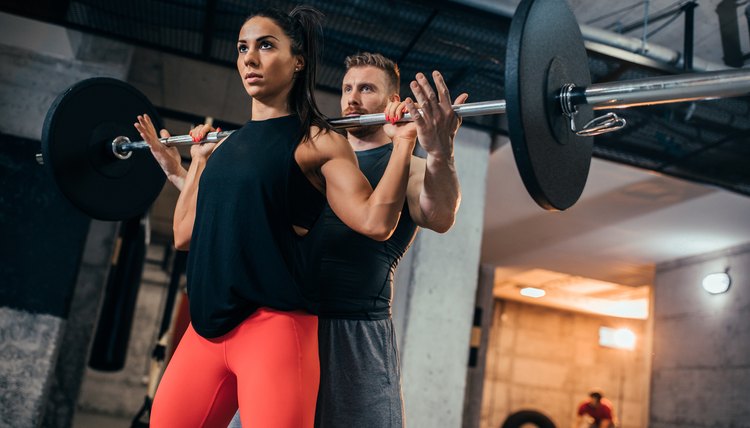
Fitness instruction is not a regulated profession in Canada. That means there are no licenses to obtain and no government exams to pass. But obtaining a fitness instructor certification from a credible certifying agency is an important step toward becoming a successful fitness instructor. Getting certified is simple; choose a program, enroll in the course, study and pass your exam.
Narrow Your Options
Fitness instructor is a broad term that can cover several different types of careers. Group fitness instructors teach classes of participants in different modalities such as dance aerobics, step aerobics, indoor cycling and water aerobics.
Personal trainers are also fitness instructors, but they usually teach individuals or small groups of individuals. However, they may also teach bootcamp-style classes or other types of group fitness classes, depending on their expertise. More specialized fitness instructors include yoga and Pilates instructors and teachers who instruct branded fitness classes such as Zumba and CrossFit.
Choose a Certifying Agency
Once you've decided on a certification, you'll need to do some research on organizations that specialize in that particular certification. A certified personal trainer, or CPT, certification is widely offered from organizations such as Canadian Fitness Professionals (canfitpro), Canadian Fitness Education Services (CFES), Canadian Society for Exercise Physiology and Professional Career Development Institute Canada (PCDI).
You can also choose to be certified by American organizations such as American Council on Exercise (ACE), National Academy of Sports Medicine (NASM) and the National Strength and Conditioning Association (NSCA). Because there are no government regulations on personal training, completing one of these programs fully qualifies you to train in Canada. These are some of the most reputable certifying agencies in America and are widely recognized in Canada.
If you choose to pursue a group fitness certification, your options are a bit narrower, but still plentiful. Canfitpro, CFES and ACE offer fitness instructor certifications, as do YMCAs, although offerings may vary by location. CFES has a specialized Aquafit certification, and the Canadian Fitness Leaders Alliance (CFLA) specializes in Aquafit certifications.
Which certification organization you choose will largely depend on your location. While some group fitness instructor and personal trainer certifications have distance-learning options, many require students to attend regular classes or attend a multi-day or day-long workshop.
Location is an important factor in obtaining Pilates, yoga and branded fitness certifications, because these programs require attending regular classes before certification is granted. Consult your local yoga, Pilates or Crossfit studios to find out the best certifications and options based on your location. You can also visit the Canadian Yoga Alliance, CrossFit, and Zumba websites to find out more about certification.
Enroll and Pay the Fee
Most programs have some type of prerequisite. Typically you must have a high school education or equivalent and be 18 years of age. Some programs may require a bachelor's in exercise science or a related field. You may also need to show proof of certification in cardiopulmonary resuscitation (CPR) and automated external defibrillator (AED) prior to registering for or taking your final exam.
To enroll in a program you will have to pay all or part of the program fees up front. The cost varies widely among programs and ranges anywhere from a few hundred dollars to a few thousand. If cost is a deciding factor for you, be sure to do your research to pinpoint available options in your price range.
Once you have paid the required amount, you will receive access to any study materials included with the cost of certification or available for purchase at an extra cost. You will also be able to sign up for classes, seminars and workshops where applicable, and you will be able to register for your exam.
Study for Your Exam
The time allotted for learning the material necessary to pass your exam also varies widely. In some cases, you may take a weekend workshop and then register to take your exam a few weeks later. Longer courses will provide you with more time to learn and study the information needed to pass the exam. You will often have smaller tests to pass along the way before the final.
Distance learning options are self-study; you determine how long you need to study and learn the material and be prepared to pass your exam. You will often have a time limit -- four to six months -- for self-study.
Pass Your Course or Exam
The final step is successful completion of a course or passing the final exam. Most distance-learning courses require you to take the exam at a monitored computer-based testing center. You will be given options depending on where you live when you register for your exam.
Some exams require both a written and a practical portion of the exam. In the practical portion you may be asked to demonstrate exercise technique or teach a sample class. Your performance on the practical and written portions will both contribute to your overall score.
What score you need to achieve to pass and receive certification will vary, but it typically ranges from 70 to 80 percent. Once you pass your exam you will receive your certification digitally or by mail.
The certification exam consists of a practical and theoretical element, in which you must write a test and teach a simulated class.
References
Writer Bio
Jody Braverman is a professional writer and editor based in Atlanta, GA. She received a Bachelor of Arts in English from the University of Maryland, and she is a certified personal trainer, fitness nutrition specialist, and yoga teacher. She has written for various online and print publications, including Livestrong.com, SFGate, Healthfully, and Chron.com. Visit the writer at www.JodyBraverman.com.