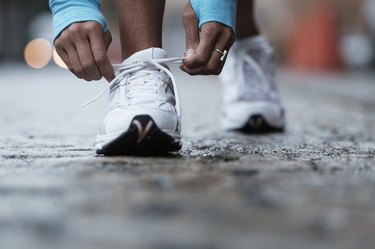
When the bottoms of your feet hurt during exercise, it makes getting through a sweat session that much tougher. Poor footwear selections, tough surfaces and improper form can all contribute to foot pain.
If your foot pain from working out persists even after making changes, consult your doctor to examine the underlying cause. Serious injuries such as stress fractures can cause your feet to hurt during a workout.
Video of the Day
Video of the Day
Read more: How to Stop Foot Pain With 7 Easy Exercises
Check the Fit
Proper footwear is imperative when you're working out. Shoes that offer too little or too much support could cause the sole of your foot to hurt. The wrong shoes could angle your arch uncomfortably, causing pain on the bottom of your foot. Head to a sports merchandising store that will perform a free gait analysis for you so you know what type of support you need.
Shoes that fit well are essential, says the American Heart Association. For example, shoes that are too big or too wide could mean your foot moves around during exercise — rubbing and causing discomfort. Wearing cotton socks for athletic activity can also cause moisture to build up and blisters on the bottoms of your feet. Opt for synthetic fabrics or a moisture-wicking natural option such as bamboo or wool.
Just standing on a hard surface, such as concrete or asphalt, can cause your feet discomfort. If you run or jump on these surfaces, the chance for pain is greater — especially if it's a new surface for you. For example, changing your running surface from a treadmill to a sidewalk could be the reason the soles of your feet hurt.
Consider the Activity
Even if your shoes fit properly and provide support, they could be all wrong for the activity you're doing. You may not have the adequate support in the forefoot or rear foot to protect your sole. A switch from a highly cushioned shoe to a minimalist shoe, for example, could be too drastic of a change for your feet.
Shoes help your feet absorb shock. If they aren't doing their job, the soles or your feet may hurt, and you could experience pain in some of your joints, too.
Shoes are specified for certain sports for a reason. For example, wearing soft-soled shoes in a cycling class can cause pain on the bottom and arch of your foot because your foot bends and rubs while in the pedal. A stiff-soled shoe is usually recommended for such an activity to better transfer power to the pedal and keep your foot stable.
Read more: A Sore Heel After Running
Pay Attention to Foot Health
The way in which you exercise can also cause pain on the bottom of your feet. If you tend to drag your feet as you run, for example, it magnifies the contact your feet make with the ground and could cause pain.
Maintaining flexibility in your feet is an important step in preventing pain on the soles. Roll the sole of your foot softly on a golf ball and practice picking up a hand towel with your toes, as recommended by the American Orthopaedic Foot & Ankle Society.
Walk barefoot occasionally on surfaces free of sharp debris, such as a sandy beach, to strengthen your feet, as discussed in a September 2018 article published by Foot & Ankle Orthopaedics.
- American Orthopaedic Foot & Ankle Society: "How to Keep Your Feet Flexible"
- Foot & Ankle Orthopaedics: "Can Foot Exercises and Going Barefoot Improve Function, Muscle Size, Foot Pressure During Walking and Qualitative Reports of Function in People With Flat Foot?"
- American Heart Association: "Get the Right Sneakers for Your Workout Infographic"
- American Heart Association: "Treat Your Feet Right"
Is this an emergency? If you are experiencing serious medical symptoms, please see the National Library of Medicine’s list of signs you need emergency medical attention or call 911.