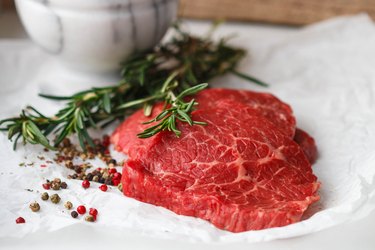
Vitamin B12, also known as cobalamin, plays an important role in your body. Plants don't have cobalamin, so vegetarians, specifically those who follow a vegan diet, may take a B12 supplement. Fortified milk substitutes also provide B12 and can help you meet your needs. Still, eating meat and fish is the best way to up your intake of this important vitamin.
Video of the Day
Video of the Day
Test for Deficiency
Vegetarians may be at risk for vitamin B12 deficiency, despite the fortification of many common foods. A 2014 paper published in the European Journal of Clinical Nutrition documented cobalamin deficiency in at least 17 percent of pregnant women who follow a vegetarian diet. Low levels of vitamin B12 during pregnancy may affect the health of the baby.
Cobalamin deficiency affects older adults too. A 2018 article in the Journal of Cachexia, Sarcopenia and Muscle showed how aging can negatively affect your ability to process B12. This change can prevent you from getting enough cobalamin into your bloodstream even with sufficient B12 intake.
Low vitamin B12 levels can lead to a variety of neurological symptoms, including numbness and tingling in your hands and feet, as well as issues with balance. A B12 deficiency may also lead to anemia <ahref="https: www.livestrong.com="" article="" 396819-how-does-b12-deficiency-cause-iron-deficiency-anemia="" "=""> </ahref="https:>and affect your red blood cell count.
Eat Animal Products
Animal products, including meat, poultry, seafood and dairy foods, are the main source of cobalamin in the diet. Animals get their vitamin B12 through microbial symbiosis, which means they make their own vitamin B12 from the bacteria in their gut.
A 2014 paper in Cell Metabolism showed how this process is more efficient in farm animals than in humans. In fact, human stomach bacteria typically consume more cobalamin than they make.
Use Dairy Substitutes
Consumer demand for milk substitutes has increased worldwide. Relying solely on these products can lower your cobalamin levels by 49 percent, according to an article published in Public Health Nutrition.
However, new food-processing technologies allow probiotic enrichment of nondairy products like soy milk. A 2017 report in Applied Microbiology and Biotechnology showed that these products can increase the bioavailable form of vitamin B12 and may help to increase your levels.
Read more: Folic Acid & Milk
Take Dietary Supplements
An article in the European Journal of Nutrition presented the effects of cobalamin supplements in a group at risk for vitamin B12 deficiency. Pregnant women received daily oral doses of 250 micrograms for several months. This dose, 100 times the recommended daily allowance, improved vitamin B12 status in the mothers and children. The mothers' breast milk also had above-normal vitamin B12 levels.
Researchers have found similar results in other at-risk populations. For example, older adults with memory problems often have low cobalamin. This deficiency places them at risk for dementia and stroke. A report in Functional Foods in Health and Disease showed how B12 supplements can enhance cobalamin and improve memory in older adults with mild impairment.
Read more: Best-Absorbed B12 Supplement
Eat Fortified Foods
A 2018 report in Food Science and Nutrition described an exciting new technology to enhance the vitamin B12 content in vegan foods. In this study, researchers used fermentation by probiotic bacteria to enrich cereal products with cobalamin.
Read more: Statistics of Vegetarians vs. Meat-Eaters
- Nutrients: Foods and Supplements Associated With Vitamin B12 Biomarkers Among Vegetarian and Non-Vegetarian Participants of the Adventist Health Study-2 (AHS-2) Calibration Study
- British Journal of Nutrition: Folate, Vitamin B6, Vitamin B12 and Methionine Intakes and Risk for Nasopharyngeal Carcinoma in Chinese Adults
- Healthfully.com: Foods Fortified With Vitamin B12
- European Journal of Clinical Nutrition: Prevalence of Cobalamin Deficiency Among Vegetarians Assessed by Serum Vitamin B12
- FASEB Journal: Maternal Folic Acid Supplementation With Vitamin B12 Deficiency During Pregnancy and Lactation Affects the Metabolic Health of Adult Female Offspring but Is Dependent on Offspring Diet
- Journal of Cachexia, Sarcopenia and Muscle: Vitamin B12 Deficiency and Impaired Expression of Amnionless During Aging
- Hong Kong Medical Journal: Vitamin B12 Deficiency in the Elderly
- Cell Metabolism: Vitamin B12 as a Modulator of Gut Microbial Ecology
- Critical Reviews in Food Science and Nutrition: Foods for Special Dietary Needs
- Public Health Nutrition: How May a Shift Towards a More Sustainable Food Consumption Pattern Affect Nutrient Intakes of Dutch Children?
- Applied Microbiology and Biotechnology: Techno-Functional Differentiation of Two Vitamin B12 Producing Lactobacillus Plantarum Strains
- European Journal of Nutrition: Vitamin B12 Supplementation During Pregnancy and Postpartum Improves B12 Status of Both Mothers and Infants but Vaccine Response in Mothers Only
- Healthfully.com: Vitamin B12 Deficiency & Dementia
- Nutrition Research: Metabolic Vitamin B12 Deficiency
- Functional Foods in Health and Disease: Vitamin B12 Supplementation and Cognitive Scores in Geriatric Patients With Mild Cognitive Impairment
- Food Science and Nutrition: In Situ Production of Active Vitamin B12 in Cereal Matrices Using Propionibacterium Freudenreichii
- International Journal of Food Microbiology: Letter to the Editor on "Enhancing Vitamin B12 Content in Soy-Yogurt by Lactobacillus Reuteri IJFM. 206: 56–59"
- Oregon State University Linus Pauling Institute Mincronutrient Information Center: Vitamin B12